2026 World Cup Preview
Links to all 48 team previews, along with the final 12 team previews and tournament predictions.

Hello and welcome to the World Cup, which kicks off today!
In this final edition, I will preview Group J, which includes Argentina, Algeria, Austria, and Jordan; Group K, featuring Portugal, DR Congo, Uzbekistan, and Colombia; and Group L, with England, Croatia, Ghana, and Panama. I will conclude with my much-anticipated, yet ultimately meaningless World Cup prediction, in which I hope to jinx my least favorite footballing country. Please scroll to the teams you’d like to read about. For your convenience, here are all of the teams organized by group, with links to learn more about each one:
Group A: Mexico, South Africa, South Korea, Czech Republic
Group B: Canada, Bosnia and Herzegovina, Qatar, Switzerland
Group C: Brazil, Morocco, Haiti, Scotland
Group D: United States, Paraguay, Australia, Turkey
Group E: Germany, Curaçao, Côte d'Ivoire, Ecuador
Group F: Netherlands, Japan, Sweden, Tunisia
Group G: Belgium, Egypt, Iran, New Zealand
Group H: Spain, Cape Verde, Saudi Arabia, Uruguay
Group I: France, Senegal, Iraq, Norway
Group J
The A Group: Argentina, Algeria, Austria, and the final group debutant, Jordan.
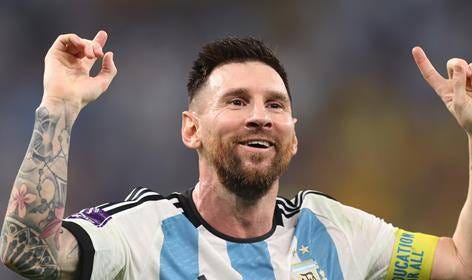
Starting with the reigning world champions, Argentina are ranked third in the world and remain one of the favorites. They had an excellent qualifying campaign, finishing first by nine points, and have been unbeaten since qualification ended. But a Lionel Messi injury scare gave all of Argentina a heart attack. He’ll play, don’t worry, and around him remains a squad full of veteran World Cup winners.
The Algerians are back after 12 years away, bringing an intriguing mix of veterans and youth. Austria (Marlene!!!) are back for the first time this century, a veteran squad that has played together for, in some cases, three Euros in a row. Jordan are one of the stories of the tournament, finishing above Iraq in their group to get here, and while not much will be expected of them, it is a truly celebratory achievement and moment for the country. On the whole, this is an excellent group for Argentina. Frankly, there are two talented squads here that will test them, but they should still comfortably advance.
Best Stadium: AT&T Stadium
In a group of repeats, which at this stage they all are, we have Arrowhead, or as it will officially be known, Kansas City Stadium, because FIFA, for all its faults, won’t be referring to it by its sponsored name so they don’t owe royalties. I respect that. It’s a lovely bowl with a great atmosphere. Levi’s Stadium, or sorry, San Francisco Bay Area Stadium, is a more modern venue with great sightlines, amenities, and architectural elements, but it is devoid of atmosphere and in the middle of nowhere.
So that leaves AT&T Stadium, or sorry, Dallas Stadium. Massive, gleaming, luxurious, corporate, Texan, American. It should host the final.
What to Eat:
Have I talked about Dallas? There is a great food scene in Dallas, I am told, but seeing as how I’m just reading online, you can do that too.
Best Dressed:
Adidas goes traditional with the home kit, as they should with the reigning world champions. The home shirt features the iconic white and sky-blue stripes, a seasonal collar, whatever that means, and black piping at the shoulders. The away has a black base with light and darker blue swirls, supposedly encapsulating the ecstatic response of the nation to their World Cup triumph through patterns inspired by Baroque and Rococo ornamentation. Apparently.


Adidas also has charge of Algeria, and they too go traditional. The home kit features a white base with green piping and sleeves, though the light brown looks kind of red to me, triangular speckles flowing and twirling down the shirt are apparently inspired by the dunes of Algeria. The away is also desert-inspired: deep green with red collar and piping, and a shimmering effect in the shirt meant to evoke a desert oasis. Both look nice, but what they were going for doesn’t really come together.


Austria’s home kit by Puma is a no-frills solid red with black sleeves. Apparently that’s a big deal because they haven’t worn black before, but it’s fucking black. The away is a cake-batter-esque mix of a white base with splashes of light blue, yellow lines, and purple or pink, apparently inspired by architecture somehow synonymous with Austria. Yeah, okay.


Jordan, through Kelme, has three kits. The countries with the worst kits always have alternates. The home is red with a white sleeve pattern inspired by kufiya scarf designs, while the away flips it with a white base and red pattern. The black alternate has a distinct but muted pattern inspired by the national flower, the black iris, with yellow piping.

Argentina takes it on the basis of their always solid and legendary traditional home kit.
Argentina (La Albiceleste — The White and Sky Blue)
The world champions. While Brazil may be the most famed footballing country, Argentina possesses a footballing tradition and obsession that rivals their South American neighbors.
Argentina have won the competition three times, once suspiciously in the hosted 1978 tournament thanks to the corruption of both the country and FIFA, once with the great Diego Maradona, and now with their living legend. There is no reason they cannot reach a seventh final and win a fourth title, which would tie them for second-most all time.
As stated, they were brilliant in qualifying and the team remains largely unchanged from 2022. It is a veteran, and dare I say aging, squad: nine men in their thirties and just three players under 25. Experience is invaluable, but so too can age catch up to a team that will have to play eight matches in a month to win the World Cup.
Manager: Lionel Scaloni
One of the most remarkable managerial turnarounds in modern football. The former Argentine international right back only entered coaching in 2016 after retiring as a player in 2013. A job as assistant to fellow Argentine Jorge Sampaoli at Sevilla led him to the national team when Sampaoli took over in 2017. Argentina underperformed at the 2018 World Cup, and Sampaoli was dismissed, and from there Scaloni was given the job. Quite remarkably, considering he had never managed at any level and was suddenly in charge of one of the most scrutinized national teams in the world. It was not well received. Maradona famously said Scaloni was “unqualified” and that he “wouldn’t be able to direct traffic.” It didn’t look great at the 2019 Copa América, and there were calls for his job.
Then Argentina won the 2021 Copa América, the 2022 World Cup, and the 2024 Copa América. Three straight tournaments. Nobody is questioning him now.
Captain, Legend, Star: Lionel Messi
The kid from Rosario has done alright for himself. The most decorated player in football history with 46 team trophies, most of them won at Barcelona, where he captured ten La Liga titles, four Champions Leagues, and seven Ballons d’Or. I could keep going. At 5-foot-7, his quickness and low center of gravity make him difficult enough to stop before you even consider that he may possess the greatest ball control in football history. Even Maradona once said: “I’ve never seen anyone with Messi’s ball control.” The quiet Argentine has always been less of a diva than players of similar stature.
Both a prolific goalscorer and playmaker, he holds records for goals in a season and total career goal contributions. But since leaving Barcelona in 2021, things haven’t entirely gone to plan at club level. A move to star-studded PSG brought trophies but not the Champions League success everyone expected. Now at Inter Miami, he has won a few pieces of silverware, though they are each very MLS. Meaningless.
None of that really matters. Messi finally captured the World Cup on his fifth attempt. At the first he was a teenager. At the second he struggled. At the third and fourth he was excellent but the team around him fell short. At the fifth, he won. One of the two greatest footballers ever, Messi remains talismanic.
Honorable mention, because they are world champions, goes to the ever-improving versatile forward Julián Álvarez and the world-class diminutive striker Lautaro Martínez. As an honorable mention for legend, there is also 38-year-old Nicolás Otamendi. The 6-foot hard-nosed center back is at his fourth World Cup after playing every minute of the victorious 2022 campaign.
One to Watch: Emiliano Martínez
A goalkeeper who earns a “one to watch” designation. Dibu Martínez is famous for his antics. Shithousing, as the English would say. Mind games. Being a jackass. Getting into opponents’ heads. There is a lot of talk in England about how overrated he is. Is he the best goalkeeper in the world? On talent alone, no.
But he is a very good shot-stopper, excellent at penalties, good with his feet, and since finally getting a chance after leaving Arsenal has become one of the most consistently good goalkeepers for one of the most consistently good clubs in England at Aston Villa. But when he puts on the Argentina shirt, he’s great. And his antics are legendary. The 33-year-old will be at it again this summer.
Algeria: مُحَارِبِي الصَّحْرَاء (The Desert Warriors)
Two-time African champions, it is frankly astounding that Algeria are only at their fifth World Cup and first in 12 years. The Desert Warriors blend veterans, three of whom appeared at their last World Cup, with players in their prime and a promising younger generation representing the future. Overall, this is a talented squad, but serious concerns remain in goal and central defense. Those weaknesses are a major reason they are ranked 28th in the world.
Those problems did not matter during qualification, admittedly in a favorable group, but they did contribute to a quarterfinal exit at the AFCON held this winter. They have looked good in tune-up matches, but opening against Argentina will either be a harsh reality check or an opportunity to throw the group wide open.
Manager: Vladimir Petković
Not sure if you can tell, but he is not Algerian. The Bosnian enjoyed a long playing career before moving into management even before retirement. Strong work in Switzerland earned him the Lazio job in Rome, which went reasonably well. From there he became Switzerland manager for seven years, guiding them to respectable runs at Euro 2016 and the 2018 World Cup before their breakthrough at Euro 2020, where they upset France and pushed Spain to penalties. He left on a high. His return to club management went poorly.
So back to international football he went. Petković has won roughly 70 percent of his matches with Algeria and has built his reputation on defensive organization, which is an interesting contrast with the squad he currently coaches.
Legend: Aïssa Mandi
While the man who comes next might make more sense as Algeria’s legend, all-time caps leader Aïssa Mandi has never put a foot wrong for the national team. The French-born center back is not eye-catching. He isn’t exceptionally fast, powerful, or adventurous going forward.
He is simply steady. Intelligent, a good passer, a good tackler, and excellent in the air despite not being especially tall for a center back, Mandi has been a model of consistency across 116 caps.From the 2014 World Cup as a 22-year-old to AFCON glory in 2019 and now another major tournament at 34, he has been a cornerstone of Algerian football.
Captain and Star: Riyad Mahrez
One of the greatest African footballers. Yes, he was also born in France, but shh. Mahrez worked exceptionally hard to reach the top. At 22 he was playing in Ligue 2 before moving to Leicester City in England’s second tier. A tricky left-footed winger, he helped Leicester gain promotion and then survive relegation.
Then came the impossible. In 2015-16, Mahrez scored 17 goals and added 11 assists as Leicester won the Premier League. He was named PFA Player of the Year. As Leicester returned to earth, Mahrez remained brilliant. Not exceptionally quick and heavily reliant on his left foot, he compensated through technical excellence and perhaps the best left foot in world football not belonging to Messi. That earned him a move to Manchester City, where he won 11 trophies.
His 113 caps and 38 goals rank second all-time for his country. At 35 and playing in Saudi Arabia, he remains Algeria’s star.
One to Watch: Ibrahim Maza
The Berlin-born winger has seen his stock rise dramatically over the last year. A product of Hertha Berlin, he impressed enough in the 2. Bundesliga to earn a £12 million move to Bayer Leverkusen.
At just 19, adaptation was always going to take time, but the quick and technically gifted winger grew into the season and finished strongly. At AFCON he was solid, scoring twice despite being just 20 years old. Alongside Mahrez, Mohamed Amoura, Amine Gouiri, and Farès Chaïbi, Maza forms part of a dynamic and exciting attack that gives the Desert Warriors genuine upset potential.
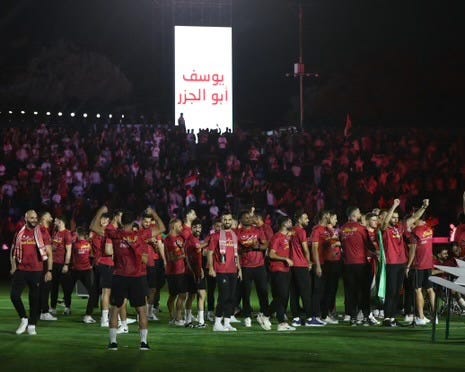
Austria (Buaschn – The Boys)
One of the great early powers of world football are back at the World Cup for the first time this century. The famed Austrian Wunderteam of the 1930s were among the best sides in the world until an Austrian with a bad mustache annexed the country in 1938. After the Second World War, Austria resumed its status as a footballing power, but since the 1960s the country’s influence has gradually faded, even if its love for the sport has not.
This is Austria’s first World Cup since 1998, but this veteran squad has been to the last three European Championships and given a good account of itself. Ranked 24th in the world, the Austrians have talent throughout the squad, but goals remain a concern. Their forwards are aging, and their best creative player, the excellent Christoph Baumgartner, misses the tournament with a muscle injury. But the Boys will still give anyone a fight.
Manager: Ralf Rangnick
As influential as he is divisive, Ralf Rangnick remains one of football’s great innovators. A likable figure personally, his legacy in Germany and Austria is complicated. In 2012, the longtime coach joined Red Bull, the Austrian energy drink company.
Red Bull purchased SV Austria Salzburg in 2005, rebranding the club as RB Salzburg, and in 2009 bought a fifth-tier German club that became RB Leipzig. Rangnick was tasked with overseeing both projects and did an extraordinary job. Salzburg became the dominant force in Austrian football, while Leipzig climbed from the fourth tier to the Bundesliga and eventually the Champions League. Why are they hated? Because German and Austrian football traditionally prided themselves on community ownership and resistance to corporate influence.
Rangnick truly changed the sport. The architect of Gegenpressing, he pioneered many of the pressing and spatial concepts that define modern football. Many of today’s elite coaches either worked under him or were influenced by his ideas. Since taking over Austria in 2022, he has led them to a respectable Euro 2024 campaign and qualification for their first World Cup in 28 years.
Legend: Marko Arnautović
The “bad boy of Austrian football” sits atop both the country’s all-time appearances and goalscoring charts with 133 caps and 47 goals. The temperamental 6-foot-4 forward possesses the technique of a much smaller player. Excellent with both feet and dangerous with his back to goal, Arnautović’s talent often seemed greater than his club output. Partly due to his fiery personality, some of it deserved, as even he admits he “wasn’t an angel,” he rarely stayed at one club for very long.
Born in Vienna to a Serbian father and Austrian mother, Arnautović began as a winger despite his size. During his Premier League years, his physical gifts were increasingly utilized as a center forward, and while not a natural striker, his combination of strength, skill, and unpredictability can make him a nightmare to defend. Even at 37, Arnautović continues to shine for the national team. He was excellent at the last two European Championships and scored eight goals during World Cup qualifying.
Captain: David Alaba
The son of a Yoruba prince and a Visayan mother, Alaba has enjoyed one of the greatest careers of any Austrian footballer. At Bayern Munich he won ten league titles and two Champions Leagues while collecting seven Austrian Footballer of the Year awards. For much of his prime he could legitimately claim to be the best left-back in the world.
An intelligent, athletic defender renowned for his positioning and leadership, Alaba gradually transitioned from full-back to center-back during the latter stages of his time at Bayern and later at Real Madrid. A devastating ACL tear sidelined him for 13 months and robbed him of some of his peak form. Now 33 and finally healthy again, he arrives at his first World Cup looking to finish his international career on a high note while also auditioning for his next club after leaving Real Madrid.
Star: Marcel Sabitzer
Honorable mention goes to the relentlessly hardworking Konrad Laimer of Bayern Munich, but the star nod belongs to his longtime teammate Marcel Sabitzer. The son of a former Austrian international, Sabitzer is one of the most versatile players in Europe. While capable of filling in as a defensive midfielder, he is comfortable as a box-to-box midfielder, attacking midfielder, winger, or even a forward.
Never considered a wonderkid, he emerged as one of the standout players in RB Leipzig’s rise. Excellent technically, creative in possession, and blessed with a powerful shot, Sabitzer later became a valuable player for both Bayern Munich and Borussia Dortmund. He was one of Dortmund’s best performers during their run to the 2024 Champions League Final and has consistently delivered for Austria. This World Cup will see him surpass 100 international appearances.
One to watch: Carney Chukwuemeka
Someone I was genuinely surprised to learn was born in Austria, Chukwuemeka moved to England as a child and developed into one of the country’s most highly regarded youth prospects.The 6-foot-1 attacking midfielder possesses excellent technical ability and creativity, but his development stalled somewhat after moving to Chelsea at 19. Injuries didn’t help, nor did Chelsea’s tendency to be awful.
A move to Borussia Dortmund has provided the now 22-year-old with a more stable environment. Technically gifted and capable of unlocking defenses with a single pass, Chukwuemeka could become the creative spark Austria badly need in Baumgartner’s absence.
Jordan (النشامى – The Chivalrous Ones)
Great nickname, and they have lived up to it. Jordan are one of the stories of the tournament, qualifying for their first-ever World Cup. Yet this is not entirely out of nowhere. Like fellow debutants Cape Verde, the Jordanians announced themselves with an excellent continental campaign, reaching the finals of the 2023 Asian Cup and 2025 Arab Cup.
The squad is largely composed of homegrown talent from a nation of around eleven million people. Ranked 63rd in the world, Jordan are clear outsiders, but they play Argentina last. If Argentina have already secured qualification by then, they may rotate heavily. If Jordan can earn a result against either Austria or Algeria beforehand, suddenly anything becomes possible.
Manager: Jamal Sellami
The former Moroccan international midfielder has become an adopted national hero in Jordan.After spending thirteen years coaching in Morocco following his retirement, Sellami was hired by Jordan in 2024. He promptly guided the nation to automatic World Cup qualification and followed that up with an unbeaten run to the final of the 2025 Arab Cup.
Along the way Jordan defeated three World Cup participants, Egypt, Saudi Arabia, and Iraq, before narrowly losing 3–2 to hosts Qatar in the final. In recognition of his achievements, King Abdullah II awarded Sellami national honors, including honorary Jordanian citizenship.
Legend: Yazeed Abu Laila
In a squad featuring several candidates for the title, goalkeeper Yazeed Abu Laila gets the nod. Having spent his career in Jordan and Saudi Arabia, he may not be a household name (I had never heard of him), but he has been instrumental in Jordan’s rise. Excellent at the 2023 Asian Cup, strong again during World Cup qualification, and dependable at the 2025 Arab Cup, the 33-year-old has repeatedly delivered in the biggest moments.
Captain: Ihsan Haddad
A dependable and experienced right-back, Haddad becomes the first Jordanian captain to lead his country at a World Cup. Comfortable on the ball and tough in defense, the 32-year-old built his reputation in Jordan and Iraq before becoming a cornerstone of the national side. Jordan’s success has been built on organization and defensive resilience, and Haddad embodies both qualities. Apologies to these last two men. I am a Jordanian football ignoramus.
Star: Musa Al-Taamari
One of the greatest Jordanian footballers of all time, Musa Al-Taamari is the face of the national team. The first Jordanian to score in one of Europe’s top five leagues, the tricky left-footed right winger has spent seven years climbing the European football ladder. At every stop he impressed enough to earn a move upward, now with Rennes in France.
Blessed with excellent close control and the ability to beat defenders one-on-one, the 28-year-old has earned 90 caps and scored 24 international goals. His ability to unlock defenses is vital for Jordan and creates opportunities for teammates such as Yazan Al-Naimat and...
One to watch: Ali Olwan
Already second on Jordan’s all-time scoring list with 29 goals, the 26-year-old striker is rapidly closing in on the national record. Standing 6 feet tall, Olwan has had a somewhat nomadic club career, playing in Jordan, Qatar, Malaysia, and Iraq without ever fully settling. For the national team, however, he has consistently delivered.
His record of 29 goals in 64 appearances would be impressive for any international striker. He finished as the top scorer at the Arab Cup with six goals and added nine more during World Cup qualification. If Jordan are going to pull off a shock in this group, there’s a very good chance Ali Olwan will be at the center of it.
Group Predictions:
Argentina two wins one draw-Qualified
Austria one win one draw-Qualified
Algeria one win one draw-Qualified
Jordan one draw
Group K Storyline:
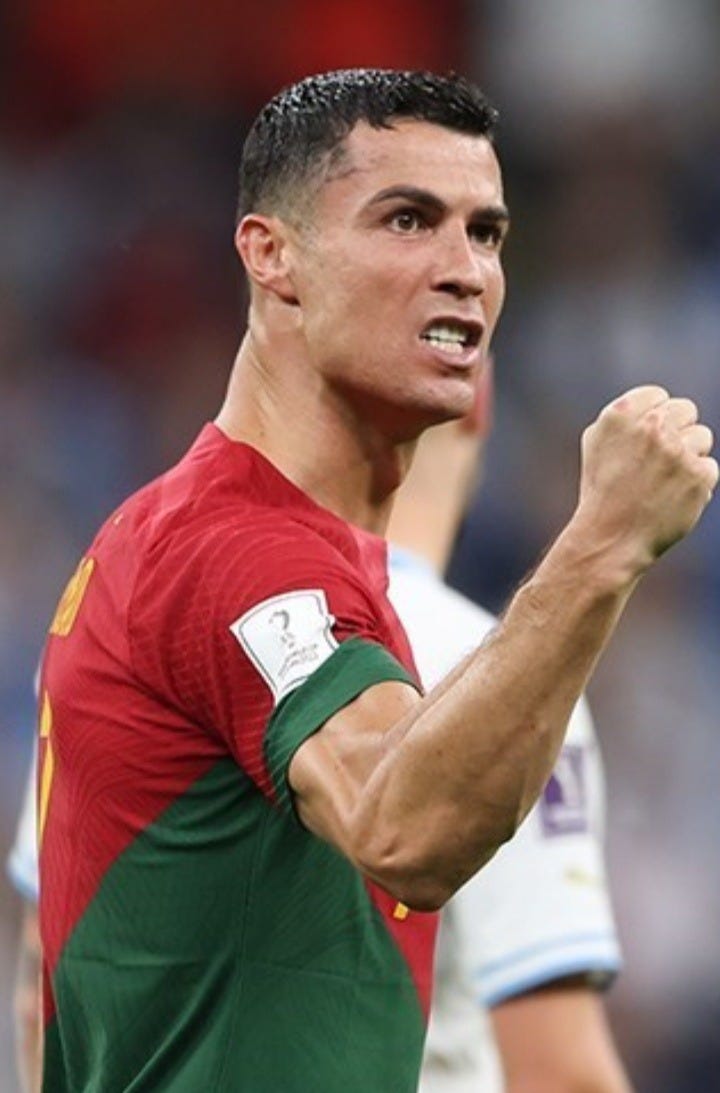
From one all-time great to another. By virtue of his legacy, talent, ego, celebrity, and status in Portugal, Cristiano Ronaldo is one of the biggest stories whenever he shows up. On the face of it, for neutrals and the Portuguese diaspora alike, Portugal are the story of this group. Ranked 5th in the world, they arrive with immense expectations.
But there are other stories here too. The always-entertaining Colombians, ranked 13th in the world, bring one of the most quietly talented squads to the tournament. DR Congo are one of the feel-good stories of the World Cup, the war-torn nation qualifying for only their second tournament and their first as DR Congo. Then there are debutants Uzbekistan, who qualified automatically and have already made history.
There are bigger storylines here than simply Ronaldo, especially now that he is 41 and surrounded by perhaps the deepest Portuguese squad ever assembled. Yet one question lingers over everything: who starts at striker? It could still be Ronaldo, chasing the only major trophy that has eluded him. That alone makes him a headline.
Best Stadium: Estadio Azteca
We return to the most meaningful ground in football history in this collection, which also happens to be an excellent stadium in its own right. The largest stadium in Latin America, and freshly renovated, the Azteca has hosted two World Cup finals. In 1970, Pelé’s Brazil dismantled Italy 4–1 in the King’s final World Cup appearance. In 1986, Diego Maradona’s Argentina defeated West Germany 3–2 to complete one of the greatest individual tournaments ever played. It hosts only one group-stage match in this group, but more importantly two knockout games. Hopefully, it adds another chapter to its collection of legends.
What to Eat:
Let’s go with Mexico City, a city I am actually reliably informed has world-class street food. Tacos al Pastor: Shaved, marinated pork served with pineapple, onion, and cilantro. Tacos de Suadero: Slow-cooked beef tacos with crispy edges. Guajolota: A fluffy bolillo roll stuffed with a tamal. Quesadillas & Tlacoyos: Blue corn masa stuffed with a variety of savory fillings. Churros: hopefully self-explanatory. Seek out stalls in Mercado de San Juan or Mercado de Medellín for some of the city’s best market food.
Best Dressed:
Puma, for Portugal’s home kit, sticks with the traditional colors. A red base, with green collars and sleeve trim, featuring subtle wave patterns meant to represent the country’s maritime history. Otherwise known as colonialism. The away kit continues the nautical theme, blending white and lagoon turquoise in flowing patterns supposedly inspired by Portugal’s iconic players. Not sure how that works. It’s a surprisingly uninspired effort.


Adidas, meanwhile, nails Colombia’s home shirt. Finally, a kit whose inspiration is both meaningful and actually visible. The traditional yellow base features butterfly motifs inspired by Gabriel García Márquez’s One Hundred Years of Solitude, where yellow butterflies symbolize hope, happiness, and transformation. It’s culturally significant and visually striking. The away shirt attempts to represent Colombia’s unique geography, where Caribbean and Pacific waters meet South America. Different shades of blue collide throughout the design. The concept makes sense; the execution is less successful.


DR Congo has one of the most unique color palettes in football: a difficult-to-describe blue, deep maroon, and white. Umbro leans heavily into the Leopards nickname and it works. The blue home shirt, with its white leopard-fur graphics and red accents, is excellent. The white away shirt isn’t as memorable but remains solid. The red alternate, featuring leopard patterns across the shoulders, looks suspiciously like something China might wear if they had qualified.


Finally, debutants Uzbekistan. Their sponsor, 7SABER, is another company I’ve never heard of. Their blue home and white away kits feature faint traditional Uzbek architectural patterns. They’re not bad. They’re also not particularly memorable. Colombia takes this category comfortably.


Portugal (Seleção das Quinas — Team of the Quinas)
Unlike most footballing giants, Portugal arrived late to the party, only qualifying for their first World Cup in 1966. In truth, they have only really been a global power since the early 2000s. The country produced greats before Cristiano Ronaldo, Eusébio and Luís Figo among them, but most of Portugal’s success has come during Ronaldo’s era: runners-up at Euro 2004, winners of Euro 2016, and Nations League champions in both 2019 and 2025. For a country of just 10.7 million people, consistently producing elite talent is remarkable.
Yet at the World Cup, success has remained elusive. A fourth-place finish in 2006 remains their best result. They failed to reach the group stage in 2014, and their best result since is the quarter-finals in 2022.This is their last shot at glory with the greatest player they have ever produced. Portugal cruised through an easy qualifying group and have looked excellent in friendlies. The biggest question remains at striker, but they may possess the best midfield in the tournament and certainly have the quality to make a deep run.
Manager: Roberto Martínez
A man I was genuinely shocked to learn is only 52. Oldest looking 52 year old I’ve ever seen. Nineteen years of coaching will do that to you. The former Spanish defensive midfielder spent much of his playing career in England, most notably with Wigan and Swansea City. As Swansea captain, he helped stabilize a club on the brink and was handed the managerial job immediately after retirement. He rewarded that faith by leading Swansea back to the second tier for the first time in 24 years. From there he moved to Wigan and performed miracles. He kept the underdog in the Premier League for four seasons and famously won the FA Cup.
A respectable spell at Everton followed before he took charge of Belgium, leading their golden generation to a third-place finish at the 2018 World Cup. After disappointment in 2022, he stepped aside and Portugal came calling. Martínez has won roughly 70 percent of his matches in charge, and his possession-heavy style suits this squad perfectly.
Captain and Legend: Cristiano Ronaldo
The boy named after Ronald Reagan had a difficult start in life. Born on Madeira, Ronaldo grew up in poverty. His father, a veteran of Portugal’s colonial wars, struggled with alcoholism. His mother later revealed that she had considered terminating the pregnancy because the family already had three children and could barely make ends meet. The doctor refused.
Football became everything. A diagnosis of tachycardia nearly ended his career before it began, requiring corrective heart surgery as a teenager. He emerged stronger. Sporting CP. Manchester United. Real Madrid. History.
As a young player, Ronaldo was an electrifying winger blessed with exceptional close control, brilliant dribbling, and a devastating shot. As he matured, he transformed himself into a complete attacking force, adding strength, aerial dominance, and relentless goal-scoring to his game. At his peak, he was virtually unstoppable. Five Champions League titles. Five Ballon d’Ors. Four European Golden Boots. Hundreds upon hundreds of goals.
Like Messi, life after leaving Spain has not quite matched the heights of his prime. The trophies have slowed, the individual awards of note have stopped, and his increasingly specialized role can sometimes create problems for his teams. Unlike Messi, Ronaldo has also never been shy about expressing his frustrations. Also, unlike Messi, he has never won a World Cup. Despite eight World Cup goals, he has never dominated the tournament in the same way he has other competitions. Three of those goals came in a single group-stage match. At 41, this is the last dance.
Star: Who to Choose?
Rúben Dias remains one of the best centre-backs in the world. Athletic, intelligent, fearless, and composed on the ball, there is little he cannot do when fully fit.
Then there’s Nuno Mendes. At just 23, he might already be the best left-back on the planet. Blisteringly fast, physically dominant, technically gifted, and already a two-time Champions League winner. His PSG teammate Vitinha has an argument too. The 26-year-old midfield metronome is among the finest passers in football. Not flashy, but utterly essential to everything that makes great teams function.
Bruno Fernandes? One of the few people who has made Manchester United watchable over the last six years. Diving and theatrics aside, he’s a magnificent footballer. Direct, creative, endlessly productive, and capable of producing something from nothing.
Then there is the versatile Bernardo Silva. Little magician João Neves. Portugal is stacked. Especially in midfield.
One to Watch: Francisco Conceição
Four years ago, Portugal’s next generation of attackers looked frightening. João Félix was to become a superstar. Rafael Leão seemed destined to dominate European football. Instead, Félix never fulfilled his immense promise, while Leão has largely stagnated and never reproduced his club form for Portugal.
Now Francisco Conceição may be the brightest attacking talent of the next generation. The son of former Portuguese international Sérgio Conceição, Francisco inevitably faced accusations of nepotism early in his career, as he played for a team his father managed. Yet he has steadily proven himself on merit. Standing just 5-foot-5, Conceição is tiny, but his low centre of gravity, explosive acceleration, and lightning-fast feet make him incredibly difficult to defend against. His move to Juventus has helped him add end product to the flair. Portugal have plenty of midfielders capable of controlling games. What they need are players who can unlock stubborn defenses. The 23-year-old winger could be exactly that player.
Congo DR (Les Léopards – The Leopards)
Officially, Congo DR, according to FIFA, because nothing is ever simple, the Leopards are here for the first time under the nation’s current name. The war-torn country of 124 million remains one of the most troubled places on Earth, with more than 120 armed groups operating within its borders and an ongoing crisis involving neighboring Rwanda. This is a joyous moment for Congolese everywhere.
This is also a team more talented than its 46th-place ranking in the world suggests. They pushed Senegal hard in qualifying, but finishing second meant a far tougher route. First they had to eliminate traditional African heavyweights Cameroon and Nigeria, both World Cup regulars and both ranked above them. Then came Jamaica for the final ticket, and there is a reason I’m writing about Congo DR.
Manager: Sébastien Desabre
Another white Frenchman coaching a black Francophone nation. No judgment or broad conclusions, just a fact. The 49-year-old never played professional football and did not become a professional manager until 2010. Before then, there is surprisingly little information available about Desabre. He coached in the French amateur game before heading to Africa, where he has spent most of his managerial career.
He has coached in Côte d’Ivoire, Cameroon, Tunisia, Morocco, Algeria, Egypt, and Uganda along the way. Nicknamed The Florist (no idea), Desabre has been in charge of the Leopards since 2022 and has done a commendable job, winning more than half of his matches with a country that is hardly a traditional footballing power.
Legend and Captain: Chancel Mbemba
The most capped player in Congolese history, Chancel Mbemba was born and raised in the capital, Kinshasa. A 2013 CNN investigation uncovered four separate birth documents for Mbemba, with birth years ranging from 1988 to 1994. At various points he was listed as being born in 1990 and 1991, while one Congolese football official claimed his birth year had been altered so he could compete at the 2012 Olympics. Then, when he signed for Newcastle United, documentation supporting the 1994 date emerged.
Standing just six feet tall, he is an old-school centre-back: tough, physical, uncompromising, and not especially interested in looking elegant while doing his job.He enjoyed long and successful spells with Porto and Marseille, where his performances were particularly admired, before moving north to Lille. For his country, Mbemba has earned 108 caps, becoming the first Congolese player to reach triple figures. He also converted the decisive penalty that sent Congo through to the playoff against Jamaica.
Star: Meschak Elia
This is another team where choosing a star is difficult. Two more goals would make 35-year-old striker Cédric Bakambu his country’s all-time leading scorer. His journeyman career has taken him through several major leagues, though age has caught up with him. Then there is Yoane Wissa. The versatile 29-year-old forward enjoyed four excellent years with Brentford, including a 19-goal Premier League season, but he is coming off the most disappointing campaign of his career following a move to Newcastle.
So we’ll go with Meschak Elia. Born in Kinshasa, Elia’s early career was complicated by documentation issues that derailed his first move abroad. At just 18, he announced himself on the continental stage at the 2016 African Nations Championship (doesn’t exist anymore), scoring four goals and winning Player of the Tournament as DR Congo lifted the trophy. The 5-foot-8 Elia combines quickness with surprising strength, playing far bigger than his frame suggests. A long and productive spell in Switzerland eventually came to an end in 2025 after his form dipped, and a subsequent move to Turkey has yet to reignite his club career.
For the national team, however, he remains indispensable. His equalizer against Nigeria forced the penalty shootout that kept Congo’s World Cup dream alive, and much of the attack still revolves around his ability to create opportunities for Bakambu and Wissa.
One to Watch: Noah Sadiki
It certainly helps when you have one of the best young defensive midfielders in world football. Perhaps that’s slightly premature, but the Belgian-born 21-year-old is an exceptional talent. Standing just 5-foot-8, Sadiki is a relentless ball-winner blessed with pace, aggression, intelligence, and technical ability.
Two excellent seasons with surprise Belgian champions Union Saint-Gilloise earned him a move to Sunderland as they returned to the Premier League for the first time in almost a decade. Sadiki was a huge part of their success this season. He offers almost no goal threat, just two career goals, but that isn’t his job. On the back of another excellent season, it feels only a matter of time before one of Europe’s superclubs comes calling.
Uzbekistan (Oq Bo‘rilar – The White Wolves)
With one of the better nicknames in the tournament, the White Wolves are the first Central Asian nation ever to qualify for a World Cup. They were impressive throughout qualifying, securing automatic qualification by finishing just two points behind traditional Asian power Iran. Ranked 50th in the world, Uzbekistan possess more quality than casuals might expect, and they are coached by one of the greatest defenders the game has ever seen. He is not from Uzbekistan.
A quarter-final appearance at the 2023 Asian Cup, achieved with many of the same players, was already a credible result for a nation without much footballing pedigree. While they are firmly the dark horses of Group K, they have enough talent and organization to make life difficult for every opponent they face.
Manager: Fabio Cannavaro
One of only three defenders to win the Ballon d’Or, the captain of Italy’s 2006 World Cup-winning side is a legend of the sport. Born in Naples, Cannavaro spent his early years with his hometown club before moving on to successful spells with Parma, Juventus, and Real Madrid. Standing just 5-foot-9, Cannavaro was exceptionally short for a centre-back, yet compensated everywhere else. Quick, fearless, intelligent, and an outstanding reader of the game, he captained Italy to World Cup glory in 2006, with his leadership and defensive brilliance earning him the Ballon d’Or.
His managerial career has been less illustrious. Initially he followed the money, coaching in China and Saudi Arabia. Attempts to establish himself at bigger clubs have disappointed, most recently at Croatian giants Dinamo Zagreb, where he was heavily criticized. Cannavaro did not even qualify Uzbekistan for this tournament. That was the work of Uzbek coach Timur Kapadze, who secured qualification before being replaced for the splashier hire of the Italian legend. Kapadze resigned rather than accept a demotion. Good for him.
Not great vibes.
Captain and Legend: Eldor Shomurodov
The White Wolves’ all-time leading scorer is coming off the finest season of his career. Born in Jarqo‘rg‘on, Shomurodov has become one of the defining figures in Uzbek football history in getting them here. For some reason he is nicknamed “The Uzbek Messi.” Which makes absolutely no sense. While Shomurodov possesses quality on the ball, he stands 6-foot-3 and one of his greatest strengths is aerial dominance, bullying defenders and attacking crosses. If you’ve read the rest of this preview, you’ll know that sounds nothing like Lionel Messi.
After productive years in Russia, he earned a move to Italy, where a solid campaign convinced Roma to spend £17.5 million on him. Although he was a rotational player in Rome, he became the first Uzbek footballer ever to win a European continental trophy when Roma captured the Europa Conference League in 2022. This past season in Turkey he rediscovered his best form, finishing tied for the league lead with 22 goals. With 44 goals in 91 appearances, the 30-year-old is already the greatest goalscorer his country has produced, and his five goals in qualification played a major role in getting Uzbekistan here.
Star: Abdukodir Khusanov
The first Uzbek player in Premier League history arrived with considerable expectations. Manchester City paid £40 million for Khusanov after a promising spell at Lens in France. Promising is the key word. Despite all the hype, he had only played 31 professional league matches before the move. Thrown straight into the deep end, his debut was a disaster. But the young defender recovered well, and his manager, the best coach in the world, Pep Guardiola, described him earlier this year as “a special player.” The 6-foot-1 centre-back combines pace, versatility, and composure with the ball. Still only 22, he has developed into an excellent defender despite relatively limited professional experience.
Yet for Uzbekistan, he already looks like a veteran. With more than half that number of appearances for his country, Khusanov has become the leader of a defence that faces three difficult assignments in Group K.
One to Watch: Abbosbek Fayzullaev
A teammate of Shomurodov in Turkey, the diminutive Abbosbek Fayzullaev has risen rapidly through the ranks. The 5-foot-6 winger was named Russian Premier League Young Player of the Year in 2024 and Asian Youth Player of the Year in 2023. Still only 22, he scored four goals during qualification and has become one of the brightest attacking talents in Central Asia. Quick, technical, and fearless on the ball, Fayzullaev can play on either wing or drift into midfield. Alongside Khusanov, he represents the future of Uzbek football. And for a country making its World Cup debut, that future suddenly looks very bright.
Colombia (Los Cafeteros – The Coffee Growers)
Rounding out the group with the best nicknames at the tournament, Los Cafeteros return after missing the last World Cup, to the detriment of the tournament itself. With one of the most passionate fanbases in world football, I sincerely hope Colombians travel in force once again. Colombian football is vibrant, expressive, and emotional, just like the crowds that follow it.
At the 2014 World Cup in Brazil, Colombia were one of the stories of the tournament, reaching the quarter-finals and pushing the hosts to the brink. They followed that up with a third-place finish at Copa América 2016 and another impressive World Cup in 2018, where they pushed England all the way before losing on penalties. During that period Colombia climbed as high as third in the FIFA rankings. While they never quite won the major trophy many hoped for, and missed the 2022 World Cup altogether, Colombia remain a formidable side. They continued to perform strongly at Copa América tournaments and went unbeaten for more than a year. This is an absolutely capable team that can upset favorites.
Manager: Néstor Lorenzo
Another Argentine, Lorenzo enjoyed a respectable career as a defender, playing in Argentina, Italy, and England over thirteen years. He earned 13 caps for Argentina and was called into the squad for the 1990 World Cup. In fact, he started the final, where Diego Maradona’s Argentina lost the rematch against West Germany.
After retiring, Lorenzo spent decades as an assistant coach before finally receiving his first managerial opportunity in Peru, where he did solid work. In 2022 he was hired by Colombia, a country he already knew well after serving there as an assistant. The appointment proved inspired. Under Lorenzo, Colombia went 28 matches unbeaten, defeating Brazil, Uruguay, Spain, and, for the first time in their history, Germany. They came within touching distance of winning Copa América 2024 and qualified comfortably for this tournament, finishing third in South American qualifying.
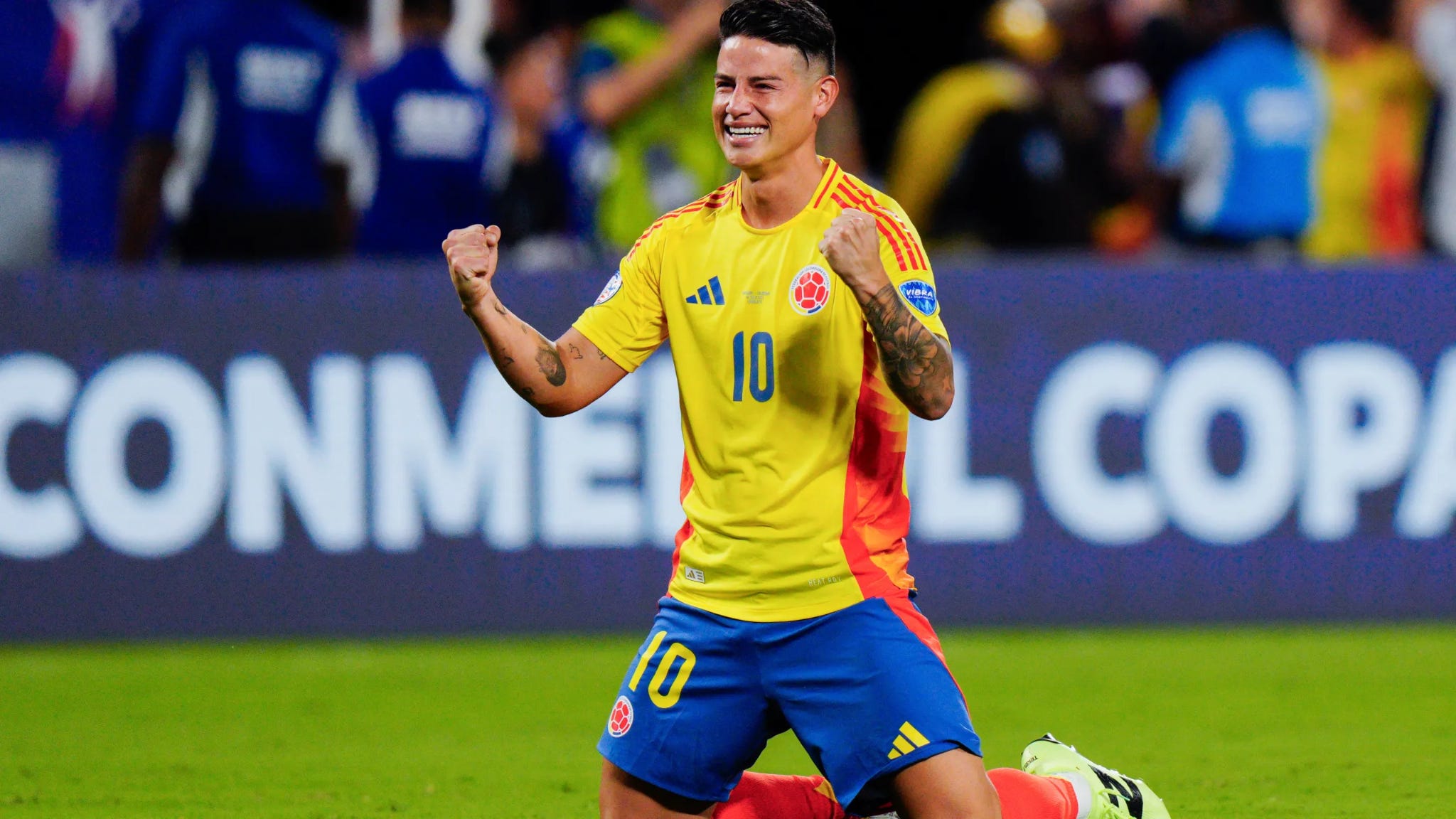
Legend and Captain: James Rodríguez
Born in Cúcuta, Rodríguez was identified as a prodigy almost immediately. He made his professional debut at 14, moved to Argentina as a teenager, and arrived in Europe with Porto at just 18 years old. Elegant, technically gifted, and blessed with extraordinary vision, Rodríguez could seemingly put the ball anywhere he wanted, whether shooting or passing. Then came the 2014 World Cup. At just 22 years old, Rodríguez produced one of the greatest individual World Cup performances I, and anyone below a certain age, have ever seen. He was the standout player in virtually every match Colombia played, scoring six goals and providing two assists. His stunning volley against Uruguay remains one of the greatest World Cup goals ever scored.
He secured a massive move to Real Madrid, where he won two Champions Leagues and two La Liga titles. He was good there. He was good at Bayern Munich. He was good at Everton. And then he became something of a journeyman. Many people describe Rodríguez as a disappointment. I think that’s unfair. He was an immensely talented footballer whose greatest misfortune was producing one of the greatest tournaments in football history at age 22. Once you’ve reached that height, almost everything else looks lesser by comparison. At 34 he is no longer the player he once was, but he remains a wonderfully gifted footballer and a hugely important figure for Colombia. Across 126 appearances, he has scored 31 goals and created countless more.
Star: Luis Díaz
One of the best wingers in the world, Díaz was allowed to leave Liverpool, though Bayern Munich did pay £75 million for the privilege. After scoring 17 goals during Liverpool’s title-winning season, Díaz moved to Germany and promptly won another league title while scoring 26 goals in all competitions. At 29, he somehow appears to be getting even better.
The immensely likable winger, of Wayuu heritage, is blisteringly fast, but reducing him to pace alone would be doing him a disservice. Díaz is excellent in one-on-one situations, dangerous in front of goal, relentless in his pressing, and capable of turning a match with a moment of brilliance. Golden Boot winner at Copa América 2021 and a key figure in Colombia’s run to the final in 2024, Díaz will finally make his World Cup debut despite already having earned 73 caps. If Colombia are to make a deep run, he will be at the heart of it.
One to Watch: Luis Suárez
Not the biting Uruguayan. I realize that perhaps 5% of my audience will understand that reference. The Colombian Luis Suárez has taken a long and winding route to the top. After years of loans and reserve roles around Europe, he finally exploded into life with Almería in Spain. The 6-foot-1 striker scored 27 goals in Spain’s second division, earning a move to Portuguese giants Sporting CP. He rewarded their faith by scoring 38 goals in all competitions.
A direct, aggressive forward, Suárez combines strength, pace, and intelligent movement. He is constantly looking to get in behind defenders and attack space, making him a nightmare matchup for centre-backs. Remarkably, he has only played 11 times for Colombia, such has been the speed of his rise. At this World Cup, he could become one of the breakout stars of the tournament.
Group Predictions
Colombia: 2 Wins, 1 Draw — Qualified
Portugal: 2 Wins, 1 Loss — Qualified
DR Congo: 2 Draws, 1 Loss
Uzbekistan: 1 Draw, 2 Losses
Group L Storyline
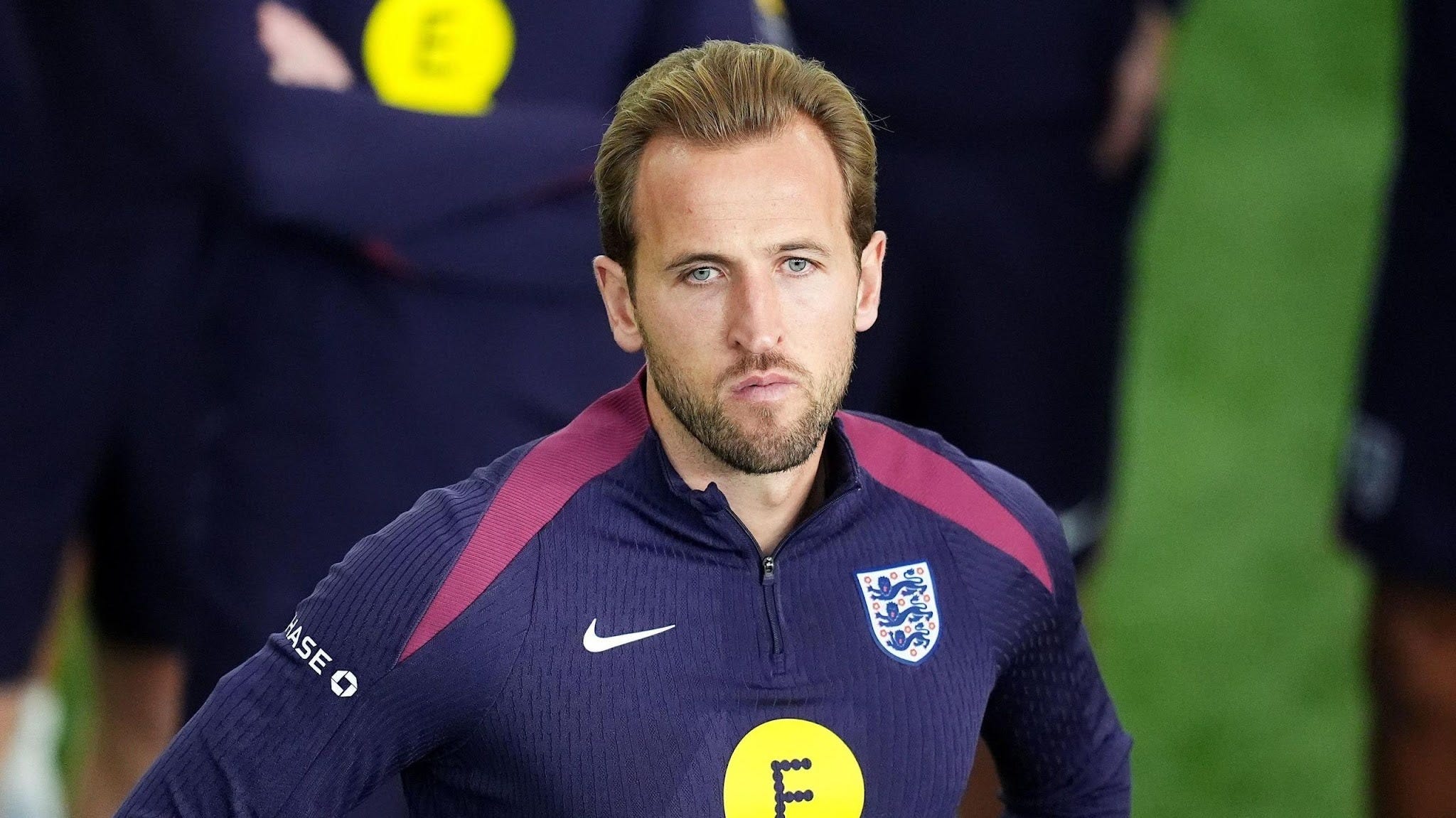
IT’S COMING HOME! Can the English, inventors of the world game, bring home their second World Cup sixty years after their first, and can they conquer the United States 250 years after losing their colony? Probably not. But this is a very good team, ranked fourth in the world and unbeaten in qualifying. They have, however, looked less than convincing in friendlies this year. As my brother adequately put it a few minutes ago, football is better when England are good, so long as they don’t actually win.
Elsewhere in the group, there is a country that has reached two World Cup finals since England last did: Croatia. The small Balkan nation continues to punch absurdly above its weight. Ghana’s Black Stars are here as well, having strolled through qualifying despite recent struggles at major tournaments. They possess far more quality than their 74th-place ranking suggests. Finally, there is Panama, the United States killers, having knocked the USMNT out of both the Gold Cup and Nations League in consecutive years. A veteran squad of largely unheralded players, but one that knows exactly how to play and win together. It is a group that should provide England with excellent tests before what they hope will be a deep run... or a spectacular implosion.
Best Stadium: AT&T Stadium
The immense and awe-inspiring home of the Dallas Cowboys is an altar to American capitalism… Ah, I can’t write about the same fucking things anymore.
What to Eat
See above. Fill your pie hole with whatever you like.
Best Dressed
For the Three Lions, Nike went traditional, which for a country renowned for its conservatism makes a lot of sense. The England home kit appears at first glance to be a standard white base with red and black accents, the Three Lions crest and Nike logo proudly displayed on the chest. I am told there are subtle English symbolic designs woven throughout the fabric, but they are so muted I genuinely cannot make them out. The mostly bright-red away kit follows the same approach. This time, however, I can at least identify some of the heraldic imagery and lions hidden within the pattern.


Nike also works with Croatia, and there should never be any mistaking Croatia. They are the team with the red-and-white checkerboard. Their home kit remains exactly that, with a white stripe running down the centre separating the checkered pattern. To quote the website I’m using, and I genuinely snorted when I read this:

“You cannot remove the symbolic implications – how the maestros of the Croatian national team take your defenses away, piece by piece in calculated, masterful manner. How they progress up the checkered board in unison, every move a masterpiece until... checkmate.” Shut the fuck up. The deep-blue away kit is essentially the same design, replacing white with blue and red with black. That’s about all there is to it.

Puma outfits Ghana, and the Black Star features prominently, dominating the chest of the white-based home shirt. To me, it looks like the Black Star is Spider-Man and the red, yellow, and green streaks are his webs shooting out. Or, to be less infantile, they represent the famous Kente cloth, a handwoven textile tradition renowned for its intricate patterns and symbolism. To my credit, Ghanaian folklore holds that hunters learned this weaving technique after watching Anansi the Spider weave, directly inspiring the shirt. So take that. The away shirt is a rich golden yellow with traditional symbols incorporated into the design, green accents along the sides, and a red collar. A very solid effort.


Reebok, which I thought went out of business, outfits Panama. They have produced two excellent throwback kits. The home is red with blue-and-white jacquard collars and sleeve trim, while the away is white with the same detailing and tasteful gold accents. Simple, but not boring. I appreciate the clean, traditional looks of England, Croatia, and Panama, but Ghana takes it.


England (The Three Lions)
The joint-oldest national team in the world, founded in 1872, England are in the midst of one of the most prolonged periods of excellence in their history. After winning on home soil in 1966, they failed to build on that success. They missed two World Cups in the 1970s, finished fourth in 1990, and then spent the 2000s comfortably underachieving with the most talented generation the country has ever produced. Then came a humiliating group-stage exit in 2014 and the infamous loss to Iceland at Euro 2016. From that low point emerged another apparent golden generation. They surprised everyone by reaching the semi-finals in 2018, finished runners-up at both Euro 2020 and Euro 2024, and pushed France to the limit in the quarter-finals of the 2022 World Cup.
Many of the players from that generation have failed to live up to expectations. Yet many key figures remain, including England’s all-time leading scorer, who is playing the best football of his career at 32. Surrounding him is an excellent mix of stars in their prime and talented young players representing the future. England went unbeaten in qualifying and are undeniably one of the strongest squads in the tournament. Yet friendlies mean something, even if very little, and England have been distinctly unconvincing in their three matches this year.
Manager: Thomas Tuchel
Occupying one of the most scrutinized jobs in world sport, described by the English press as “the impossible job,” is a man who could not care less about public perception. Thomas Tuchel. The fiery 52-year-old German was a defender whose playing career ended at 25 due to chronic knee injuries. For years he worked as a bartender before receiving his opportunity from another coach at this World Cup: Austria manager Ralf Rangnick.
From there he became one of the key figures in the development of modern German football. Tuchel built his reputation at Mainz before moving to Borussia Dortmund, PSG, Chelsea, and Bayern Munich. Rarely does he stay anywhere long, thanks to his combustible personality. Tactically flexible, Tuchel builds systems around his players rather than forcing players into rigid systems. His teams seek to dominate possession, overload central areas, and aggressively counter-press when possession is lost. A former player once called him a dictator. Tuchel probably took it as a compliment. Since taking over on January 1st, 2025, which happens to be my birthday, though I can find no connection between the two events, he has won 77 percent of his matches.
Legend, Captain, Star: Harry Kane
A few honorable mentions. One time England and longtime Liverpool Captain Jordan Henderson, despite thoroughly torching his reputation with a move to Saudi Arabia after years of being a vocal supporter of LGBT rights. His explanation that he would help end homophobia in the country convinced nobody. Still, he fought his way back into the squad and deserves credit for that. Declan Rice has developed into one of the finest midfielders in the world. Hard-working, immensely likable, and already capped over 70 times at just 27, he is a cornerstone of this side and now a Premier League winner. Then there is Jude Bellingham. Exceptionally talented, technically brilliant, capable of influencing games from virtually any midfield role. His relatively poor season at Real Madrid was largely the fault of circumstances rather than the player himself. But none of them can compare to Harry Kane.
The Londoner with the gloriously English accent is one of football’s most likable stars and one of its best. Never blessed with elite athleticism, Kane transformed himself through intelligence, relentless work, diet, and training. Once a thoroughly traditional number nine, he evolved into a complete forward capable of creating as well as scoring. Released by Arsenal as a youngster for being “a bit chubby,” he spent years on loan from Tottenham before finally getting his chance in 2014. The rest is history.
He scored 280 goals in 435 appearances for Tottenham, making Spurs relevant for nearly a decade. Given Tottenham’s excellence at avoiding trophies, that alone deserves recognition. After nine excellent seasons, he moved to Bayern Munich, where he became even better. This season he scored an absurd 61 goals in 51 matches.
England’s all-time leading scorer won the Golden Boot at the 2018 World Cup and helped England reach the finals of both Euro 2020 and Euro 2024. His missed penalty against France in 2022 remains one of the defining moments of that tournament. At 32, this may be his final World Cup, although given his professionalism, I would not rule out another. I will always root against England. I can never bring myself to root against Harry Kane.
One to Watch: Jordan Pickford
I could have chosen Arsenal’s Bukayo Saka, now a Premier League champion and one of England’s most creative attacking players. I could have chosen young box to box midfielder Kobbie Mainoo, whose composure and technical quality belie his age. Instead, I am choosing our final goalkeeper: Jordan Pickford.
It’s remarkable that Pickford has never represented one of England’s traditional superclubs. Instead, he has spent virtually his entire career with Everton. Yet for almost a decade he has been England’s unquestioned number one. An excellent shot-stopper, brave to a fault, emotional, loud, and chaotic, Pickford wears his heart on his sleeve. He shouts, gestures, and occasionally engages in a bit of gamesmanship, though not quite on Emiliano Martínez’s level.
Despite never playing for one of England’s glamour clubs, he has been a rock for the national team, earning over 80 caps and delivering repeatedly on the biggest stages. He is also an outstanding penalty saver. And knowing England, they are almost certainly going to need him.
Croatia (Kockasti – The Checkered Ones)
With one of the most distinctive looks in world football, modeled after the heraldic Croatian checkerboard, this is a shirt no supporter wants to see lining up against their team. That is because a nation of fewer than four million people has become perhaps the greatest overachiever in international football.
Since qualifying for their first World Cup in 1998 and finishing third, Croatia have appeared at every World Cup except 2010 and every European Championship except 2000. More remarkably, they have finished runners-up and then third at the last two World Cups. The golden generation is aging, but the players who remain are still immensely talented, experienced, and mentally resilient. Around them is another crop of stars in their prime and younger players proving that Croatian football is not disappearing anytime soon. Ranked 11th in the world and having marched through qualification, Croatia will be a difficult opponent for anyone in this tournament.
Manager: Zlatko Dalić
Along with the man who beat him in the 2018 World Cup Final, Zlatko Dalić is one of the most experienced managers at this tournament, and one of the best. A defensive midfielder during his playing career, spent entirely in the Balkans, Dalić immediately moved into coaching upon retirement. He built his reputation in Croatia, Albania, Saudi Arabia, and the UAE, doing consistently excellent work far from football’s spotlight.
In 2017, after Croatia stumbled through qualification, he was handed the national team job. Dalić publicly stated he would only remain manager if Croatia qualified for the World Cup. If they failed, he would accept dismissal without complaint. That was nine years ago. Since then, Croatia have reached a World Cup Final, finished third at another World Cup, and remained one of the most consistently difficult teams in international football. Dalić has lost only two World Cup matches as manager, a final and a semi-final. At 59, he is without question the greatest manager in Croatian football history and one of the most respected at this World Cup.
Legend and Captain: Luka Modrić
An honorable mention first for Ivan Perišić. The versatile 37-year-old winger is second all-time in both appearances and goals for Croatia. A tireless worker, excellent in attack and defense, a natural leader, and the scorer of six World Cup goals, Perišić would be the obvious choice for legend in almost any other Croatian generation or team at this world cup.
But Croatia’s greatest-ever footballer, the captain, who will surpass 200 appearances during this tournament, Luka Modrić remains the defining figure of Croatian football. He was the first player not named Lionel Messi or Cristiano Ronaldo to win the Ballon d’Or in eleven years.
Even at 40 years old, it is difficult not to call him Croatia’s star player. A diminutive midfielder, Modrić is one of the great playmakers of the 21st century. After starring for Dinamo Zagreb, he moved to England with the aforementioned losers, Tottenham Hotspur. Like many arriving in the Premier League, he needed time to adjust, but quickly became the maestro around whom Spurs rebuilt themselves. His performances earned a £30 million move to Real Madrid. Like in England, Modrić was initially mocked in Spain. Marca infamously named him the worst signing of the season.
Then he spent the next decade making that look stupid. The headband-wearing little Croat, who, sorry, is never winning any modeling contests, became the heartbeat of one of the greatest club sides in football history. His tactical intelligence, passing range, dribbling ability, vision, and mastery of the “pre-assist” made him indispensable. At club level he was often the unsung hero. For Croatia, he has always been the hero. The Golden Ball winner at the 2018 World Cup, where he orchestrated Croatia’s remarkable run to the final, and the Bronze Ball winner in 2022, Modrić’s leadership, composure, and brilliance have defined the greatest era of Croatian football.

Star: Joško Gvardiol
The masked defender with the broken nose became one of the stories of the 2022 World Cup. At just 20 years old, Joško Gvardiol was arguably the standout young player of the tournament. Unfortunately for him, after weeks of brilliance, he ran into Lionel Messi in the semi-final. That experience did not go especially well. Messi repeatedly twisted him inside out as Argentina dismantled Croatia on their way to lifting the trophy.
Many players would have been defined by that moment. Gvardiol has moved beyond it. Now 24, he is one of the finest defenders in world football. While Manchester City’s failure to win the Premier League over the last two seasons has surprised many (hi), it is certainly not because of Gvardiol. He was named City’s Player of the Year last season and was outstanding again this year before suffering a broken shinbone in January. Remarkably, he recovered in time for the World Cup. Strong, intelligent, athletic, technically gifted, and comfortable in possession, Gvardiol is everything modern football asks of a centre-back. He excels at traditional defending while possessing the ball-playing ability of a midfielder. Simply put, he is one of the best in the world.
One to Watch: Martin Baturina
While no player can compare to Luka Modrić, Martin Baturina offers a glimpse of what Croatia’s future might look like once their legendary captain finally steps aside. Like Modrić before him, Baturina emerged from Dinamo Zagreb before earning a move to a stronger league. The 23-year-old became one of the breakout stars of Serie A with Como.
On the shores of Europe’s expensive playground, Baturina’s technical quality flourished. Smooth on the ball, excellent in tight spaces, and gifted at finding the decisive pass, he quickly became the creative engine of a side that shocked many by qualifying for the Champions League. Already capped 18 times by Croatia, Baturina represents the next generation of Croatian midfield excellence. If Croatia are to make another deep run, his creativity will be vital in supplying chances to veterans such as Andrej Kramarić, Ante Budimir, and Ivan Perišić.
Ghana (Black Stars)
Named after the Black Star of Africa, the symbol adopted from the shipping line founded by Pan-Africanist Marcus Garvey, the Black Stars carry one of the most recognizable nicknames in international football. Ghana are appearing at their fifth World Cup, having first qualified in 2006 and now making four of the last five tournaments. Their golden generation was excellent, reaching the quarter-finals in 2010 and were heartbreakingly close to becoming the first African nation to reach a World Cup semi-final, a certain Uruguayan ensuring that no Ghanaian will ever forget that night. Four-time African champions Ghana have a proud footballing tradition. Recent years, however, have been less encouraging.
They crashed out in the group stage of the last two AFCON tournaments they qualified for and failed to qualify for the most recent edition altogether. They strolled through a weak qualifying group to reach this World Cup, but the vibes are not great. Ghana have lost five of their last six friendlies, and all five defeats came against teams that qualified for this tournament. If you’re like me (I’m sorry if that’s the case) and look first at the squad sheet, particularly the attack and midfield, you’ll wonder how this team is only ranked 74th in the world. Then you look at the defence, the goalkeeping situation, and the results over the last year, and it starts to make sense.
Manager: Carlos Queiroz
Set to manage at his sixth World Cup, more than anyone else, Queiroz first made his name managing Portugal’s youth sides before embarking on one of football’s great coaching odysseys. He coached Portugal before they became a power, led South Africa to a World Cup, and gained renown as a trusted assistant to Sir Alex Ferguson at Manchester United and later at Real Madrid.
Returning to Portugal for the 2010 World Cup, he oversaw a talented side featuring Cristiano Ronaldo, though they underperformed and exited in the Round of 16. From there he moved to Iran, becoming the longest-serving coach in the nation’s history. Between 2011 and 2019 he won roughly 60 percent of his matches and guided Iran to two World Cups. A handful of less successful jobs followed before he returned to Iran for the 2022 World Cup. After a season managing Oman, he was appointed Ghana manager in April with the task of guiding the Black Stars through this tournament. The vibes aren’t great, but experience is not lacking on the touchline.
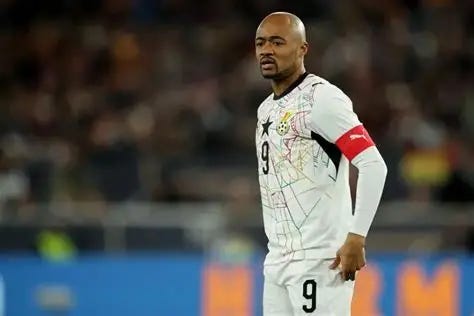
Captain and Legend: Jordan Ayew
Tied with his brother André for appearances entering the tournament, Jordan Ayew will become Ghana’s all-time most-capped player with his first appearance here. Frankly, I’m surprised 36 year old André wasn’t called up purely for the vibes.
The sons of Ghana’s most talented footballer, Abedi Ayew, both carved out impressive careers of their own. André may have possessed the greater natural talent, but Jordan has been the more durable and productive player. Standing six feet tall and now 34 years old, Ayew has scored 34 international goals and spent much of his career performing valuable, often unglamorous work as a forward capable of operating across multiple positions. He played at a high level in Ligue 1 with Marseille and then spent years in the Premier League with Swansea, Aston Villa, Crystal Palace, and Leicester City.
Reviled by Leicester supporters after suffering back-to-back relegations, Ayew is hardly responsible for the club’s immense dysfunction. Released this summer, he arrives at the World Cup representing both his country and, perhaps, auditioning for one final move. Regardless of what comes next, he has already secured his place in Ghanaian football history.
Star: Thomas Partey
At his peak, Thomas Partey has been one of Africa’s finest midfielders. The 6-foot-1 box-to-box midfielder spent years performing at the highest level with Atlético Madrid, winning La Liga and the Europa League, before moving to Arsenal where he remained an important player for several seasons. Strong, athletic, intelligent, and capable in both defensive and attacking phases, Partey provides virtually everything Ghana need in midfield. When he plays well, Ghana are a significantly better side.
However, his football career now exists alongside serious legal allegations. Partey has been charged with multiple counts of rape and sexual assault involving several women in London. The legal process remains ongoing, and he maintains his innocence. As always, everyone is entitled to due process, but the case hangs heavily, especially as more cases emerge. It is frankly disturbing his career has been allowed to continue with little consequence given the severity of the allegations, their number, and their details.
One to Watch: Antoine Semenyo
Born in London and of Ghanaian descent, Antoine Semenyo worked his way up from non-league football with Highworth Town to scoring the winning goal in an FA Cup Final for Manchester City. That is not a normal career trajectory. Never viewed as a prodigy, Semenyo developed through hard work. At 6-foot-1 he combines pace, strength, and impressive technical ability. Establishing himself as a starter for Bristol City in the Championship was an achievement in itself, but he kept improving.
His rise continued with Bournemouth in the Premier League before earning a £64 million move to Manchester City midway through last season. Rather than looking overwhelmed by the step up, he looked entirely at home, scoring 11 goals in 27 appearances and quickly becoming one of City’s most dangerous attacking players. Despite 34 caps, he has scored only three goals for Ghana. If the Black Stars are going to escape this group, they will need his pace, directness, and creativity to translate into consistent end product on the international stage.
Panama (Los Canaleros — The Canal Men)
Wrapping us up with another excellent nickname, Los Canaleros arrive at only their second World Cup. Their first appearance came in 2018, where they were largely the whipping boys of the tournament, conceding 11 goals and scoring just twice. But that wasn’t how Panama saw it. Simply qualifying was a national triumph. When Felipe Baloy scored Panama’s first-ever World Cup goal during a 6–1 defeat to England, the celebrations from the traveling Panamanian fans drowned out everything that had come before.
Eight years later there is overlap with that squad, but this is a far more experienced and organized side. Over the last few years Panama have become one of CONCACAF’s most annoying opponents, repeatedly frustrating and defeating the region’s traditional powers. They have beaten the United States twice in major competitions in recent years and enter the tournament ranked 33rd in the world. Most casual fans won’t recognize many names on the roster. Truthfully, many regular football fans won’t either (hi again). But this is a veteran team that knows exactly how it wants to play and has spent years proving it belongs on this stage.
Manager: Thomas Christiansen
No, he is not Panamanian. Born in Denmark to a Spanish mother, Christiansen represented Spain internationally and enjoyed a respectable playing career as a striker before moving into management. The 53-year-old built his coaching résumé through solid work in Cyprus and Belgium, with a less successful spell in England mixed in, before taking charge of Panama in 2020.
His first World Cup qualifying campaign ended in disappointment. Panama performed admirably but were eliminated by the United States late in the process. Christiansen and his players clearly remembered that experience. Since then, Panama have beaten the Americans three times in four meetings, with the lone defeat coming in a friendly. He has steadily transformed Panama from regional underdogs into a genuine threat, and qualification for a second World Cup is the reward.
Captain and Legend: Aníbal Godoy
With 159 caps at the age of 36, Aníbal Godoy is Panama’s most-capped player and one of the defining figures in the history of their national team. A defensive midfielder by trade, Godoy occupies one of football’s least glamorous roles. He doesn’t score goals. He doesn’t produce highlight reels. What he does do is win the ball, organize the midfield, and make life miserable for opponents.
Since debuting in 2010, he has become the heartbeat of Panama’s national side. He captained the team to the 2023 Gold Cup Final, helping eliminate the United States before ultimately falling to Mexico. Still performing at a high level with expansion side San Diego FC in MLS, Godoy remains central to everything Panama do.
Star: Amir Murillo
Defenders rarely get star billing, and full-backs even less often, but Amir Murillo earns it. The 30-year-old has reached a level of club football few Panamanians have, starring for Anderlecht and Marseille in the Champions League, and now in Turkey. A modern full-back in every sense, Murillo combines athleticism, technical quality, and tactical intelligence. Standing six feet tall, he is dangerous going forward while remaining reliable defensively. Having earned nearly 100 caps and scored nine international goals, Murillo is Panama’s best player and one of its most experienced.
One to Watch: José Luis Rodríguez
Known as “Puma” for his speed, José Luis Rodríguez provides something Panama’s veteran-heavy squad occasionally lacks: pure explosiveness. At 27, he is actually one of the younger regulars in the side. They are old, or more kindly, experienced. His pace has taken him to Europe and later Liga MX, where he has established himself as an effective winger.
Rodríguez is not a prolific goalscorer, but Panama do not need him to be. His job is to stretch defenses, create counterattacking opportunities, and punish teams that commit too many players forward. Against stronger opponents, that ability could be invaluable.
Group Predictions
England — Two wins, one draw (Qualified)
Croatia — One win, two draws (Qualified)
Panama — Two draws
Ghana — One draw
World Cup Predictions
Did I really need to painstakingly write about each and every team in a 48-team tournament? No. No, I didn’t. But it was fun, and I don’t regret a second of it. Writing about the same stadiums and food over and over again? Yes. Yes, I absolutely regret that.
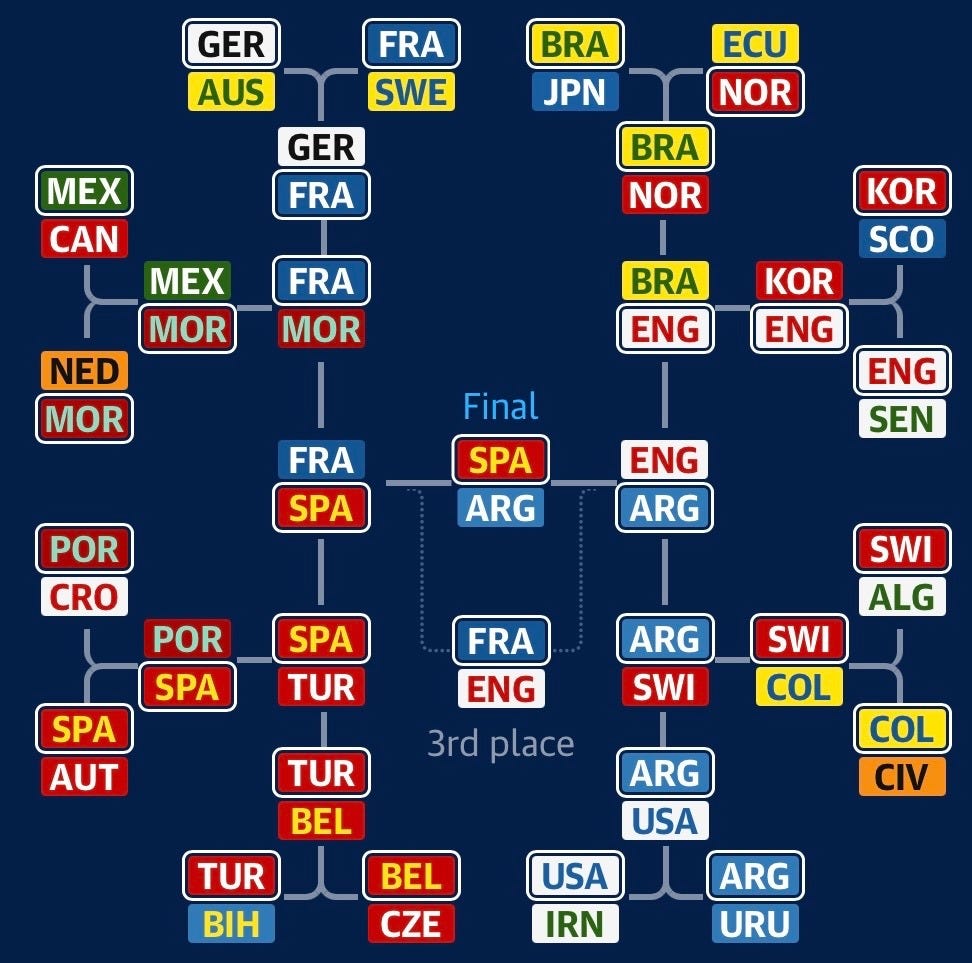
Now, onto the predictions. In Group A, I have South Korea topping the group, though honestly, they and Mexico are interchangeable and both should advance comfortably. Czechia sneaks through as a third-place qualifier. In Group B, Switzerland comfortably win the group as the most talented and consistent side. An injury-hit Canada use home advantage to get through, while Bosnia’s resilience sees them advance as well.
In Group C, I have Morocco stunning Brazil and winning the group. Brazil still advance in second, and Scotland find a way through. In Group D, Türkiye finish first ahead of the United States. I have read several predictions that had the Americans winning the group because, and quote, “Turkey’s defence can be vulnerable.” Sure. But have you fucking watched the United States lately? Australia scrape together enough points to qualify as well.
In Group E, Germany finally return to the knockout rounds for the first time since lifting the trophy in 2014. Ecuador and Côte d’Ivoire also advance. Sorry, Curaçao. That means that after five groups I’ve already picked five third-place teams to go through, and that trend continues in the fascinating Group F, where the solid but unspectacular Netherlands finish first, while both Japan and Sweden advance. Japan could easily win the group, though.
Group G is straightforward. Belgium and Iran advance comfortably, leaving Egypt and New Zealand behind. In Group H, Spain and Uruguay progress with little fuss, provided no Uruguayan decides to punch a Spaniard. Group I is about as close as a 48-team World Cup gets to a Group of Death. France win it with one victory and two draws, while both Senegal and Norway advance.
Group J sees all three A’s qualify, in order: Argentina, Austria, and Algeria. In one of my bigger surprises, Colombia edge Portugal for first place in Group K on goal difference, though the Portuguese qualify comfortably as runners-up. Finally, in Group L, England and Croatia advance with relatively little drama. Take a breath, Aidan.
Round of 32
In the fake Round of 16, South Korea overcome Scotland on penalties after a bruising 1-1 draw, while Mexico exorcise some demons by beating Canada 2-0. Switzerland dispatch Algeria 2-0 in typically meticulous Swiss fashion.
In the blockbuster match of the round, Brazil defeat the Netherlands in a game that sends the collective heart rate of every Brazilian through the roof. It’s 2-2 after 120 minutes, with Neymar coming off the bench in extra time to equalize before converting his penalty in the shootout.
Morocco are frustrated by Japan, who grind out a 1-1 draw and force penalties. There, Morocco’s experience, and Bono (the goalkeeper, not the Irish singer; why would he be playing for Morocco?), prove decisive.
Türkiye blast past Bosnia in a match with absolutely no ethnic or religious undertones whatsoever. In another entirely football-related fixture, the United States edge Iran 2-1 thanks to a stoppage-time winner from Brenden Aaronson.
Australia make life difficult for Germany, but a late own goal seals a 2-0 German victory. Ecuador’s defensive excellence is undone by the world’s best striker. Erling Haaland scores a hat-trick as Norway win 3-1 and announce themselves to casuals around the globe.
In a battle of flair, Colombia edge Côte d’Ivoire 3-2 in the most entertaining game of the round. At the other end of the spectrum, Belgium score twice early against Czechia and spend the next hour professionally killing the game.
France receive an early scare from Sweden fuckboi striker Viktor Gyökeres, but respond with three unanswered goals. Spain are tested by a disciplined Austria, but a Lamine Yamal worldie opens the scoring before two late goals make the final scoreline look far more comfortable than the match actually was.
In the most physical and outright violent game of the round, Uruguay sees red and falls 2-0 to Lionel Messi and Argentina. In a rematch of 2022, Senegal give a much better account of themselves against England. Ismaïla Sarr burns past Nico O’Reilly to open the scoring, sending England fans racing to social media to explain how much they hate football. Harry Kane equalizes from the penalty spot before Eberechi Eze, earning redemption after his Champions League penalty miss, scores the winner in extra time.
In another excellent match, Portugal eliminate Croatia on penalties, ending Luka Modrić’s World Cup career and prompting Cristiano Ronaldo to celebrate as though he has already won the tournament.
Round of 16
Mexico’s curse continues as Brazil samba past the hosts 3-1 in a match closer than the scoreline suggests. In an Iberian derby, Spain defeat Portugal 2-1. Ronaldo’s final chance at a World Cup disappears, along with several million tears.
The most entertaining match of the round sees Türkiye and Belgium combine for a glorious 3-3 thriller. Arda Güler scores a 25-yard curling masterpiece that becomes the goal of the tournament, and the Turks advance after Romelu Lukaku misses in the shootout.
Argentina embarrass the hosts in front of President Donald Trump, winning 3-0 without Messi appearing to break a sweat. Switzerland frustrate Colombia in a 1-0 game featuring approximately six scoring chances. A Swiss header from a corner in the opening stages proves enough.
England have a relatively comfortable evening against South Korea, winning 2-0 in a match that feels closer than it looks. Morocco and Norway trade blows in a 2-2 classic before Ayoub El Kaabi scores in the 111th minute to seal a dramatic 3-2 victory.
Finally, France continue their recent tournament dominance over Germany, winning 2-1 with Kylian Mbappé finally announcing his arrival after a quiet start by scoring both goals.
Quarter-Finals
In the blockbuster tie of the last eight, France continues Brazil’s decades-long underachieving relative to their history. A first-half stalemate is shattered by quick-fire goals from Kylian Mbappé and Ousmane Dembélé. Desculpa, Ju.
Spain become the first team to truly quiet Türkiye’s young stars, winning 2-0. Lionel Messi converts a stoppage-time penalty to edge Argentina past Switzerland 2-1. England wins a World Cup penalty shootout in a tense 1-1 draw with Morocco.
At this point, any prediction that doesn’t have one of France, Spain, England, or Argentina winning the tournament is nonsense. One of them will almost certainly be eliminated much earlier than expected. It’s the World Cup; weird things happen, but one of those four is lifting the trophy.
Semi-Finals
The two best teams in the world meet in another classic. To my immense frustration, Spain defeat France 3-2. Mikel Oyarzabal, the unorthodox Basque saint of scoring in big games, once again delivers the decisive moment.
The other semi-final is far uglier. Both captains convert penalties in a tense 1-1 draw that slowly devolves into a defensive stalemate. Penalties feel inevitable. And there, England’s old demons return. Emiliano Martínez makes the crucial save and sends the defending champions back to the World Cup Final.
Third Place Match
France beat England. Nobody cares.
Final
And so we arrive at the biggest game in football, played in the middle of nowhere in New Jersey.
Argentina battles hard, but the world’s best team lifts the trophy. Spain win their second World Cup with a 2-1 victory orchestrated by the best teenager (player) on Earth, Lamine Yamal, who takes home the Golden Ball as the tournament’s best player. God, I hope I’ve jinxed them.
Thank you for bearing with me through all of this.
I genuinely hope you enjoy this World Cup as much as I will.
Unless France crashes out in the group stage and the United States somehow wins the whole thing, and then the President makes it all about himself, and how he has made American Soccer great again, then I will be miserable.
Love you.
I've got my eye on your predictions