2026 World Cup Preview Part 1: Groups A,B,C
Football, Food, Fashion, Fun!

I am by no means a sports writer, and at this point, I have built up enough of an audience to unpretentiously reference having one, and I’m not entirely sure my audience, you reading this, will care.
This will not be a technical breakdown, something more akin to what you could find on The Athletic, nor will it be the kind of amateur analysis you get from the idiots on ESPN or FOX Sports, who only ever watch football/soccer when they have to every four years. Instead, this will be written by me, a knowledgeable lover of the sport, as a guide to this year’s World Cup, hosted by three nations: principally the United States with 60 matches, Mexico with 28, and Canada with 16.
Now, as with anything, the World Cup is a political tool, and the President of the United States has become butt buddies with the sycophantic idiot president of Fédération Internationale de Football Association, a historically, and presently, horribly corrupt institution that sucks up to dictators. There is a lot to be said about the problems with World Cups: the massive white-elephant stadiums built for tournaments that later rot into nothing; the human rights abuses of host nations; the sky-high ticket prices; the lack of public transit; and the number of countries at this World Cup whose fans will either not be allowed to attend or will have to pay exorbitant sums just to enter this country and then buy an exorbitant ticket. All of these are real problems with the World Cup.
But the World Cup is the biggest sporting event in the world. Not game, the Super Bowl is bigger, but event. And it brings people together like nothing else. People who otherwise never care about the sport watch, and it can unite a country like little else can. So, to give you a taste of the World Cup when you watch, or simply to entertain you, here is my World Cup Viewing Guide.

Group A storyline: The only group to have most of its games played in Mexico, save for one in Atlanta, naturally revolves around Mexico itself. One of the more open groups in the whole tournament, it would not be surprising to see Mexico, South Korea, or even the Czech Republic top the table. Mexico will have the pressure and advantage of home crowds, South Korea brings their mix of grit and star power, and the Czechs have the sort of disciplined side that can grind out results against anyone. South Africa, meanwhile, is the dark horse. In their first World Cup appearance since hosting the tournament sixteen years ago, they find themselves in a group where one upset could realistically be enough to sneak into the knockouts.
Best Stadium: Seen above is the storied Estadio Azteca, which, because we cannot have nice things, is now officially the Estadio Banorte. Sitting at an altitude of 2,200 meters (7,200 feet) in Coyoacán, Mexico City, the longtime and iconic home of the Mexican national team will host two of Mexico’s group games. This is one of the true cathedrals of world football: Pelé lifted a World Cup here, Maradona scored both the “Hand of God” and the Goal of the Century here, and now another generation gets its turn. Rest assured, in those two games, most of the 87,523-capacity crowd will be among the most passionate fans on earth, with the noise and smoke and chants making the stadium feel far larger than it already is.
What to eat: I have never been to Mexico City, or Guadalupe, or, well, any part of Mexico, but if you do go, you should get a tamale: corn dough wrapped in husk and filled with chicken, cheese, spices, sauces, and everything else that is good in the world. Preferably buy one from someone who has been making them longer than you have been alive. Then grab a pan dulce for dessert and a coffee strong enough to wake the dead.
Best Dressed: It’s Mexico. It usually is. Adidas gets gold stars for the hosts, with bombastic Azteca-inspired motifs running through the green-and-red home shirt, while the white away kit, trimmed with green and red and stamped with Somos México, looks clean without being boring. Unfortunately, as is so often the case for Central and Eastern European nations, Puma has gone with simplicity, that is to say, boring, for the Czech Republic’s home shirt, a very basic red design. The white away, however, with gold accents and detailing inspired by Bohemian crystal, is genuinely quite nice.


Adidas has also done solid work with South Africa: the yellow-and-green home shirt pops, though the supposed tributes to the country’s twelve official languages do not quite come through, and the mismatched shades of green between the home and away kits bother me more than they should. “A lot” is probably the best term for the Republic of Korea’s kits. Nike has gone with a deep red home shirt cut through with lighter tiger-stripe claw marks for the so-called Tigers of Asia, while the away is an extremely loud lavender-and-purple floral mix supposedly inspired by the Joseon dynasty. Again, it’s a lot.


Mexico (El Tri)
Can El Tri finally get beyond the round of 16? They did not even make it there last time, an exceptionally disappointing 2022 World Cup campaign ending when they were eliminated on goal difference. Now, with the expanded format, there is a round of 32 to contend with first. Ranked 15th in the world, Mexico did not have to qualify as hosts, though they did win last year’s Gold Cup, North America, and whoever pays their way in, usually Qatar. Some of their more important players are aging, but there is still enough experience and quality here to carry them through a favorable group, especially with home crowds behind them.
Manager: Javier Aguirre
The 67-year-old is in charge of the national team for the third time. In 2002, surprise, surprise, Mexico reached the round of 16, only to be knocked out by the United States in South Korea in one of the infamous Dos a Cero games. In 2010, they again reached the round of 16, this time losing to Diego Maradona’s Argentina. A well-regarded coach known for stubbornly resilient teams, Aguirre also represented his country as a player at the 1986 World Cup in Mexico, where he was sent off in the losing quarterfinal against West Germany. Forty years on, there is a shot at redemption.
Legend: Guillermo Ochoa
Memo Ochoa is so old that he has been Mexico’s goalkeeper for as long as I have watched the sport. The forty-year-old is in the squad for his sixth World Cup and has not actually played in goal for Mexico in two years. While it is likely that Raúl Rangel of C.D. Guadalajara gets the nod, seeing Ochoa’s glorious flowing locks in goal one last time would be something special. At this point, Ochoa showing up every four years to make fifteen impossible saves against a heavily favored team feels more like a law of nature.
Captain: Edson Álvarez
The rock-solid 6-foot-2 defensive midfielder will eclipse 100 caps for the national team before the age of 29, having captained the side to last year’s Gold Cup title. He has also endured three frustrating years at club level, never quite shining at West Ham, while a loan spell at Fenerbahçe in Turkey saw him sidelined through injury and undergoing surgery in February. Still, he appears fit and ready to go for his country, where he remains the anchor of the midfield.
Star: Raúl Jiménez
While Santiago Giménez plays for the bigger club, and Roberto Alvarado and Alexis Vega are stars domestically, no player may be more important to the squad than the 35-year-old striker. After suffering a brutal skull fracture in a collision with Sideshow Bob (David Luiz) Jiménez faced a long and uncertain road back. But he returned to scoring goals and remaining a beloved figure in English football. His 123 caps and 44 goals rank ninth and third all-time for El Tri respectively, and Mexico will need every ounce of his experience and hold-up play if they want a serious run.
One to Watch: Gilberto Mora
Mexico is no longer quite the prolific talent factory it once was. Problems within Liga MX and the reluctance to send young players abroad have stalled the development of many prospects. Seventeen-year-old Club Tijuana attacking midfielder Gilberto Mora looks like an exception. Already the youngest scorer in club history, Mora has the confidence and skill that immediately stands out. A few positive cameos at the World Cup would almost certainly accelerate the inevitable transfer offers from Europe.
South Africa (Bafana Bafana)
In their first World Cup since hosting in 2010, where they memorably upset France but still went out as Mexico advanced above them on goal difference, South Africa now open the tournament against Mexico in the Estadio Azteca itself. There is a certain poetic symmetry there, and perhaps even a chance at revenge. Ranked 60th in the world, Bafana Bafana are very much the outsiders in the group, though a squad made up largely of domestic players gives them a level of chemistry and familiarity many national teams simply do not have.
Manager: Hugo Broos
Historically speaking, Belgians in Africa are usually bad news, a joke which is extremely unfair to Hugo Broos, who, as far as I can tell, has never been definitively linked to colonial atrocities. The 74-year-old enjoyed a successful playing career with Anderlecht and was part of the Belgian side that finished fourth at the 1986 World Cup. As a coach, he has built an impressive résumé in African football, winning AFCON with Cameroon in 2017 before leading South Africa to a surprise podium finish at the 2023 Africa Cup of Nations and qualification for this World Cup, including an upset over 26th-ranked Nigeria. Broos has already announced he will retire after the tournament.
Legend and Captain: Ronwen Williams
Frankly, it is hard to call anyone here a legend when much of the squad remains relatively unheralded internationally. But if anyone qualifies, it is 34-year-old goalkeeper and captain Ronwen Williams. Like many in the squad, he has spent his entire professional career within the South African Premiership, limiting his international profile. But an outstanding AFCON 2023 saw him named the tournament’s best goalkeeper, included in the Team of the Tournament, and even shortlisted for the world’s best goalkeeper at the 2024 Ballon d’Or awards.
Star: Tebho Mokoena
I would be lying if I claimed to be deeply familiar with most of this South African team; the South African Premiership is neither especially accessible nor renowned abroad. But vice-captain Tebho Mokoena qualifies as a genuine star. The 29-year-old box-to-box midfielder, a teammate of Williams at Mamelodi Sundowns, played an absurd seventeen matches for South Africa in 2024 alone. That run included two knockout-stage goals at AFCON 2023, played in 2024, because football tournaments are incapable of normal scheduling, and three more later in the year. In 2025, he became involved in a genuinely bonkers scandal after appearing in a World Cup qualifier while suspended, resulting in South Africa being handed a 3–0 loss to a team they had actually beaten 2–0. It does not matter now, though, because Mokoena will still be covering every blade of grass at this World Cup.
One to Watch: Mbekezeli Mbokazi
One of the youngest players in the squad, and one of the few to move abroad, Mbekezeli Mbokazi was nominated for Young Player of the Year at the 2025 Confederation of African Football Awards after a strong season with Orlando Pirates, one of South Africa’s biggest clubs. That form catapulted him into a move to the United States, where he has quickly become a starter for Chicago Fire. Still raw but clearly talented, the defender represents the sort of player South Africa desperately hopes can form the backbone of a stronger generation going forward.
South Korea (Taeguk Warriors)
Participating in their tenth successive World Cup, the 25th-ranked team in the world went undefeated in what was, frankly, a fairly easy qualifying group. While another fourth-place finish, when they miraculously (suspiciously), beat Italy and Spain to reach the semifinals in 2002, is likely beyond them, Korea once again arrive with a technically skilled and disciplined side, plus some of the best traveling fans in world football. That combination should see the Taeguk Warriors advance to the knockout rounds for a second consecutive tournament.
Manager: Hong Myung-bo
Widely considered a Korean legend of the game, and one who would take offense to my aforementioned comments regarding the questionable refereeing at the 2002 World Cup, Hong starred at four consecutive World Cups for his country and was one of the standout performers during Korea’s famous run. Now in his second stint managing the national team, and leading them to a second World Cup as coach, the Korean legend hopes to guide his country back toward something resembling that glory.
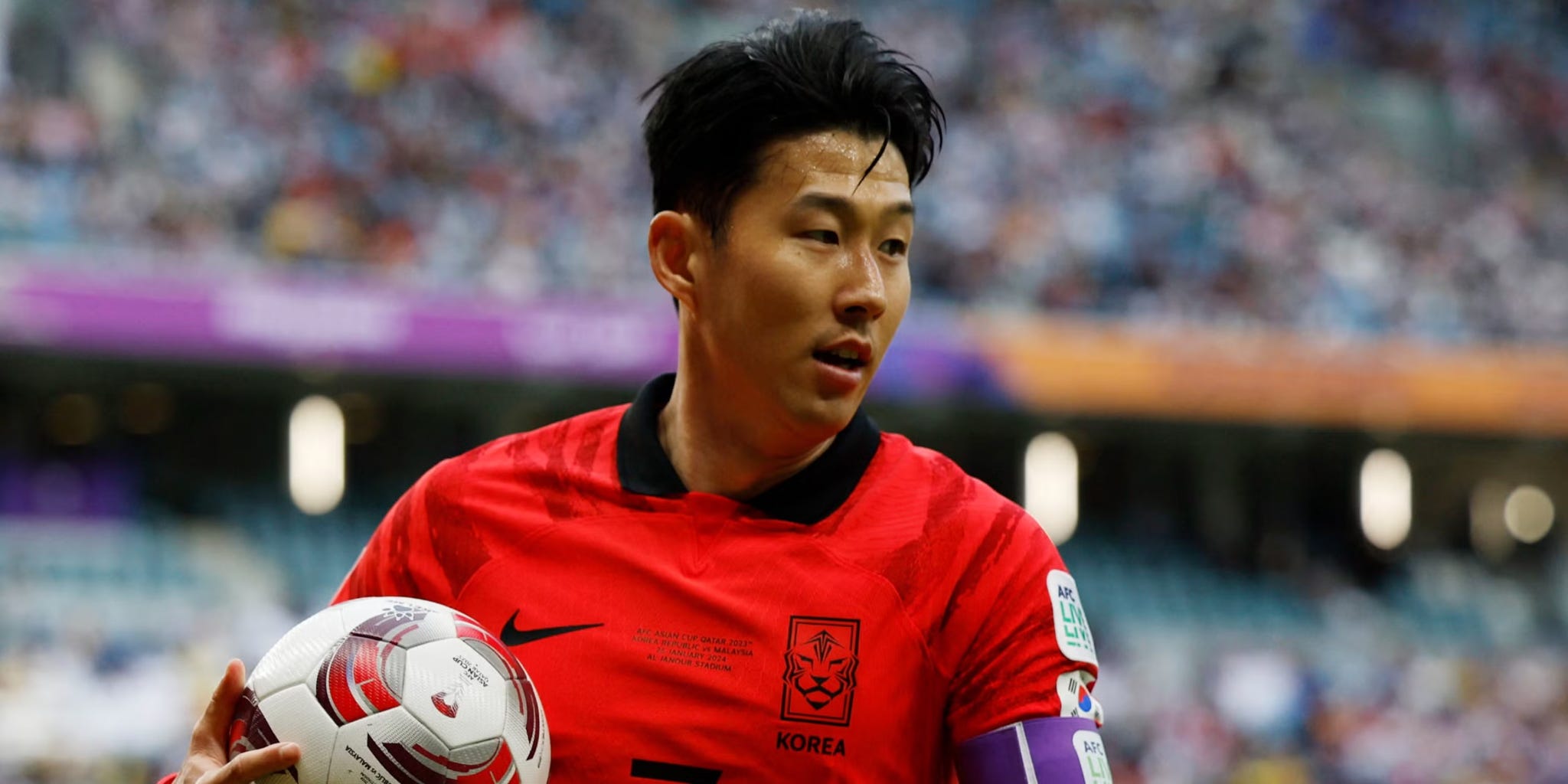
Legend and Captain: Son Heung-min (pictured)
Another legend and national hero, Son Heung-min has been awarded the Order of Sport Merit by South Korea. Aside from the singers of BTS, there is probably not a more widely known or beloved South Korean on earth. One of the rare footballers whom even rival fans seem incapable of disliking, the two-footed attacker with the infectious smile is no longer quite the player he was at his scintillating peak with Tottenham Hotspur in England. Having now moved to LAFC in MLS, the retirement home for many footballing legends, Son nevertheless remains one of the team’s most important players and still entirely capable of producing moments of brilliance.
Star: Kim Min-jae
While Son is more of a star in the celebrity sense, and Paris Saint-Germain’s Lee Kang-in plays for the best club team in the world, no one is more important to the Taeguk Warriors than Kim Min-jae. The 6-foot-3 Bayern Munich centre-back is a genuine man mountain, combining strength, recovery speed, and an excellent passing range. Kim has perhaps not fully hit the heights Bayern expected when they made him the most expensive Asian player in history, but the 29-year-old with 77 caps remains the defensive heart of this team. If Korea are going to make a serious run, it will likely be because Kim spent the tournament erasing opposing strikers from existence.
One to Watch: Yang Hyun-jun
In one of the more experienced, read older, squads at the World Cup, 23-year-old winger Yang Hyun-jun is one of the few younger players representing hope for the future. After winning Young Player of the Year in the K League, Yang moved to Scottish giants Celtic in 2023. It took him time to settle into the physicality and speed of the Scottish game, but this season he emerged as a regular starter, dazzling down the right and helping Celtic steal the title from Hearts on the final day. Yang feels very much like the next generation of Korean football arriving in real time.
Czechia (Nároďák)
As they are officially known by FIFA, Czechia, Czech Republic, qualified the hard way. Finishing second in their qualifying group after being thoroughly outclassed by Croatia, and perhaps hitting an all-time low by losing to the Faroe Islands, the 123rd-ranked team in the world, the 41st-ranked Czechs stumbled awkwardly into the playoffs through Pathway D.
There, however, they rediscovered fight. Against Ireland, the Czechs twice responded after falling behind, including recovering from trailing in the penalty shootout itself, only for goalkeeper Matěj Kovář to make two crucial saves and break Irish hearts. Then against 20th-ranked Denmark, it was Czechia’s turn to blow leads, twice going ahead only for the Danes to equalize. In penalties, one Kovář save and two Danish misses finally sent the Czechs to their first World Cup in twenty years. It was neither graceful nor convincing, but it was undeniably dramatic and full of heart.
Manager: Miroslav Koubek
A Czech through and through, 74-year-old Miroslav Koubek spent his entire playing career in the country and has coached almost exclusively there as well. Hired just before the qualification playoffs, Koubek set his side up intelligently in both matches, one favored, the other the underdog. Now he enters a group where advancement to the knockout rounds, something Czechia has never accomplished at a World Cup as an independent nation, feels genuinely possible.
Captain: Ladislav Krejčí
27-year-old Ladislav Krejčí has had a remarkable rise, only earning his first cap for the national team in 2023. Strong domestic performances and European nights with Sparta Prague earned him a move to Girona during their first-ever Champions League campaign, which ended poorly, before another transfer sent him to Wolverhampton Wanderers in England, where things somehow became even more miserable. The versatile 6-foot-3 defender-midfielder cannot be blamed for either disaster, consistently putting in hardworking performances for club and country alike, including massive goals against both Ireland and Denmark in qualifying.
Krejčí was only recently named captain in bizarre circumstances. Following a 6–0 victory over Gibraltar, a frustrated fanbase booed the team over what they viewed as a lackluster qualifying campaign. The squad, led by captain Tomáš Souček, ignored the supporters entirely after the match, creating a minor national controversy. Souček was quietly replaced by Krejčí, though both remain central figures in what is actually a formidable spine featuring Krejčí, Souček, goalkeeper Matěj Kovář, and of course:
Legend and Star: Patrik Schick
Described as “one of the brightest prospects in international football” when Roma signed the 6 foot 3 striker at 21 in 2017, Schick never lived up to the hype in the Italian capital and was eventually moved on to Bayer Leverkusen in 2020. There, injuries aside, he has flourished, scoring over 100 goals in all competitions and helping Leverkusen capture the Bundesliga and DFB-Pokal during their remarkable domestic unbeaten 2023–24 season.
He has not always been equally prolific for a Czech side that often struggles to provide him service, but his five goals at Euro 2020, tied with Cristiano Ronaldo for the tournament lead, including an outrageous halfway-line strike against Scotland, propelled Czechia to the quarterfinals, their best major tournament finish since Euro 1996. If the Czechs are to surprise people here, Schick will almost certainly be the reason.
One to Watch: Pavel Šulc
Czech Footballer of the Year in 2025, Pavel Šulc left Viktoria Plzeň as the league’s standout player before moving to Lyon, where he has continued to impress. The 25-year-old attacking midfielder possesses excellent close control, a sharp passing range, and a clear eye for goal, including scoring the opener against Denmark in qualifying. In a squad that can sometimes look rigid or overly physical, Šulc is one of the few players capable of creating something elegant out of nothing.
Group Prediction
South Korea — two wins and a draw Q
Mexico — one win and two draws Q
Czechia — two draws
South Africa — one draw
Group B Storyline:
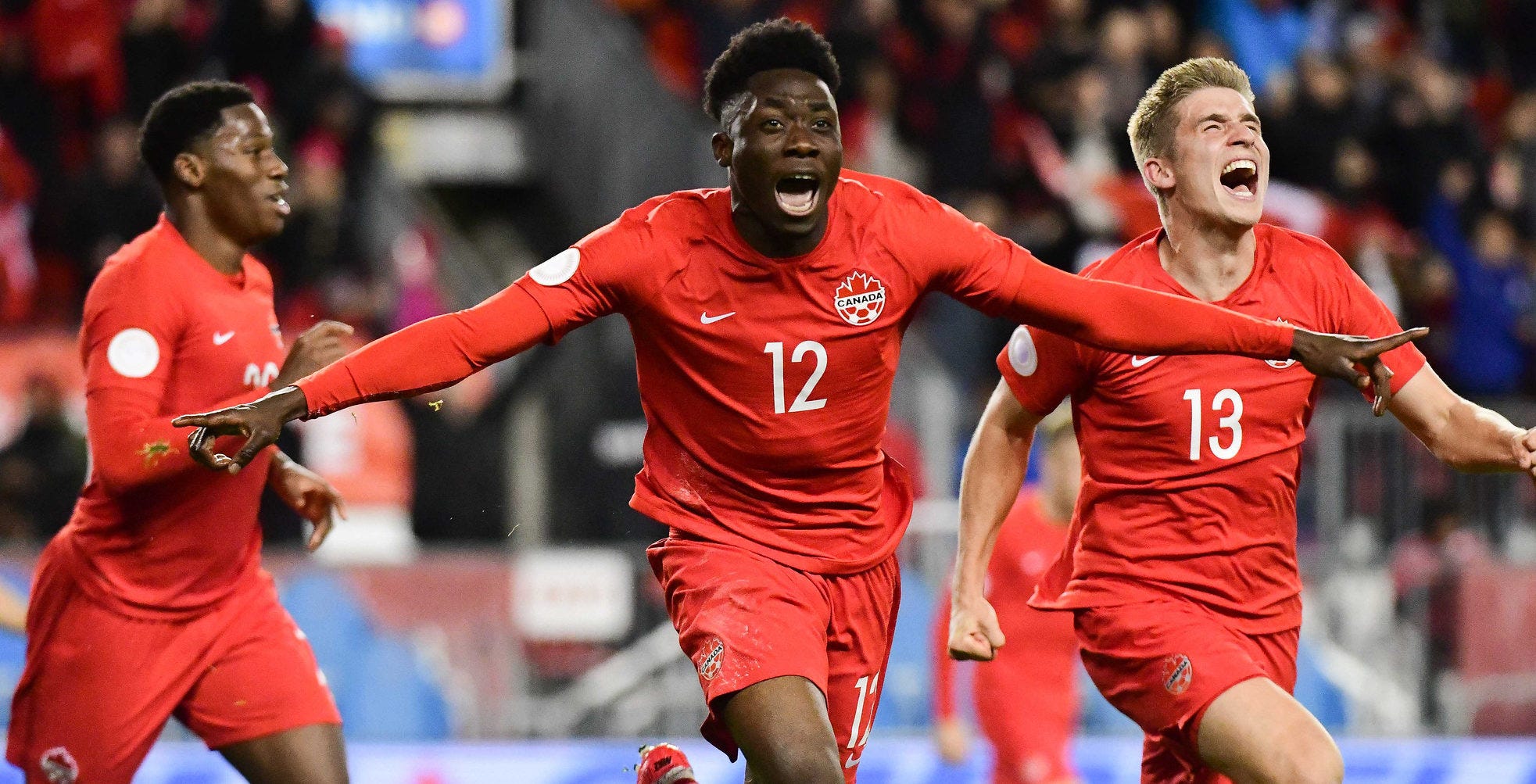
Another group where qualification feels fairly open, though unlike Group A there is most definitely a favorite. The always stubborn Swiss should comfortably qualify and advance to the knockout rounds for the seventh straight tournament. From there, however, the battle for second, and maybe even one of the third place qualifying slots, gets incredibly interesting. Qatar are very much the outsiders. Canada, meanwhile, have made a remarkable rise even in just the last five years, qualifying for their second consecutive World Cup and reaching the final of the 2023 Nations League, while also boasting the most outright star power in the group. But Bosnia and Herzegovina cannot be discounted. They stunned favored Wales in qualifying and then embarrassed Italy, keeping the Azzurri out of a third consecutive World Cup.
Best Stadium:
Not a soccer-specific stadium, because this is America, but Lumen Field in Seattle is one of the most infamous places to play in the other football, American football. Home of the Super Bowl champion Seahawks and MLS side Seattle Sounders, the stadium is famed for its deafening noise levels and genuinely rabid fanbases. It may not be as new or shiny as SoFi Stadium in Inglewood, but with its excellent views of the Seattle skyline and steep stands trapping in sound, Lumen is one of the best venues in the entire World Cup.
That said, I cannot imagine Bosnia vs. Qatar will register on the Richter scale like the stadium’s noise has in the past. The Qataris traveling will be rich oil men, which tends to create a fairly plastic atmosphere, while the Bosnians, though famously loud and rowdy, may struggle to travel in massive numbers given the exorbitant ticket prices and transatlantic costs. Still, if Bosnia score, expect flares, screaming, and several shirtless man hanging from a railing.
What to Eat:
There is so much to choose from here. The American and Canadian Pacific coast will host the majority of these games, save for Canada’s opener against Bosnia and Herzegovina, sorry, I did not mention you earlier, Herzegovinians, in Toronto.
On the coast, fresh seafood is the move: salmon in Seattle and Vancouver, oysters pretty much everywhere, cioppino in San Francisco, though the game is technically in Santa Clara, so hopefully you stay in San Francisco instead of beside a freeway, and ceviche around Inglewood and greater Los Angeles. If you are in Toronto, meanwhile, you are in one of the most multicultural cities on earth, meaning you can realistically eat world-class Jamaican for lunch, Ethiopian for dinner, and drunk poutine at 1 a.m. after the match.
Best Dressed:
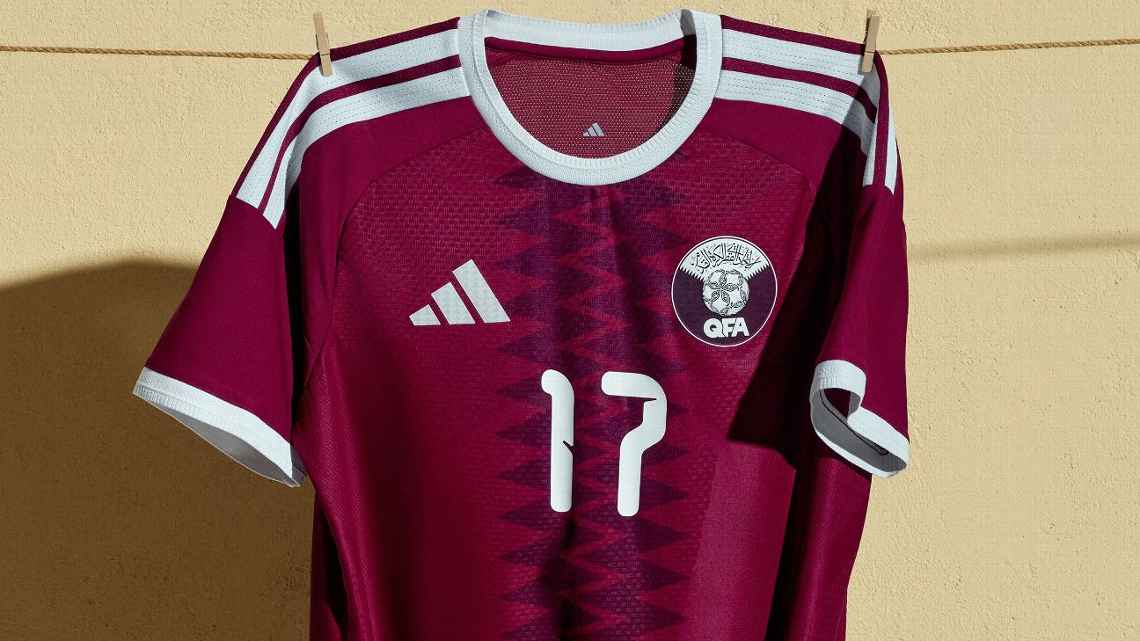
This is not the group for you if you are a fashionista, like me. Qatar once again goes exceptionally plain: a white kit with the Arabic name for Qatar (قطر) printed on the back of the neck, and a deep red home shirt featuring the zigzag pattern from the national flag. Adidas did not exactly empty the creative tank here, though I assume the Qatari checks cleared just fine.

Switzerland’s kits are also very Switzerland. Their Puma-made home shirt is solid red, no fuss, no flair, no fun, just efficient business. Their away kit, however, is a loud neon-green monstrosity that looks less like a football shirt and more like something road crews wear so they do not get hit by trucks.


Bosnia’s kits are produced by Kelme, a company I have genuinely never heard of. Their blue-and-yellow home shirt, reflecting the national colors, and the white-and-blue away are about as straightforward as kits can get. They are not offensive. The nicest thing I can say about them.

By process of elimination, that leaves Canada. Nike’s kits are… fine. The black away has paint-like splatters across it, which I am not a huge fan of, though the hidden maple leaf pattern within the splatter is at least a nice touch. Their alternate white-and-light-grey shirt also forms a subtle maple leaf through the contrast patterning, while the red home kit does the same thing except with red on slightly different red. If you did not know, the maple leaf is the symbol of Canada.


Woof. These are rough.
Canada (Les Rouges / The Reds)
Participating in their first ever consecutive World Cups, Canada, ranked 30th in the world, is arguably the best they have ever been. With two legitimate European stars and several other players of real pedigree, expectations are higher than they have ever been for the national team. Advancing to the knockout rounds for the first time in the country’s history is not just possible, but expected.
That said, depth remains a genuine issue. Still, with three group matches taking place on home soil and a chance to make a sports-crazed nation truly fall in love with football for perhaps the first time, this tournament represents a massive moment in Canadian sporting history. Hockey may still rule the country, but a deep World Cup run could genuinely change the landscape of the sport there for a generation.
Manager: Jesse Marsch
One of the few American coaches to find legitimate success in Europe, Jesse Marsch made his name with Red Bull Salzburg before struggling in bigger leagues with RB Leipzig and later Leeds United in England, where he was often mocked simply for being American. He has rebounded impressively with Canada, setting the team up well tactically and earning considerable goodwill north of the border after publicly denouncing and laughing off U.S. President Donald Trump’s bizarre calls to annex Canada in 2025.
A longtime MLS player who earned two caps for the United States himself, Marsch is now one of the more high-profile coaches at the tournament and will undoubtedly relish the opportunity to overshadow fellow hosts the United States and Mexico. His teams play aggressive, energetic football, which suits this Canadian side perfectly.
Captain, Legend, Star, and One to Watch: Alphonso Davies
Yes, really. Apologies to Canada’s all-time leading scorer Jonathan David, now starring for Juventus in Italy, and to the beloved and versatile Celtic defender Alistair Johnston, but 25-year-old Alphonso Davies somehow qualifies for every highlighted category at once.
The scorer of Canada’s first ever World Cup goal, Davies is one of the great football stories of his generation. Born in a refugee camp in Ghana to Liberian parents fleeing the horrors of the Second Liberian Civil War, his family immigrated to Canada in 2005. Davies first played the sport through an after-school league for inner-city children unable to afford fees, equipment, or transportation. From there, he rose into one of the best left-backs in the world and has spent the last seven years at Bayern Munich, one of the biggest clubs on earth.
Only injuries have prevented him from becoming the best in his position. This past year was again disrupted by fitness issues, but he is healthy now and ready to lead his country into the biggest tournament in the sport. His speed genuinely has to be seen to be believed; defenders often look less like professional athletes trying to stop him and more like people unsuccessfully chasing a bus they just missed. He is nicknamed ‘the roadrunner’ for a reason.
Bosnia and Herzegovina (Zmajevi — The Dragons)
This is only the country’s second-ever World Cup appearance. Their first, in Brazil in 2014, saw Bosnia make a remarkable account of themselves, narrowly losing to eventual runners up Argentina and Nigeria before defeating Iran. For years afterward, it looked as though that would remain the nation’s only appearance on football’s biggest stage. Until now.
Finishing second in their qualifying group, just two points behind Austria, was already a relative achievement for the 65th-ranked nation in the world. Then came the playoffs. Wins over 37th-ranked Wales and, remarkably, 12th-ranked Italy sent Bosnia through in one of the shocks of qualification. Against the Italians, a red card to centre-back Alessandro Bastoni for an utterly daft challenge opened the door, and Bosnia eventually stormed through it on penalties. They now enter a group that is surprisingly open and where a knockout-round appearance is genuinely attainable.
Manager: Sergej Barbarez
Former national team captain Sergej Barbarez, now 54, was an excellent player in his own right: a three-time Bosnian Footballer of the Year who enjoyed a long and successful career in the Bundesliga. As a player, however, he never quite had the supporting cast necessary to guide Bosnia to a major tournament. Now he leads the country into the World Cup as manager.
But it is impossible to discuss a Bosnian of his generation without mentioning the devastating Bosnian War, itself part of the larger Yugoslav Wars following the collapse of Yugoslavia. Barbarez’s father, a Herzegovinian Serb, sent him away to Germany to live with an uncle, both protecting him from the conflict and inadvertently helping launch his football career. That decision drew criticism and even threats against his family. Barbarez later reflected:
“Today, it can be said that my father made the right decision. If I had not gone to Germany, I would have gone to war. Aside from the fact that wars are always meaningless, the question arises: for whom or against what?”
Hard to disagree with him there.
Captain, Legend, and Star: Edin Džeko
Again, apologies for collapsing multiple categories into one player, but 40-year-old Edin Džeko leaves little choice. The 6-foot-4 striker is Bosnia’s all-time leading scorer and most-capped player, as well as one of the greatest athletes the country has ever produced.
Having won the Bundesliga with Wolfsburg and the Premier League with Manchester City, Džeko has spent nearly two decades scoring goals at the highest levels of the sport. Somehow, he is still doing it at forty. He scored the equalizer that forced extra time against Wales and remains the focal point of the Bosnian attack. Having also scored at the 2014 World Cup, Džeko’s experience, positioning, and ability to bully defenders physically will be essential if Bosnia are to advance from what is, once again, a very open group.
One to Watch: Kerim Alajbegović
Born in 2007, which frankly feels offensive, the 18-year-old winger just completed an excellent season with Red Bull Salzburg, earning himself a move to Bayer Leverkusen in Germany. Fast, direct, and fearless, Alajbegović already looks like one of the brightest young players Bosnia has ever produced.
More importantly, he has already shown immense nerve for the national team. Called upon during both playoff penalty shootouts, the teenager calmly buried penalties past Ireland’s Mark Travers and then one of the best goalkeepers in the world, Gianluigi Donnarumma, helping send Bosnia to the World Cup.
Qatar (العنابي — The Maroon One)
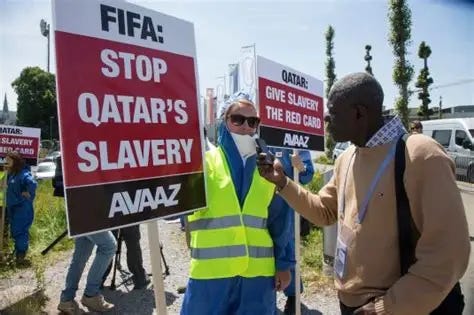
I would hate to be seen as picking on Qataris themselves, but I am absolutely picking on the Qatari state for its human rights abuses. Qatar hosted the last World Cup after winning the bid through what was, to put it mildly, a notoriously corrupt process. This is a desert country that at one point in arguing for hosting the World Cup claimed its scientists could manufacture floating cloud systems to shield stadiums from the heat. Those same stadiums were built under the kafala sponsorship system, where migrant workers, predominantly from South and Southeast Asia, were often recruited under dubious conditions, forced to pay illegal fees just to arrive, and then paid less than promised once there. Human rights restrictions in the country more broadly are also well documented.
There are many problems in every country, including my own, for those inclined toward whataboutism, but Qatar’s hosting of the 2022 World Cup remains a black mark on the sport. And fairly or unfairly, that baggage still hangs over the national team itself, particularly given the large number of naturalized players brought in to accelerate the state’s sports-washing footballing project. All of it tends to eclipse the football.
Manager: Julen Lopetegui
The highest-profile coach in the group, 59-year-old Spaniard Julen Lopetegui had a respectable playing career as a goalkeeper, serving as a backup for both Real Madrid and Barcelona before becoming far more notable as a manager. After coaching Spain’s youth teams and helping develop some of the nation’s brightest talents, he moved on to Porto, the Spanish national team, Real Madrid, Sevilla, Wolverhampton Wanderers, West Ham, and now Qatar.
On paper, that résumé sounds fantastic. In practice, the actual trophy cabinet is a bit thinner than you might expect. His Europa League triumph with Sevilla in 2020, which doesn’t mean much as it is the competition Sevilla seem biologically engineered to win (seven titles in the last twenty years), is the only major trophy of note on his CV. What Lopetegui has become better known for is leaving jobs in dramatic or awkward circumstances. Spain famously sacked him on the eve of the 2018 World Cup after he secretly agreed to join Real Madrid, while Wolves supporters grumble about him walking away and leaving the club holding the bag. Paid through the nose, it somehow feels fitting that such a man now leads Qatar.
Captain and Legend: Hassan Al-Haydos
An actual Qatari, born in Doha, Hassan Al-Haydos has spent his entire career in his home country, winning eight Stars League titles with Al Sadd while scoring 137 goals in all competitions. For the national team, the 35-year-old is Qatar’s all-time appearance leader with a remarkable 184 caps, the seventh-highest total in international football history. Three of the men above him will appear later in this World Cup, and more importantly, later in this preview series.
Star and One to Watch: Almoez Ali
One of several naturalized players in the squad, 29-year-old Almoez Ali is Qatar’s all-time leading scorer with 60 goals in 125 caps, an excellent return and actually better than his domestic scoring record with Al-Duhail. Born in Sudan, Ali became the center of controversy during the 2019 Asian Cup when the United Arab Emirates lodged a formal complaint questioning his eligibility to represent Qatar, arguing he had not continuously lived there for the required number of years after turning eighteen. Ali claimed his mother was actually born in Qatar, and the complaint was dismissed without explanation.
Ali is one to watch partly because, frankly, I do not know many of these players particularly well, but also because he enters this tournament with something to prove. He failed to score at the 2022 World Cup on home soil, where Qatar produced what is, statistically speaking, the worst performance by a host nation in tournament history. That is not even an insult; it is just true. Rest assured, Ali will be determined to change that this time around.
Switzerland (A Whole Lot of Nicknames in Four Official Languages)
Having largely sleepwalked through qualification without ever really being tested, Switzerland once again arrive as one of the most quietly reliable teams in international football. This, however, is a side in transition. Two of the most important figures from what has arguably been a golden age of Swiss football have retired internationally: longtime goalkeeper Yann Sommer and the little magician Xherdan Shaqiri.
Even so, Switzerland remain formidable. They have reached the round of 16 in the last three World Cups and the quarterfinals in the last two European Championships. Sommer’s gloves have been more than adequately filled by the excellent Gregor Kobel, but the perennial Swiss problem remains the same: where exactly are the goals supposed to come from? Still, this is a team absolutely nobody will want to face in the knockout rounds.
Manager: Murat Yakin
Like many in this Swiss side, Murat Yakin is the child of immigrants who found a new home in Switzerland. He and his brother Hakan both represented the national team. The 51-year-old now manages the national side after successful spells coaching some of Switzerland’s biggest domestic clubs. As manager, Yakin guided Switzerland to the 2022 World Cup, which ended badly in a heavy defeat to Portugal. More impressively, he led them to the quarterfinals of Euro 2024, where they were only eliminated on penalties by eventual runners-up England. Yakin’s teams understand exactly what they are: organized, disciplined, and perfectly happy to grind opponents down. Switzerland rarely beat themselves.
Legend and Captain: Granit Xhaka
The son of ethnic Albanian parents from Kosovo who fled during the Yugoslav Wars, Granit Xhaka is now Switzerland’s all-time appearance holder and one of the great redemption stories in modern football. Once considered among Europe’s brightest midfield prospects, Xhaka endured years of criticism at Arsenal, where being played out of position and his own volcanic temperament culminated in the infamous moment where he flipped off supporters and screamed “fuck off” after being booed off the pitch. It looked like a relationship beyond repair.
Instead, he rebuilt himself completely, becoming a cult hero in North London before moving to Bayer Leverkusen in 2023 and helping lead them through one of the greatest seasons in football history. Internationally, his career has been just as dramatic. His missed penalty at Euro 2016 helped send Switzerland home to angry jeers, while his thunderous goal against Serbia at the 2018 World Cup, celebrated with the Albanian double-eagle gesture, sparked fury in Serbia and instantly entered Balkan football folklore. Nobody in the Balkans likes Serbia very much. Now 33, the left-footed defensive midfielder remains the heartbeat of Switzerland and one of the most respected leaders in the tournament.
Star: Manuel Akanji
While Xhaka is the soul of the team, and Gregor Kobel might be it’s most gifted in his position, nobody in the squad has reached the heights in club football that Manuel Akanji has. The son of a Nigerian immigrant, the 6-foot-2 centre-back became a cornerstone of Manchester City’s Premier League and Champions League-winning sides before later starring for Inter Milan during another excellent campaign in Italy.
Akanji is one of those defenders the English call a “rolls-royce.” Calm in possession, physically dominant, and intelligent positionally, he has also been immense for Switzerland in major tournaments. Across their last four competitions, he has anchored a backline that consistently frustrates elite opponents. He will relish the battles awaiting him against the forwards in Group B.
One to Watch: Noah Okafor
Long tipped for a breakout into genuine stardom, Noah Okafor has had a slightly uneven career trajectory so far. Like Akanji, he is the son of a Nigerian immigrant, and after emerging at Red Bull Salzburg he earned a major move to AC Milan. Unfortunately, he never truly settled there and has similarly struggled to fully establish himself for the national team.
But the versatile 6-foot-1 forward may finally have found a home at Leeds United in England, where his goals helped the club secure a credible 14th-place finish in their first season back in the Premier League. With Switzerland still searching desperately for consistent attacking production, this tournament presents Okafor with a perfect opportunity to become the player many in Swiss football believed he would be years ago.
Predictions
Switzerland — two wins and a draw (higher goal difference)
Canada — two wins and a draw
Bosnia and Herzegovina — one win
Qatar
Group C Storyline:
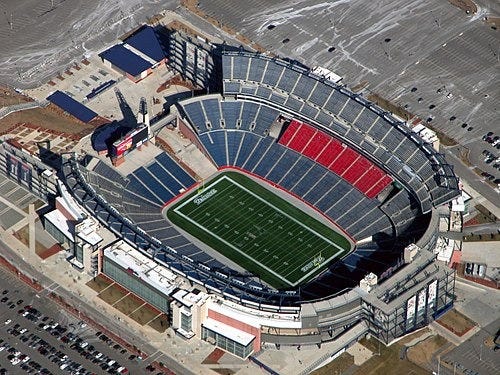
That two of this group’s games will be played in the greatest state in the U.S. of A, Massachusetts, is of course the real story here. Massachusetts will host five matches at Gillette Stadium in Foxborough, a nice town located in the middle of absolutely nowhere, where the traffic is so bad it may qualify as one of the worst abuses at this years World Cup.
But no, the actual story begins with Brazil, the biggest story at virtually every tournament they enter. Is this finally the year the Seleção break through again? They are in one of the driest stretches in the country’s footballing history by their absurd standards, and while they are not the outright favorites to win the tournament, they arrive with an excellent blend of youth, veterans, flair, and defensive solidity. Plus, Neymar is back, which guarantees drama.
From there, Scotland and Haiti return after long absences from the World Cup stage, while Morocco arrive still basking in the bizarre glow of one of the strangest footballing controversies in recent memory. The Moroccans lost the 2025 AFCON final to Senegal, only to later be awarded the title almost two months afterward because Senegal walked off protesting what they viewed as (and were) catastrophic refereeing decisions. Brazil are deservedly the favorites here, but both Scotland and Morocco are more than capable of making things uncomfortable for them.
Best Stadium: Hard Rock Stadium
It is not Gillette, which is genuinely nice, nor MetLife, which will host the final and is also nice but somehow equally stranded in a transit nightmare. That leaves Lincoln Financial Field in Philadelphia, solid but awkward to reach, Mercedes-Benz Stadium in Atlanta, shiny and sleek in the way all modern American stadiums are, and Hard Rock Stadium in Miami.
Recently renovated and home to the NFL’s Miami Dolphins, Hard Rock gets the nod. Like virtually every major stadium in the United States, it is aggressively corporate: clean, polished, comfortable, and mostly devoid of the personality you find in South American or European football grounds. It is also, again like many American World Cup venues, not purpose-built for football, which creates its own issues with sightlines and atmosphere. Miami in the summer during the World Cup is difficult to beat as an experience. The place will be humid enough to drown in, the football will be played in swamp-like heat, and the crowd will likely contain half of South America. It is still the best stadium.
What to Eat:
Apologies to Foxborough, but I cannot really count the Boston food scene if the stadium is sitting beside a highway and several chain restaurants.
Philadelphia famously offers cheesesteaks, which are good, though perhaps the most overrated sandwich on earth. Atlanta brings soul food, one of the great culinary traditions in America: fried chicken, collard greens, grits, black-eyed peas, cornbread, and enough butter to shorten your life expectancy. Worth it.
Miami, meanwhile, is probably the food capital of this group. Excellent Cuban cuisine, incredible seafood, outstanding ceviche, and enough Caribbean and Latin American influence to make almost every meal absurdly good.
Best Dressed:
Nike and its subsidiary Air Jordan understood the assignment with Brazil. The famous canary yellow camisa amarela with green trim remains one of the most iconic shirts in sports and almost impossible to ruin. The away shirt, a dark blue and teal combination, works well enough even if it lacks the same magic. Brazil kits always carry an unfair advantage because the history attached to them does half the work.


Scotland’s home shirt, made by Adidas, is another kit that is almost impossible to mess up: deep navy blue with white trim and subtle detailing around the collar, finished with the rampant lion crest. The away shirt is the riskier idea, an almost peach-pink design inspired by the national flower, the thistle. In lesser hands it could have looked ridiculous, but Adidas actually pulled it off surprisingly well.


Haiti, unfortunately, suffer the fate many poorer nations do at international tournaments. Their kits, produced by Saeta, another company I had never heard of before, are fairly generic collections of red, white, and blue.


The alleged African champions, Morocco, however, are my pick for best dressed in the group. Their home shirt combines deep red and green beautifully in a way that mirrors the national flag without overdoing it, while the cream-and-gold away kit is genuinely excellent, featuring intricate geometric detailing inspired by Moroccan art and architecture. Elegant without trying too hard, which is rare in modern kit design.


Brazil: Seleção (“The Selection”)
Brazil arrive after a deeply underwhelming qualifying campaign by their standards, finishing fifth in qualification on goal difference and a full ten points behind rivals Argentina, who beat them twice, including a humiliating 4–1 thrashing in Buenos Aires. The disastrous run ultimately cost manager Dorival Júnior his job. In response, the Brazilian federation finally landed its dream appointment: Carlo Ancelotti, likely the best manager at the tournament and certainly the most decorated. Brazil remains perhaps the single most scrutinized team in all of sports, representing a football-mad nation with impossible expectations and a dressing room full of massive personalities and egos. Even Ancelotti’s legendary calm may be tested here.
Manager: Carlo Ancelotti
A manager so important he already got mentioned before his own section. That is how enormous Don Carlo’s reputation is. After a strong playing career as a midfielder for Roma, AC Milan, and Italy, Ancelotti built one of the greatest managerial résumés in football history. League titles in Italy, Spain, England, France, and Germany. Five Champions League trophies. The man practically collects silverware as a hobby. If he manages to finally drag Brazil back to World Cup glory, calling him the greatest manager in football history would stop sounding like hyperbole and start sounding obvious.
Legend: Neymar
For as talented and storied a career as Neymar has had, many around the world, including in Brazil itself, would still say he never quite reached the heights expected of him when he first exploded onto the scene at Santos, dazzled alongside Messi and Suárez at Barcelona, and carried Brazil at the 2014 World Cup before injury cruelly ended his tournament. Massive-money moves to Paris Saint-Germain and later Saudi Arabia, an outright disaster, combined with constant injuries, robbed much of the last decade of its momentum. But now Neymar is back where it all began at Santos, playing well and back in the national team setup for the first time in three years. Importantly, this is not merely sentimental nostalgia. Even at 33 and no longer in peak physical condition, Neymar remains outrageously gifted.
For Brazil, he has almost never truly failed. He simply never got them over the finish line. That said, he remains deeply polarizing. His creativity and improvisation feel like one of the last surviving remnants of joga bonito, the “beautiful game” identity that once defined Brazilian football. But alongside that comes the entourage, the theatrics, the petulance, and the diving. Dear god, the diving. Watching Neymar can oscillate wildly between witnessing genius and wanting to launch your television through a window. Still, if he somehow helps win Brazil a World Cup, none of that will matter.
Captain: Casemiro
Casemiro built a legendary career with Real Madrid, winning three league titles and five Champions Leagues before making a massive-money move to Manchester United. Unfortunately for him, Manchester United has spent the better part of a decade functioning as a football-themed psychological experiment. Not that much of it was Casemiro’s fault. In fact, his final season there has quietly been something of a resurgence.
The defensive midfielder remains one of the smartest players in world football: calm in possession, positionally elite, dominant in the air, and capable of controlling games through pure tactical intelligence. These are qualities Brazil teams have not always possessed in abundance, which makes Casemiro essential to balancing all the flair around him.
Star: Alisson
I am admittedly treating “star” here as both best player and most important player, but honestly, Alisson qualifies as both. The 33-year-old Liverpool goalkeeper is essentially everything you could ask for in a modern keeper. Excellent with the ball at his feet, quick off his line, commanding in the air, brave, positionally brilliant, consistent, calm under pressure; the list goes on and on. Unlike some elite goalkeepers, Alisson also lacks the exhausting theatrics: no endless time-wasting, no screaming for cameras, no elaborate mind games. He simply stops shots and quietly ruins opponents’ evenings.
A Premier League winner, Champions League winner, and recipient of the 2019 Yashin Trophy as the world’s best goalkeeper, Alisson remains one of the three best keepers on earth. You could reasonably argue nobody else in this Brazil squad is top-three globally at their position. Though…
One to Watch: Vinícius Júnior
One of the best left wingers in the world and a bona fide global superstar, Vinícius enjoyed an absurdly successful start to his career with Real Madrid, winning multiple La Liga and Champions League titles while scoring in two European finals. With the ball at his feet he is electric: explosive acceleration, absurd dribbling ability, impossible agility. Few players on earth are more terrifying in open space.
But he is also one to watch because volatility follows him everywhere. The diving, the arguing, the theatrics, the emotional swings; all of it can become exhausting, and combined with the constellation of egos at Real Madrid, it has contributed to a bizarrely underwhelming couple of seasons for a team with that much talent. At the same time, Vinícius has endured horrific racial abuse throughout Spain, and far too many people have been slow or unwilling to defend him because they find him irritating on the pitch. That is both cowardly and disgusting. Whatever frustrations people may have with his antics, the racism directed at him has been vile, relentless, and indefensible.
Morocco (The Atlas Lions)
I am not sure a team has ever lost so much goodwill so quickly as Morocco. Their run to the World Cup semifinal in 2022, knocking out Spain and Portugal before finally falling to France, made them the first African nation ever to reach a World Cup semifinal. They became the feel-good story not just of the tournament, but of an entire continent.
And then came the fiasco of the 2025 AFCON, which Morocco hosted. Their antics throughout the tournament drew the ire of players, supporters, and neutrals alike, and the farcical ending, losing the final to Senegal only to later be awarded the title on appeal after Senegal walked off protesting genuinely egregious refereeing, turned Morocco from beloved underdogs into something between a laughingstock and a villain overnight. That said, the Atlas Lions are ranked 8th in the world, the highest ranking in their history, and they remain an exceptionally difficult team to play against. Brazil may be the favorites in this group, but it would surprise absolutely nobody if Morocco finished first instead.
Manager: Mohamed Ouahbi
The bespectacled 49-year-old seems like a nice enough bloke. Born and raised in Belgium to a Moroccan Rifian family, Ouahbi never played professionally but steadily built a reputation as an excellent youth coach.
The bigger story, however, is the man not coaching Morocco. Walid Regragui led the country to that historic World Cup semifinal and oversaw their rise to the highest FIFA ranking in their history, only to rather bizarrely resign in March, citing mental exhaustion, pressure, and the fallout from the AFCON disaster. The man who built this Morocco side will not be the one leading it at the World Cup.
Legend: Yassine Bounou
While the man coming next is the bigger star, Yassine Bounou’s heroics at the last World Cup made him a bona fide Moroccan legend. Born in Montreal to Moroccan parents before moving back to Morocco at the age of three, Bounou has carved out an outstanding career for himself in Spain, winning two Europa Leagues with Sevilla, because Sevilla apparently cannot help themselves, and twice being named African Goalkeeper of the Year.
Instead of earning the move to a genuine European giant many hoped for, Bounou headed to Saudi Arabia, which is usually where careers go to quietly stall while bank accounts explode. But his abilities have not diminished at all. Fresh off another AFCON where he was named Goalkeeper of the Tournament, Bounou remains one of the best shot-stoppers in international football and a master of the sort of time-wasting antics and penalty-box theatre that drives opposing fans absolutely insane.
Captain, Star, and One to Watch: Achraf Hakimi
Born and raised in Madrid to Moroccan parents, his mother a cleaner and his father a street vendor, Achraf Hakimi was identified early by Real Madrid’s academy. Unfortunately for him, being stuck behind Dani Carvajal meant opportunities were limited, and after loans and eventual sale, Hakimi has since developed into one of the best right-backs in the world.
While Neymar, Lionel Messi, and Kylian Mbappé arrived at Paris Saint-Germain to much fanfare, enormous wages, and ultimately little European success, Hakimi quietly stayed and became one of the club’s most important players. Since the superstar era imploded, he has been central to PSG finally lifting the Champions League and potentially winning another in the coming weeks.
There is very little Hakimi cannot do. He is an excellent passer, dribbler, and finisher, blisteringly fast, and while not an elite defender in the purely traditional sense, he is more than solid enough while being utterly transformative going forward. He is the heartbeat of both club and country.
Off the pitch, things have occasionally been far messier. His high-profile split from Spanish actress Hiba Abouk became tabloid fodder across Europe, while a 2023 rape allegation resulted in formal charges but, three years later, no resolution. Hakimi was also disciplined alongside several PSG teammates for anti-gay chants after a match celebration.
Haiti (Les Grenadiers — The Grenadiers)
Participating in their first World Cup in 42 years, Haiti are very much the outsiders here, but they possess more quality than many people realize. Yes, the expanded format undoubtedly helped, particularly with three North American nations automatically qualifying as hosts, but Haiti still topped a qualifying group containing Costa Rica, who had reached three of the previous four World Cups and five of the last six overall.
This is an extremely difficult group, but Haiti are energetic, athletic, and fearless enough that it would not be shocking to see them catch somebody sleeping.
Manager: Sébastien Migné
Like much of his squad, Sébastien Migné is French, though he has no Haitian roots. Said plainly, he is white. The 53-year-old played professionally in the lower leagues of England and France before moving almost entirely into African football management, coaching Congo, Kenya, and Equatorial Guinea before taking over Haiti. Remarkably, he has managed much of this job remotely due to the ongoing instability and violence in Haiti itself, making qualification for the World Cup a genuinely admirable achievement.
Captain and Legend: Johnny Placide
Again, like much of the squad, Johnny Placide is French-born. Short for a goalkeeper at just 5-foot-11, the 38-year-old has nonetheless enjoyed a long and successful career bouncing between Ligue 1 and Ligue 2 in France. Placide is by far the most experienced player in the squad, apologies to Duckens Nazon, whose name I am obligated to mention repeatedly because it is fantastic, and remains Haiti’s first-choice goalkeeper heading into the tournament.
Star: Duckens Nazon
There, I said it again.
Haiti’s all-time leading scorer, Nazon’s six goals in qualification played a massive role in getting them here. His club career has been pure footballing journeyman chaos: France, England, Belgium, India, Scotland, Russia, Turkey, and now Iran. The 32-year-old striker may never have settled anywhere for very long, but for Haiti he has consistently delivered goals.
Also, once again, his name is Duckens Nazon.
One to Watch: Wilson Isidor
Like Nazon and Placide, Wilson Isidor was born in France, but unlike them, only recently switched his international allegiance to Haiti, making his debut earlier this year and scoring in just his second appearance against Iceland.
Unlike most of the squad, Isidor now plays at a genuinely high level, the Premier League, after impressing with Sunderland during a surprisingly solid campaign. The 6-foot-1 striker is capable of doing a bit of everything: hold-up play, pressing, running channels, and finishing chances. Also, because I watch the Premier League, he is one of the few Haitian players I have actually seen regularly, and every interview suggests he seems like an incredibly likable guy.
Scotland (The Tartan Army)
Participating in their first World Cup in almost thirty years, Scotland were genuinely excellent in qualification, topping a group containing Denmark and Greece. This is a deeply Scottish team. They are organized, combative, very familiar with one another, and convinced they should have done better at the last two European Championships. Defensively, they are solid and well-drilled. Goals remain the major question. But the player who carried them through qualification has undergone such a bizarre career renaissance that he has somehow become one of the best attacking midfielders in Europe. Ranked 43rd in the world, Scotland will be a miserable draw for anybody.
Manager: Steve Clarke
A decorated right-back during his playing days, Steve Clarke won the FA Cup and Chelsea Player of the Year as a gritty, hard-nosed defender. As a manager, he has become one of the most successful coaches in Scottish history, guiding Scotland to back-to-back European Championships and now their first World Cup in a generation. His teams play exactly the way he wants them to: disciplined, aggressive, emotionally invested, and wearing their hearts on their sleeves. Nobody will accuse Scotland of lacking effort under Steve Clarke.
Captain and Legend: Andy Robertson
At the beginning of his senior career with Queen’s Park in Scotland’s third division, Andy Robertson was stacking shelves part-time while playing amateur football. Today he leaves Liverpool as a Premier League and Champions League winner, a club legend at Anfield, and arguably the greatest Premier League left-backs of his generation.
Robertson worked harder than almost anyone to reach the top. While his technical ability improved enormously over time, his defining qualities have always been his drive, leadership, and an engine that simply never stops running. At 32, he is no longer quite the relentless force he once was, but nobody in this Scotland squad will fight harder for the shirt.
Star and One to Watch: Scott McTominay
If you had told Scott McTominay four years ago that he would one day receive Ballon d’Or buzz and be compared to Diego Maradona in Naples, he probably would have assumed you were high. The 6-foot-3 midfielder, born in England to a Scottish father, spent years at Manchester United being used primarily as a defensive midfielder and utility player, during an era where Manchester United themselves appeared to have forgotten how football worked.
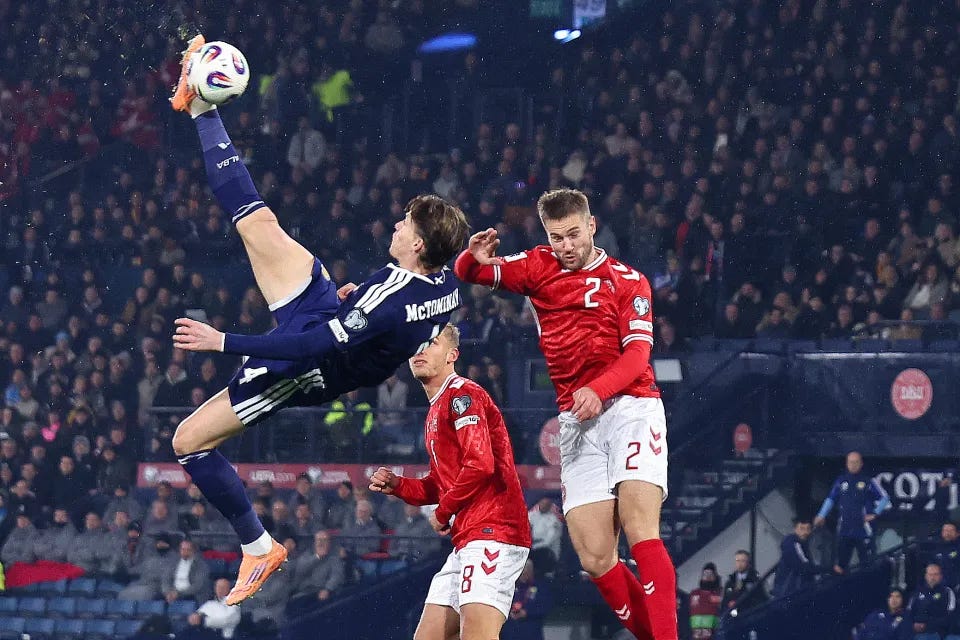
Then came the move to Napoli, and suddenly McTominay transformed into something almost absurd. As the city embraced him, one Neapolitan banner famously declared: “If Maradona is God, Scott McTominay is Jesus.” McTominay led Napoli to a league title, won Serie A MVP honors, and while the club regressed slightly the following season, he did not. His overhead kick that helped send Scotland to the World Cup is exactly the sort of thing Naples supporters have become accustomed to seeing every week.
Group Prediction:
Brazil — two wins and a draw Q
Morocco — one win and one draw Q
Scotland — one win and one draw Q
Haiti
As a Scotsman, I am the eternal pessimist, but I actually think we have a shot at getting out of the group stage for the first time ever. The game order is perfect. Beat Haiti first, get a draw with Morocco, and then face a Brazil team that will have already qualified for the knockouts. A real opportunity here. Great write-up.
nothing beats the camisa amarela💛