Hare-brained History Volume 48: The Bhopal Disaster
Content Warning: There is one very haunting image that will stay with you, but I think it important to include.

Welcome to the 48th installment of Hare-brained History, a blog in which your intrepid host will treat you with absurdities, follies, mind-fucks, and everything in between from the world of history. Today, we are inspired by the fact that my last five, FIVE, blogs have all taken place in the United States of America. SHAME! To remedy that injustice, we are taking a trip exactly 7,743.65 miles (12,462.19 km Marlene) to, for the first time, India. Once again, today we are looking at a case of injustice, this time involving a United States company. We truly cannot escape the global influence of the United States.
41 years ago, over 500 thousand civilians were exposed to toxic gas in what is likely the world’s worst industrial accident. Neither American ownership nor the Indian management responsible for the tragedy was ever justly punished. So today, for the very first time, join me on a trip to the Indian subcontinent, specifically the capital city of Madhya Pradesh in central India, Bhopal, as we explore the Bhopal Disaster.
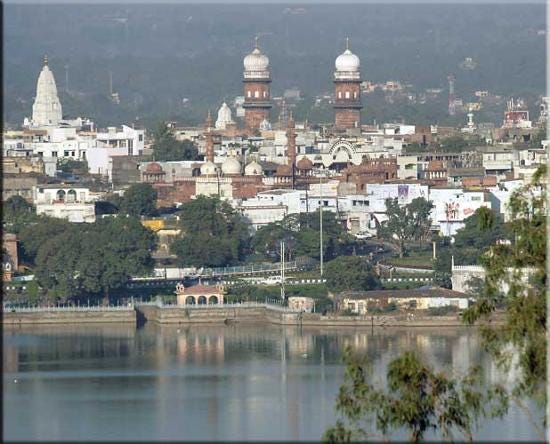
Referred to as the City of Lakes, thanks to the mix of natural and now artificial lakes surrounding it, Bhopal is the 16th-largest city in India. To give you a sense of India’s sheer scale, the last census counted 1,798,218 people living there, which almost certainly means the real number today is much higher.
Once just a small village in the early 17th century, the city as we know it was founded by a Pashtun (what us in the West might lazily call “Afghan”) soldier who went on to become the Nawab of Bhopal, a state within the loose fabric of the Mughal Empire, at its height a Muslim dominion stretching over much of what is now India, Pakistan, and Afghanistan, before the whole thing was folded into British rule. Under the British Raj, Bhopal became the second-largest Muslim-ruled princely state. After Indian independence, the last Nawab wanted to keep Bhopal separate from the newly formed, Hindu-majority Union Government. After a stretch of political turmoil, the Union Government formally took over the Bhopal State on June 1, 1949.
Today, Bhopal is considered one of the most livable cities in India, backed by a strong industrial base, multiple research institutions, and its status as the greenest state capital in the country. That last point… doesn’t mean a whole lot, sorry India, and there’s a pretty good reason for that.
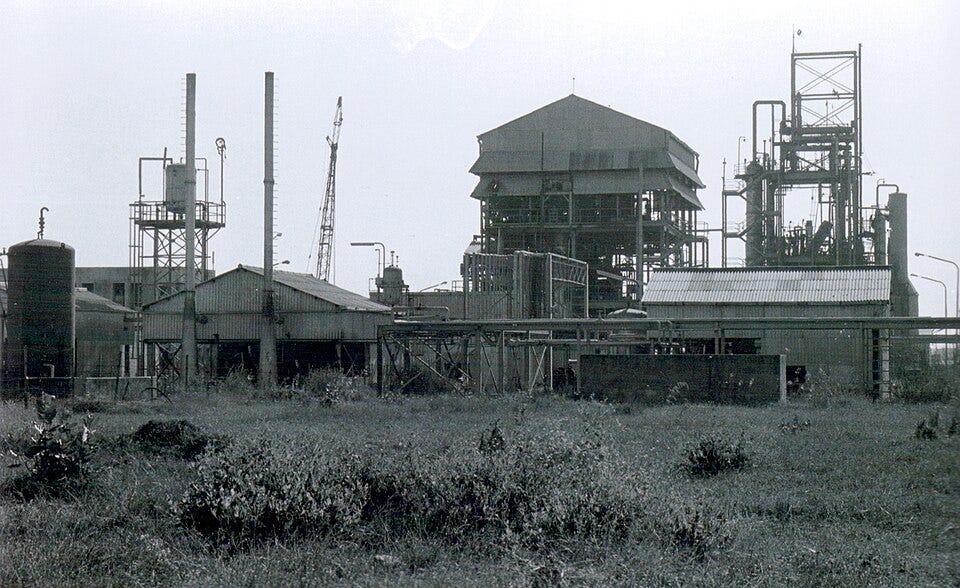
Union Carbide India Limited (UCIL) was founded in 1934 by the Union Carbide and Carbon Corporation, which ultimately held a slight majority stake, alongside Indian investors, including the Government of India, which had significant shares. The American parent company itself was formed in 1917 after a merger of two firms, and it quickly expanded by developing economical methods to manufacture various chemicals, which I absolutely do not understand. This is not Big Brain Science.
What I can tell you is that the company later divested a bunch of consumer brands you definitely know: Eveready and Energizer batteries, Glad bags and wraps, Simoniz car wax, and Prestone antifreeze. Odds are, you use a Union Carbide product every week, maybe every day, whether you realize it or not.
UCIL, under the larger Union Carbide umbrella, made chemical-company stuff: batteries, carbon products, plastics, industrial chemicals, and whatever Bakelite is supposed to be. And, notably, pesticides. How is any of this actually made? Again, fuck if I know. By 1984, UCIL had become the twenty-first-largest company in India, of any kind, with annual revenues of about 2 billion rupees, roughly $170 million in 1980s money.
The Bhopal plant was built in 1969 to produce the pesticide Sevin, Union Carbide’s brand name for Carbaryl, using methyl isocyanate (MIC) as an intermediate. MIC is highly toxic and hazardous, but at the time, this process was standard. In 1979, an on-site MIC production unit was added. The basic chemical process went like this: methylamine (Breaking Bad chemical) reacted with phosgene to form MIC, which then reacted with 1-naphthol to form Carbaryl. And that is how chemicals are made.
It’s worth noting that another major manufacturer, Bayer, which you may know for aspirin, also heroin, and if you’re like me, from their football team, used the same process in 1969. But by 1984, companies like Bayer had already moved to producing Carbaryl without relying on MIC. It cost more but was safer and significantly less hazardous. Guess what UCIL chose not to do? By the early 1980s, demand for the pesticide had dropped, yet the plant continued producing at the same rate, leading to a growing stockpile of unused MIC.
In 1976, two local trade unions filed pollution complaints. In 1981, a worker was splashed with phosgene; panicking, he removed his mask, inhaled the gas in the air, and died three days later. That death pushed 31-year-old local journalist Rajkumar Keswani, a friend of the victim, to start investigating the plant. Union Carbide denied him access and tightly controlled employees, but Keswani managed to find two disgruntled workers who helped him obtain manuals and confidential reports.
After eight months of digging, he published his first article on September 26, 1982: “Bachaiye huzoor, is shahar ko bachaiye”: “Save, please save this city”. In it and in a series of follow-up pieces, he warned, “Wake up, people of Bhopal, you are on the edge of a volcano,” while laying out what he had uncovered about the plant’s failures. What initially caught his eye was the use of phosgene, not unusual in chemical manufacturing but alarming to him because it was one of the gases used in German gas chambers. He was ignored.
Through 1982, 1983, and 1984, leaks proliferated: MIC, chlorine, phosgene, monomethylamine, carbon tetrachloride, sending workers and residents to hospitals with burns, breathing problems, and chemical injuries. None of those sounds good, and they weren’t.
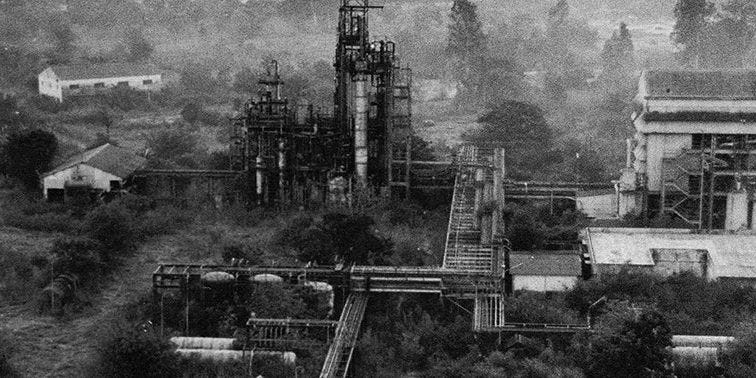
The plant had three underground liquid MIC storage tanks, each with a capacity of 68,000 liters (18,000 gallons Marlene, wait). Regulations required that no tank be filled with MIC more than 50 percent, with the remaining space pressurized with inert nitrogen. By late October, tank E610 had lost the ability to hold most of its nitrogen pressure, meaning the liquid MIC inside could no longer be pumped out. Shortly after, MIC production was halted, and parts of the factory were shut down for maintenance.
This “maintenance” included shutting down the plant’s flare tower, its main safety device. Then, while the flare tower was still down, production of Carbaryl resumed at the end of November using the MIC stored in the two tanks that still worked. On December 1st, workers tried to re-pressurize E610. It didn’t work. By this point, most of the plant’s MIC safety systems were old, poorly maintained, or completely nonfunctional. And then came the night of December 2, 1984.
Water entered tank E610 through a worn-down side pump. The introduction of water triggered a runaway exothermic reaction, basically a chemical chain reaction that rapidly heated up, built enormous pressure, and turned the liquid MIC into gas. Two senior refinery employees noticed the rising pressure, checked the instruments, and dismissed the readings because the numbers were so high they assumed the gauges were broken.
By 11:30 PM, workers were already feeling the effects of MIC exposure and began searching for leaks. One was found around 11:45 PM and reported to the MIC supervisor. The supervisor decided he would deal with it after his scheduled 12:15 AM tea break. Employees were told to keep looking for leaks while they discussed the very obvious problem. Tea break ended at 12:40 AM. By then, the reaction in E610 had escalated to a critical level. The pressure was so intense it cracked a concrete slab above the tank when the emergency relief valve burst open.
All of this was worsened by the fact that the refrigeration system meant to cool the tanks had been shut down, all the freon had been removed, the flare tower was offline, the vent gas scrubber was deactivated. It didn’t have enough caustic soda to treat a leak, even if it had been working.
Within 45–60 minutes, about 30 tonnes of MIC gas, eventually rising to 40 tonnes, escaped into the night air, blowing southeast over Bhopal. A UCIL employee finally triggered the alarm at 12:50 AM. The system was supposed to activate both the plant’s siren and the city’s public alarm. But in 1982, the two alarms had been decoupled, meaning they no longer triggered together. Both sirens sounded briefly, but the public one was quickly shut off. Company policy: don’t alarm the public. Workers evacuated the plant and moved upwind.
Meanwhile, around 1:00 AM, the superintendent of police was alerted by a town inspector that residents a full 2 km (over a mile) away were collapsing. He called the plant twice, meaning someone was still inside, or at least they had taken a radio, and was reassured that “everything is OK.” Finally, at 2:10 AM, someone admitted, “We don’t know what has happened, sir.”
The city hospital was never notified directly by UCIL. When they first heard about a gas leak, they assumed it was an ammonia leak. Then they assumed phosgene. When they were finally told “MIC,” but not “methyl isocyanate,” they were simply confused; they had no idea what MIC even was.
The MIC leak from tank E610 finally stopped around 2:00 AM. Fifteen minutes later, only then, the plant’s public siren was sounded for the first extended stretch. A little after that, an employee finally showed up at police headquarters to report the leak and to say it had stopped. It was the first time Union Carbide publicly acknowledged that anything was wrong.
By that point, most of the city had already been exposed. And they didn’t learn this from warnings, announcements, or evacuation orders. They learned by being exposed to it.
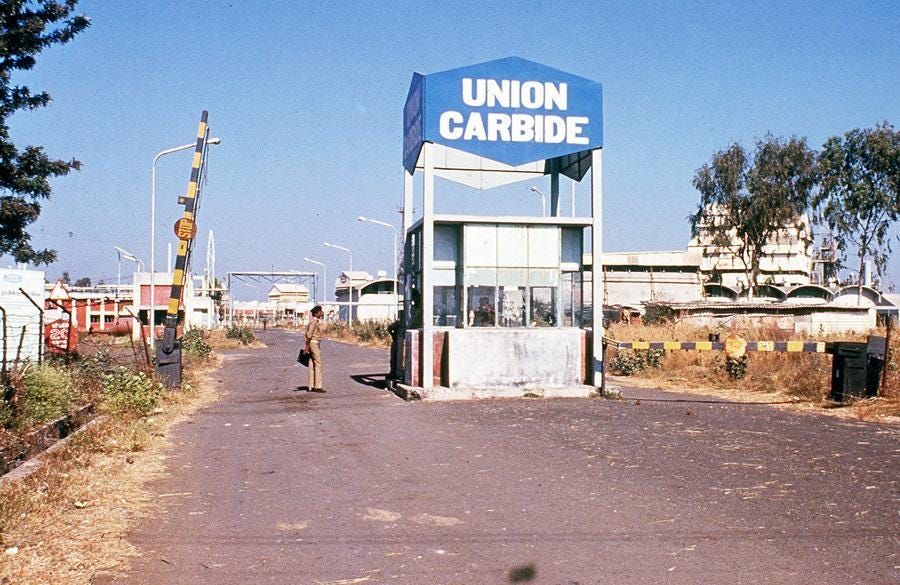
What does MIC exposure actually look like? The initial symptoms are coughing, severe eye irritation, burning in the throat and stomach, and an overwhelming feeling of suffocation. People caught outdoors suffered far worse than those indoors or in cars. And because MIC is heavier than air, it settled low to the ground, meaning children and shorter adults were hit hardest. By dawn, thousands were dead due to choking, circulatory collapse, and pulmonary edema, along with catastrophic damage throughout the body: severe lung injury, cerebral edema, kidney tubular necrosis, fatty degeneration of the liver, and necrotizing enteritis. At the lowest credible estimate, the death toll was at least 3,787; other counts put it above 16,000. Nonfatal injuries, again, at least, numbered 558,125, many of them severe.
Long-term effects were devastating. Survivors struggled with chronic damage to the eyes, respiratory system, and nervous system. Children faced high peri- and neonatal death rates, stunted growth, and cognitive impairments. Cancer rates surged. Tens of thousands of people were left unable to work or care for themselves.
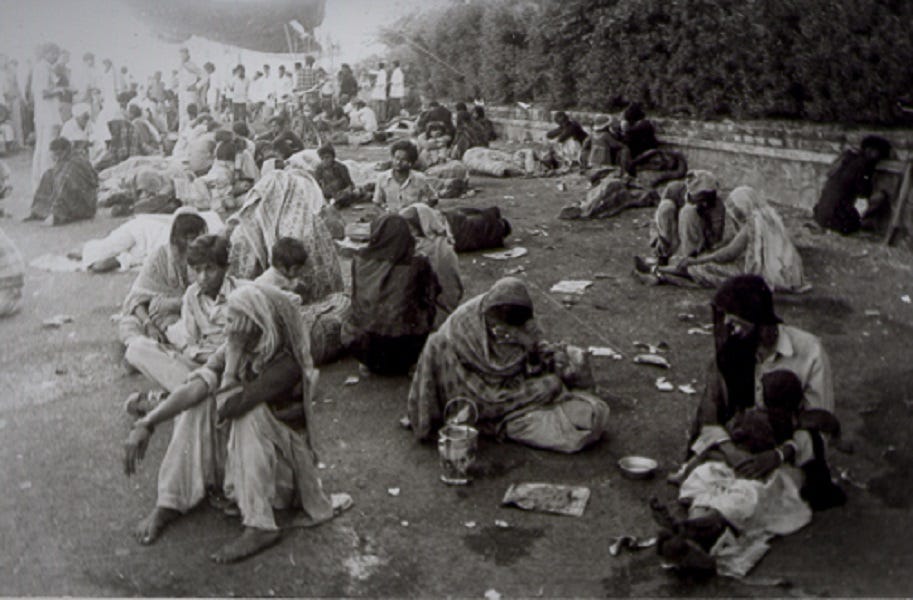
In the immediate aftermath, the Indian government sealed off the plant, but they failed to release key data, which only deepened the confusion. Bhopal’s healthcare system collapsed under the influx of patients; medical staff had no preparation and weren’t told the proper treatments for MIC exposure.
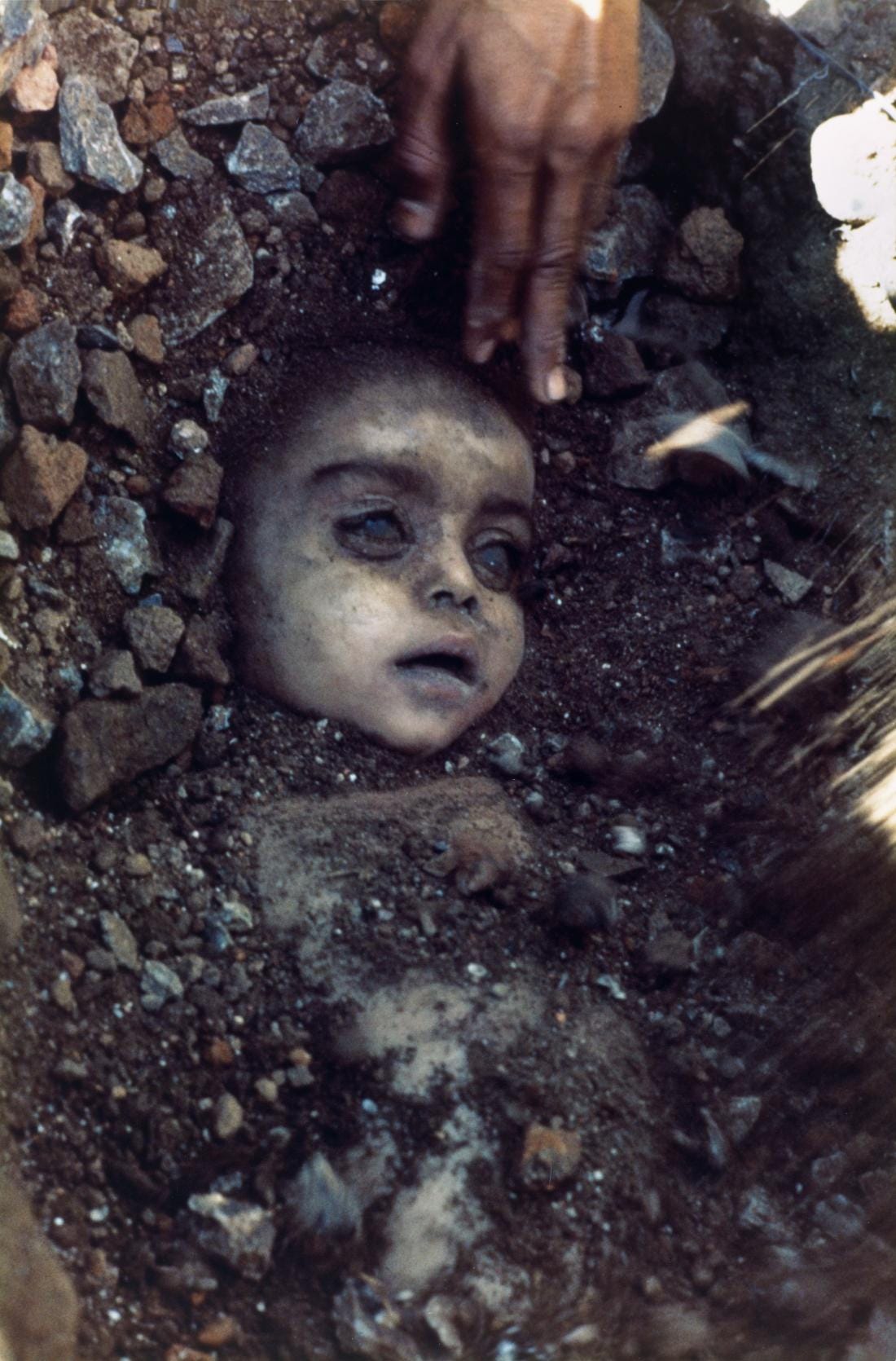
Mass funerals and cremations followed. During one of them, photojournalist Pablo Bartholomew captured the (color) image of a young girl being buried, a child whose identity remains unknown. The photograph won the 1985 World Press Photo of the Year. It appears below not for shock value, but because it reminds us of the real human cost. Statistics fade; an image like this does not.
Trees in the surrounding area were stripped bare, and bloated carcasses, farm animals, wild animals, pets had to be collected and disposed of. Supplies, food, anything that might have been exposed were thrown out out of fear of contamination. Fishing was prohibited. Despite this, official statements insisted that the air, water, vegetation, and food were “safe.”
Within a month, the state government had managed to set up hospitals, clinics, and mobile medical units to treat the hundreds of thousands who needed care. The Government of India soon passed the “Bhopal Gas Leak Disaster Act,” giving the national government the authority to represent all victims, whether they lived in India or abroad.
Warren Anderson, age 63, was chair and CEO of Union Carbide Corporation at the time of the disaster. Born in Brooklyn on November 29, 1921, to Swedish immigrants, he was named after the sitting president, Warren Harding. I can’t think of a worse president to be named after… Millard Fillmore… Donald Trump. Alright, I can think of a few.
In the immediate aftermath of the disaster, Anderson flew to India with a technical team. That Union Carbide team quickly organized medical experts, supplies, and equipment, and began assessing the cause of the leak. Anderson, however, did not get far. He was immediately placed under house arrest, largely for his own safety, and was promptly urged by the Indian government to leave the country. Despite facing charges of manslaughter and being publicly condemned for his actions, he was permitted to return to the United States, a decision that infuriated many Indians.
Legal proceedings kicked off in both the U.S. and India. Early lawsuits in the United States held that “fundamental human decency required Union Carbide to provide between $5 and $10 million to immediately help the injured,” suggesting the money be distributed through the International Red Cross. Union Carbide offered a $5 million relief fund two days later. The Indian government rejected it.
In March 1986, under mounting pressure, UCC proposed a $350 million settlement, which the company said would “generate a fund for Bhopal victims of between $500–600 million over 20 years.” Not sure how that works. U.S. courts also ruled the litigation should take place in India since Union Carbide India was “a separate and independent legal entity, managed and operated exclusively by Indian citizens in India.” Hmmm.
The Indian government refused the offer and demanded $3.3 billion. The Indian Supreme Court told both sides to return “with a clean slate.” Finally, in February 1989, Union Carbide agreed to pay $470 million in damages, which it paid immediately. Appeals followed, but the Indian Supreme Court upheld the settlement, ordering the Indian government to “purchase, out of the settlement fund, a group medical insurance policy to cover 100,000 persons who may later develop symptoms.” The Court also asked Union Carbide to voluntarily fund a hospital for Bhopal victims, and the companies agreed.
In 1992, Warren Anderson, who never returned to India, was declared a fugitive by the Chief Judicial Magistrate of Bhopal for failing to appear in court. The court ordered the Indian government to pursue his extradition. They did not pursue it very hard, and the United States declined to extradite him. Again, this did not sit well with the Indian people.
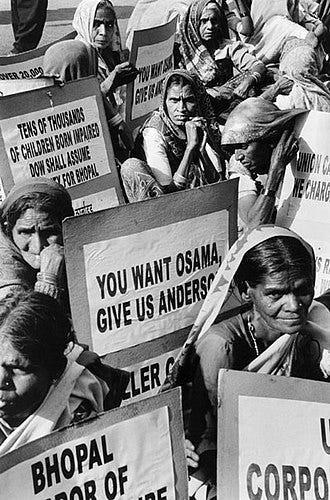
And well, that’s really about it. There was subsequent legal action, sure, but none of it resembles justice. The U.S. Supreme Court refused to hear an appeal that would’ve allowed victims of the Bhopal disaster to seek damages in a U.S. court. The Indian government withheld portions of its settlement funds until its own Supreme Court forced the release, and it has repeatedly dismissed petitions for enhanced compensation.
That compensation? About $2,200 for families of the dead, less for survivors. In 2010, seven former UCIL employees, all Indian nationals, were convicted of causing death by negligence. Accountability finally arrived… and then they were all released on bail. Warren Anderson was never criminally or civilly charged. He died in 2014 at the age of 92.
It has been called, by The Atlantic, so by an actual reputable source, not just me, the “world’s worst industrial disaster.” All those numbers I cited earlier are likely conservative. The Indian Council of Medical Research was barred from publishing its full findings, and many believe significant data was suppressed. A local clinic estimated “8,000 deaths during the first weeks, and another 8,000 since,” and even that is probably low. And that’s just deaths. The gas affected at least 700,000 people. A 2014 report in the nonprofit Mother Jones found that an estimated 120,000 to 150,000 survivors still suffer serious health conditions: nerve damage, growth problems, gynecological disorders, respiratory issues, birth defects, and elevated rates of cancer and tuberculosis.
Some positives? Improvements in medical care in the area, for one. And Bhopal itself has come a long way. The comparison isn’t perfect, but consider this: the city at the center of the worst nuclear accident on Earth, Pripyat, is still uninhabited. Bhopal, at the center of the worst industrial accident, is now one of the greenest and most livable cities in India. That took decades of work and collective effort, and even though chemicals abandoned at the plant continue to leach into the ground forty years later.
It wasn’t the original leak that caused that ongoing contamination, but the waste UCIL left behind. Only last year, on December 3rd, 2024, the Madhya Pradesh High Court finally ruled that the site must be cleaned up. And on my 25th birthday, January 1st, 2025, a caravan of semis, fire engines, and ambulances began hauling 377 tons of toxic waste to an industrial facility for proper disposal; much more remains.
Journalist Rajkumar Keswani, rightly called the Cassandra of the disaster, cursed to see the future and not be believed, became the youngest recipient of the B.D. Goenka Award for Excellence in Journalism. In his acceptance piece, he noted that he might be the only person to win a journalism award for what he called a “spectacular journalistic failure,” because had he succeeded at his task, “no one would have ever taken note.”
In his reporting, he uncovered a telex exchange (basically a proto-email telegram) from August 27th, 1984, just three months before the disaster. The plant manager asked the parent company for guidance on pipe coatings; Union Carbide replied that the appropriate material was too expensive and to forget about it.
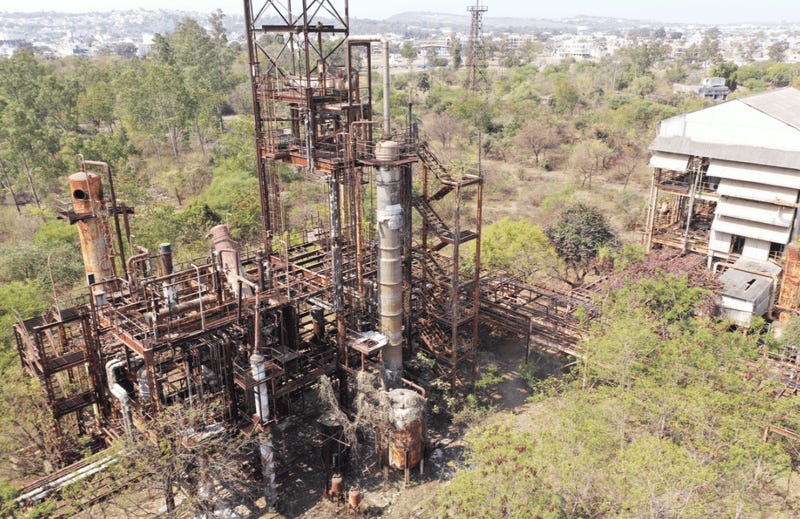
That about sums up Union Carbide’s stance. To this day, they insist the disaster was caused by “worker sabotage,” a theory I’m not even dignifying with analysis. Union Carbide has spent forty years trying to minimize, redirect, or outright erase its responsibility. Now owned by Dow Chemical, the company even maintains a website on the tragedy that still blames sabotage, still claims that adequate safety systems existed, and still points the finger at plant staff.
But the reality is simple: Union Carbide starved that plant. They imposed roughly $1.25 million in cuts. They halved the supervisory staff. They slashed training. They let vital equipment sit unreplaced. They handed out English-language manuals to workers at a facility where only a few employees spoke English. It was corporate negligence, cost-cutting, and disregard dressed up as plausible deniability. And for all of it, no Union Carbide employee was ever prosecuted. The only people convicted were Indian employees, and they were released on bail.
More than half a million people were injured. The death toll almost certainly reaches into the tens of thousands, likely more when you consider long-term exposure. And let me ask you honestly: had you heard of this disaster before now? Maybe. But if you’re from an English-speaking country and under a certain age, probably not. Union Carbide and, to a lesser degree, the United States did an effective job of keeping this quiet, or at least distant.
In India, the story is better known, but justice? Absolutely not. American-owned companies continue to exploit workers and environments around the world, insulated by subsidiaries, shell structures, and carefully curated ignorance. Foreign governments have often welcomed that investment at the expense of their own citizens’ safety.
So what do we do? We vote, we protest, we hold power to account. But first, we remember. Memory is the first guardrail against repetition.
Note: Thank you for making it to the end! What began as a farcical blog for a depressed, history-loving nerd to mess around with, an escape from the hole I’d dug, has grown into something more. As I’ve said before, this was always meant to be entertaining rather than academic. I’m not doing the deep-dive research that kept me from pursuing a career in history, but the work I put in here is careful, thoughtful, and, yes, work. And while it often doesn’t feel like work because I love it, it still takes time and effort. So if you’ve enjoyed this, please consider tossing a few bucks my way. My goal is to make history both educational and entertaining, the kind of history that first captured my imagination as a kid. Thank you for reading, and thank you for coming along on this journey. If you’ve made it this far, just know, I love you.
This absolutely wrecked me. It is the sort of thing that can put me in a depression spiral. Right back to Taco Bell.
It was, however, well-written, and I am thankful to you for sharing it. Well done, Aidan.
This installment is devastating, authoritative, and compelling. You translate a labyrinth of technical, bureaucratic, and legal failures into a narrative that feels both urgent and historically grounded. It honors the tragedy without exploiting it, indicts the system without empty moralizing, and closes with a call to memory that feels earned. It’s strong work.
On a side note, my late brother was one of the engineers at Union Carbide in Bombay when I was growing up. He was offered a huge promotion to go to Bhopal when the plant was being built. He declined that promotion because he must have foreseen problems on multiple fronts.
This one really hit home. Thank you.