Hare-brained History Volume 65: The Disappearance of Maura Murray
Different From Our Usual Fare

Welcome to the 65th installment of Hare-brained History, a blog in which your intrepid host will treat you with absurdities, follies, mind-fucks, and everything in between from the world of history. Today’s edition is inspired by a disappearance that occurred 22 years ago today. I know this is a history blog, and some might question whether the disappearance of a young woman in 2004 qualifies as “history.” But it’s my blog, and history doesn’t need to be centuries old or sweeping to matter.
This case is widely known. Many of you, especially my friends and family from back home, will recognize it immediately. True crime followers might as well. It remains one of the most discussed disappearances of the 21st century.
For me, it’s personal. Maura Murray was from my home state. She attended my alma mater. She grew up in a neighboring town to where I live and graduated from the same high school I did. So today, join me on a trip to Haverhill, New Hampshire, by way of Amherst and Hanson, Massachusetts, as we examine the disappearance of Maura Murray.
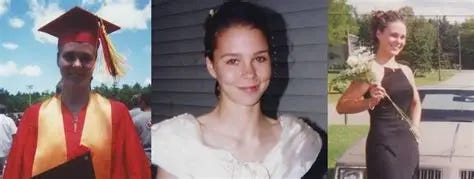
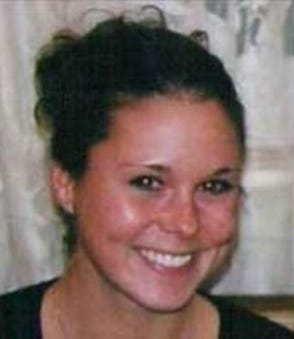
Maura Murray was born on May 4, 1982, the youngest child of Fred Murray, a medical technician, and Laurie Murray, a nurse, at Brockton Hospital. She had an older brother, Fred Jr., and two older sisters, Kathleen and Julie.
Maura was raised in Hanson, a town on Massachusetts’ South Shore, the Atlantic coastal region south of Boston. The South Shore is largely middle-class and suburban, though Hanson is slightly more rural and, famously, has terrible cell service. None of that particularly shaped the Murray family story, but I know Hanson and the South Shore well, and I can’t help sharing that with you.
The Murray family was close. Even after her parents divorced when Maura was six, accounts consistently describe a loving, supportive environment. Her siblings looked out for her, and she would later have a younger half-brother Kurtis. There are no widely or credibly reported accounts of instability or trauma in her childhood. Some sources say she primarily lived with her mother after the divorce, others say with her father, but neither version suggests serious conflict.
Maura grew into an athletic and academically driven high achiever. She was a National Honor Society student and played nearly every sport available, including basketball, before emerging as a standout runner at Whitman-Hanson Regional High School, my alma mater, a solid school all things considered.
On the track, Maura excelled. She broke several longstanding cross-country records, was named a Boston Globe All-Scholastic, and qualified for the 1998 National Outdoor Championships as a sophomore, finishing 33rd in the country. She was known for her kind heart, signature dimples, and bright smile, as described on the website her family created in her memory.
She graduated near the top of her class and had her choice of colleges. She accepted a congressional nomination to attend the United States Military Academy at West Point, joining her sister Julie there. West Point, essentially the Harvard of military schools, is highly competitive. Maura studied chemical engineering and competed on the cross-country and track teams.
During her sophomore year, she decided the military path was not for her and transferred to the University of Massachusetts Amherst, the largest university in Massachusetts, known both for its party school reputation and its strong academics. Several sources claim this transfer was due to a desire to be closer to home, but while Amherst is closer to Hanson than West Point, about two hours and fifteen minutes compared to nearly four, it’s not exactly around the corner. If proximity alone had driven the decision, there were closer options.
Regardless, she enrolled in UMass’s nursing program and was described by the dean as a strong, responsible student:“Nursing students are very responsible. That’s part of her character.” If that quote is any indication, though, the dean may not have known her deeply. Behind the scenes, Maura was struggling.
Like many high-achieving young people, she developed a harsh inner critic. According to her sister Julie, Maura struggled with an eating disorder. As Julie put it, being achievement-oriented and driven can lead someone to seek control in a world of uncontrollables: “One thing she could feel a sense of control over was her eating.”
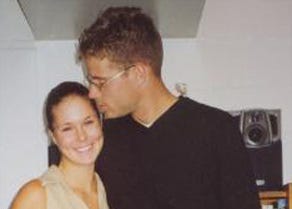
During this time, Maura was also in a relationship with Bill Rausch, whom she had met at West Point. After her transfer, he graduated, was commissioned as a lieutenant, and was stationed in Oklahoma. Maura and Bill.
Although not mentioned on her family’s website, Maura encountered legal trouble in late 2003. On November 3, 2003, she was charged with credit card fraud under $250. She had been arrested after admitting to using a stolen credit card number to order food in October, several small purchases from La Cucina Di Pinocchio (amounts of $10.20, $12.60, $15.70, and $10.75) and Domino’s (charges of $10.44 and $16.89, plus tip).
She was hardly a criminal mastermind, and by all accounts, the behavior was out of character. The judge’s response reflected that: three months’ continuance without a finding, to be dismissed if she stayed out of trouble. She would not complete those three months.
On the evening of February 5, 2004, while working her campus security desk job at UMass, Maura spoke by phone with her older sister Kathleen. Kathleen had recently left rehab, and, according to later accounts, her fiancé had stopped at a liquor store on the way home, not what you do when you are driving someone home from rehab. Around 10:30 p.m., Maura suddenly broke down in tears and became, in her supervisor’s words, “just completely zoned out. No reaction at all. She was unresponsive.”
Her supervisor escorted her back to her dorm room and asked what was wrong. Maura reportedly could only say, “My sister.”
Two days later, on Saturday, February 7, Fred Murray visited Amherst. He and Maura spent the day car shopping, as she would need reliable transportation for her nursing clinicals, and her own car was having mechanical issues. They went out to dinner with one of Maura’s friends. Later that evening, after Maura dropped her father off at his motel in his Toyota Corolla, she returned to campus in the car and attended a dorm party. She left around 2:30 a.m.
At approximately 3:30 a.m., she struck a guardrail on Route 9 in neighboring Hadley, causing more than $9,000 in damage to her father’s car. The responding officer filed an accident report but did not administer field sobriety tests, which he probably should have. Maura was driven to her father’s motel. Fred later described her as “distraught, quite distraught.” Julie Murray has said that while their father was disappointed, “there was nothing he could do or say that would be harsher than what Maura told herself.”
At 4:49 a.m., a call was placed from Fred Murray’s cell phone to Bill Rausch. Who made the call and what was said remains unclear. Later that morning, Sunday, February 8, Fred learned the damage to his car would be covered by insurance. He rented a vehicle, dropped Maura back at campus, and left for Connecticut. That night, he called to remind her to pick up accident forms from the Registry of Motor Vehicles. They agreed to speak again the next day to go over the paperwork and insurance claim.
Shortly after midnight on Monday, February 9, Maura used her computer to search MapQuest for directions to the Berkshires and to Burlington, Vermont. Then at 3:32 a.m. she turned in an assignment online for a class. Her first documented contact that day came at 1:00 p.m., when she emailed Bill:
“I love you more stud. I got your messages, but honestly, I didn’t feel like talking too much to anyone. I promise to call today though. Love you, Maura.”
She then made a call about renting a condominium in Bartlett, New Hampshire, a place her family had vacationed. The three-minute call did not result in a reservation. At 1:13 p.m., she called another nursing student; the content of that call is unknown. Eleven minutes later, she emailed her nursing program supervisor stating she would be out of town for a week due to a death in the family and would follow up upon her return. No one in the Murray family had died.
At 2:05 p.m., she called a hotel information line in Stowe, Vermont, a ski town a few hours north; that call lasted five minutes. She then called Bill and left a brief voicemail saying they would talk later.
At some point that day, Maura packed a bag with toiletries, makeup, workout clothes, schoolbooks, birth control pills, and several days’ worth of clothing, placing them in her car. Maura had recently moved dorms, and many of her possessions remained in boxes. Resting atop the boxes was a printed email to Bill discussing problems in their relationship. The exact contents have not been publicly detailed.
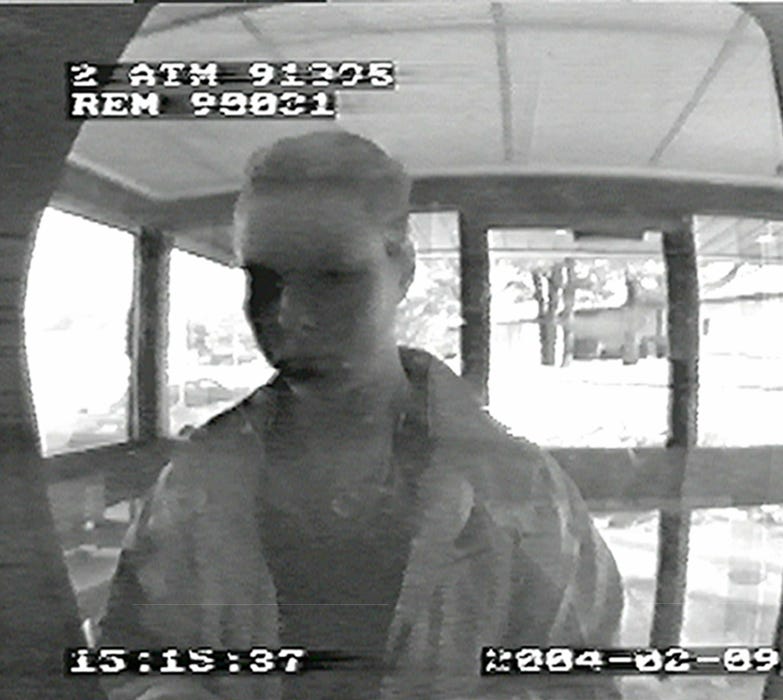
It had been snowing, and classes were canceled, leaving campus relatively quiet. At 3:15 p.m., Maura stopped at an ATM in the Big Y plaza in Hadley and withdrew $280, nearly the entire balance of her bank account. Then she drove away from campus in her black 1996 Saturn sedan. Maura at the ATM.
After leaving campus, Maura stopped at Liquors 44 in Hadley. She returned 79 cans and bottles for $3.95, then purchased a bottle of Kahlúa, a bottle of vodka, a nip of Baileys, and a 12-pack of Smirnoff Ice for just under $40. Store records show she was alone and completed the transaction at 3:43 p.m. At some point, likely after the liquor store stop, she is believed to have picked up the accident report forms related to her crash two days earlier.
She then headed north, most likely via Interstate 91. Sometime between 4:00 and 5:00 p.m., she called to check her voicemail, this was 2004, after all, and that call marks the last recorded use of her cellphone. There is no evidence she told anyone where she was going.
At 7:27 p.m., in Haverhill, specifically the small village of Woodsville within the town, New Hampshire, roughly 136 miles and just over two hours north of Hadley, a local resident, Faith Westman, called 911 to report a car off the road near her home on Route 112. When asked about the condition of the driver, she initially reported seeing a man inside the vehicle smoking a cigarette. She later clarified that what she had likely seen was a red glow from inside the car, not necessarily a cigarette.
Haverhill police officer Smith was dispatched two minutes later, a drive that would take approximately 15 to 18 minutes. Between 7:33 and 7:37 p.m., before Officer Smith officially arrived, a witness reported seeing a police SUV parked nose-to-nose with Maura’s Saturn. Whether this sighting was accurate, and if so who was driving the vehicle, remains unclear.
At 7:42 p.m., local school bus driver Butch Atwood also called 911. He reported that he had stopped to check on a young woman at the scene. She appeared “shaken up, no blood that I could see,” though the airbags had deployed and there was heavy damage to the vehicle. He described the location as near the “Weathered Red Barn,” about 3.4 miles from the junction of Routes 302 and 112 along the Wild Ammonoosuc Road.
Atwood said he offered to call for help, but the woman declined and told him she had already contacted AAA. He then left the scene and placed his 911 call. He reported that several other vehicles passed the area before he left and before Officer Smith would arrive at 7:46 p.m.
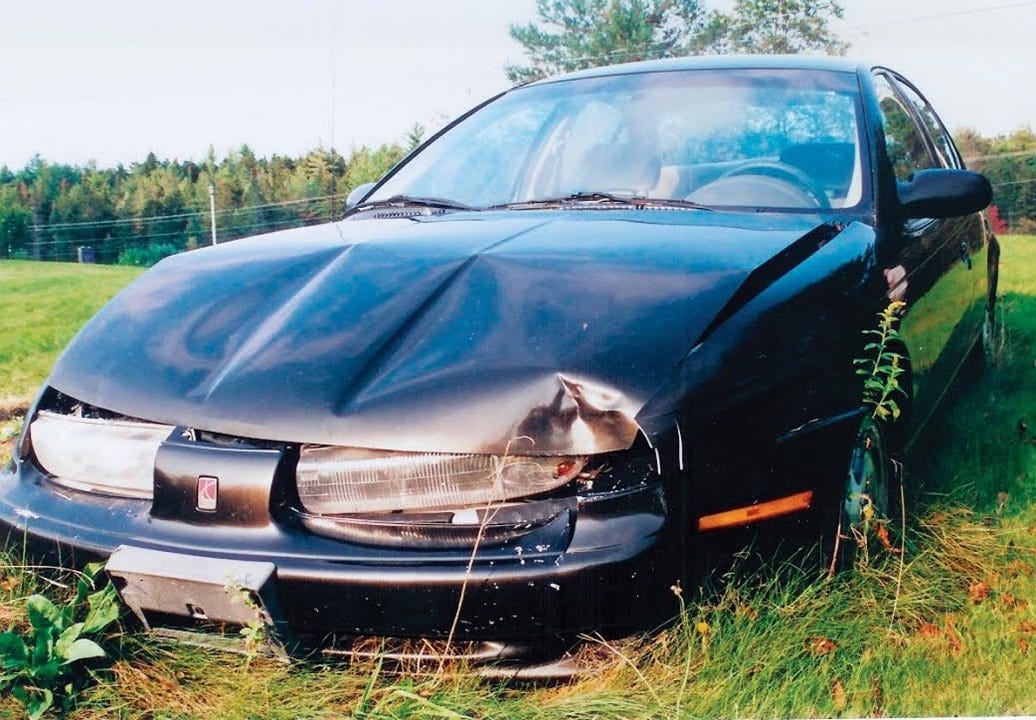
Maura’s Saturn had struck a tree on the driver’s side with enough force to render it inoperable per the police report, but Julie Murray would reveal on her podcast that a private analysis found “The damage wasn’t consistent with hitting a tree, as stated in the police report. And the car was drivable.” Both airbags had deployed. The car was locked when police arrived. There were red stains inside and outside the vehicle, later determined not to be blood, but spilled wine from the damaged box of Franzia found in the back seat.
Inside the car, were an empty Smirnoff Ice bottle, the damaged Franzia box, her AAA card, the accident report forms, gloves, CDs, makeup, jewelry, a stuffed animal reportedly given to her by her boyfriend, the book Not Without Peril (about mountaineering in the White Mountains), and printed directions to Burlington, Vermont. Julie would report a random Chrysler part found in Maura’s car on her podcast. According to her, a white Jeep Grand Cherokee fled the scene when police arrived, as she says “Chrysler manufactures Jeep, and there was also a white scuff mark on the Saturn’s rear bumper.”
Missing were her bank cards, cellphone, some of the alcohol she had purchased earlier that day, and Maura Murray herself. None of those items, nor Maura, have ever been found. Her car.
Between 8:00 and 8:30 p.m., a contractor returning home to Franconia reported seeing a young woman walking quickly along Route 112, about four to five miles east of where Maura Murray’s car had been found. She was wearing jeans, a dark coat, and a lighter-colored hoodie. At the time, he thought nothing of it. Months later, in May, he connected the seemingly innocuous sighting to Maura’s disappearance and contacted authorities.
That evening, Officer Smith and local bus driver Butch Atwood both searched the surrounding area in their vehicles while EMS and a fire truck arrived to assess the crash scene. The car was eventually towed. A rag, believed to be part of Maura’s roadside emergency kit, was discovered stuffed into the vehicle’s muffler.
Authorities did not formally refer to her as missing until noon the following day. At 12:36 p.m., a “be on the lookout” alert was issued. At 3:20 p.m., police called her father, Fred Murray, but he was working in Connecticut, so a message was left on his answering machine. Around 5:00 p.m., one of Maura’s sisters reached Fred and informed him of the situation. When he contacted Haverhill police, he was told that if Maura had not been located by the next morning, New Hampshire Fish and Game would begin a search.
Fred arrived before dawn on February 11. At 8:00 a.m., he, Fish and Game officers, family members, and friends began searching the area. A tracking dog picked up Maura’s scent from one of her gloves and followed it roughly 100 yards east of the crash site before losing it. leading some to speculate that she may have left the area in another vehicle.
At 5:00 p.m., her boyfriend, Bill Rausch, who had obtained leave from the Army, arrived with his parents and was immediately questioned by police. He had been stationed in Oklahoma at the time of her disappearance and tearfully stated that he had been a loving boyfriend. He was not considered a suspect.
At 7:00 p.m., police announced they believed Maura may have come to the area to “run away” or attempt suicide, an assertion the family strongly disagreed with then and continues to reject. Fred publicly stated that he believed “dirtbags” had taken his daughter. As her sister Julie later said on her podcast, referencing Maura submitting a homework assignment at 3:32 a.m., “Who puts in that kind of effort if they plan to disappear?”
After landing in New Hampshire, Rausch turned his cellphone back on and received a strange voicemail he described as sobbing. The call was traced to a calling card issued to the American Red Cross. Authorities do not believe the call came from Maura.
Fred Murray and Bill Rausch held a press conference on February 12, the first day the disappearance became public. Police stated Maura may have been headed toward the Kancamagus Highway in the White Mountains and described her as “endangered and possibly suicidal.” They also suggested she had been intoxicated at the crash site. Atwood, however, said she did not appear drunk, though Julie claimed on her podcast that his accounts of their interaction have varied.
A week later, Fred and Rausch appeared on CNN as the family expanded their search into Vermont, only to learn that Vermont authorities had not initially been notified. The FBI eventually joined the investigation, and the search broadened nationwide.
On March 3, the family checked out of their motel, exhausted. Fred, however, continued returning every weekend to search, even after Haverhill police informed him there had been complaints about him trespassing on private property.
On March 19, 2004, seventeen-year-old Brianna Maitland disappeared in Montgomery, Vermont, under somewhat similar circumstances, about 66 miles west of Maura’s last known location. State police have stated they do not believe the cases are connected and dismissed the possibility of a serial killer.
Later in 2004, a man approached Fred Murray with a rusty, stained knife he claimed belonged to his brother, a local man with a criminal history who had lived less than a mile from the crash site. The man alleged his brother had killed Maura and said the knife was the weapon. Fred brought both the knife and the story to authorities. Family members later stated the accusation had been fabricated in hopes of obtaining reward money, noting the man’s long history of drug abuse. This was rural New Hampshire after all.
Fred petitioned the New Hampshire governor for assistance, appeared on The Montel Williams Show, and filed lawsuits seeking access to investigative files. On November 1, a user named Tom Davies posted on a message board dedicated to the case, claiming to have seen a black backpack resembling Maura’s behind a restroom at the Pemigewasset Overlook, about 30 miles east along Route 112. Assistant Attorney General Jeffrey Strelzin stated law enforcement was “aware of the backpack,” but did not confirm whether it had been recovered. Nothing further came of the claim.
In 2006, volunteers conducted another search within a few miles of the crash site. Cadaver dogs alerted strongly inside the closet of an A-frame house roughly one mile from where Maura’s car had been found. Believe it or not, but the house had once been occupied by the same man implicated by his brother in the knife allegation. Carpet samples were collected for testing, but results were never publicly released, suggesting nothing conclusive was found. In 2009, Strelzin stated for the first time that the case was being handled as a “potential homicide.”
Fred continued to express his belief that his daughter is dead and, in 2019, reiterated his suspicions about the A-frame house. That April, investigators conducted excavation at the property for the first time. Previous owners had refused permission; the new owners cooperated fully. Officials reported finding “absolutely nothing.”
In early 2021, the tree near the crash site, long marked with ribbons and memorial items, was cut down by the property owner. The Murray family requested that a New Hampshire historical marker be placed at the site in Maura’s honor, but the state declined. Fucking New Hampshire.
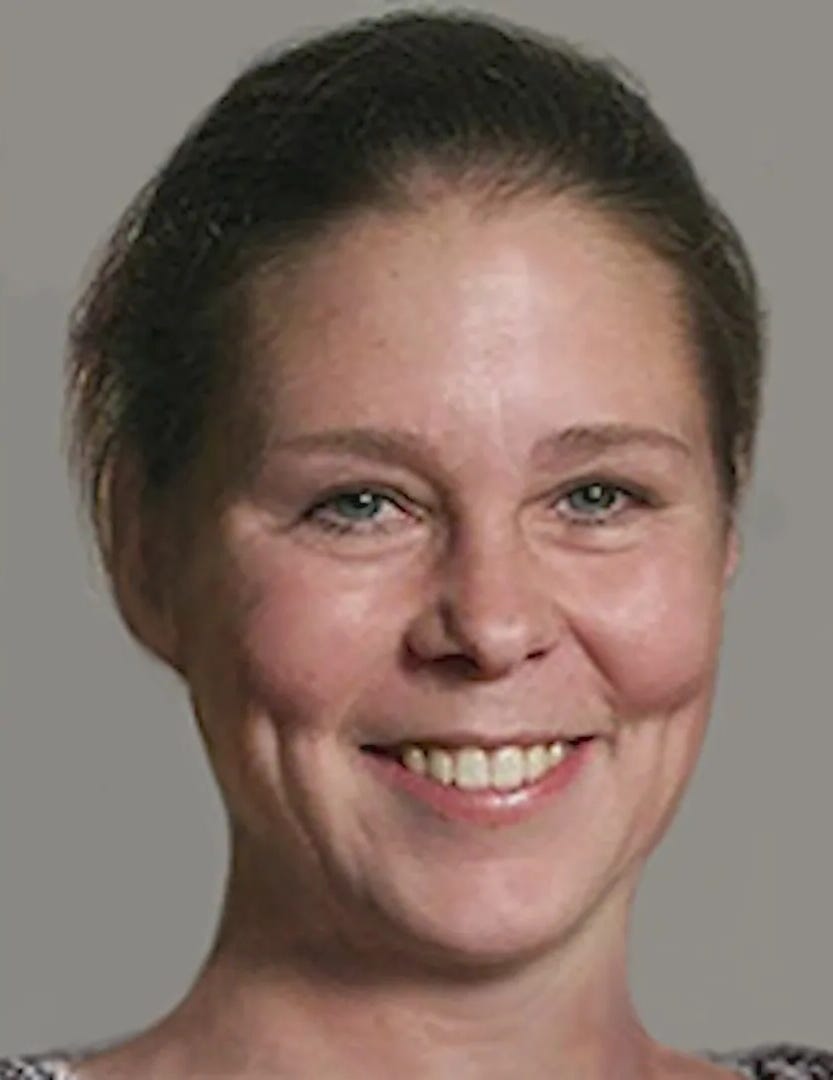
In February 2024, twenty years after her disappearance, an age-progressed image of Maura was released. She would be 43 years old. And that is where the case stands today. The age-progressed photo.
As that overview of where the case stands suggests, we don’t have much to go on. But the first mystery isn’t what happened to Maura after she crashed on Wild Ammonoosuc Road, it’s why she left in the first place.
The Murray family has consistently rejected the idea that Maura was suicidal. I understand that instinct, but I also wouldn’t dismiss the possibility outright. When someone feels trapped, overwhelmed, or lost, especially when they’ve been acting impulsively, as Maura had, things can escalate quickly. A person doesn’t need a long, documented history of suicidal ideation for a moment of crisis to spiral. At the time, Maura was dealing with a number of stressors: her sister’s relapse, her own struggles with an eating disorder, the credit card fraud charge, and the pressures of her own perfectionism. That’s a lot for anyone. The trip appears impulsive, and it’s fair to say she may not have been in the clearest headspace.
But, it’s evident she left of her own accord. Though was she just running away from those stressors, or someone?
In the email she printed before leaving, she alluded to problems in her relationship with her boyfriend, Bill Rausch, who was stationed in Oklahoma at the time. He arrived in New Hampshire days later and spoke tearfully to police and the press.
Investigative journalist James Renner, who spent years studying the case and wrote True Crime Addict: How I Lost Myself in the Mysterious Disappearance of Maura Murray (2016), reported that Maura had an affair with Hossein “Hoss” Baghdadi, a fellow member of the UMass Outing Club. Baghdadi voluntarily spoke with Renner and said they had been seeing each other while she was still involved with Rausch. He also claimed Maura had expressed fantasies about disappearing and starting over. “I wish I could disappear,” he recalled her saying.
According to Baghdadi, Rausch was controlling and demanding, frequently checking up on her and dictating where she should be and when. He suggested she felt unable to extricate herself from the relationship. Renner has said that Baghdadi was the only person he found fully forthcoming during his research, as the Murray family declined to participate in his book. Renner criticized that decision, arguing that publicity keeps cases alive. The family, however, has good reasons for caution: true crime blurs the line between investigation and exploitation. As The New Yorker described Renner, “embodying every problem that arises when online obsessives are infected with delusions of detective grandeur.”
That said, acknowledging uncomfortable facts is not the same as condemning Maura. The credit card fraud, for example, documented in public court records, is often omitted from discussions of her disappearance, including by her family. I understand the impulse to highlight her best qualities: she was, by all accounts, loving, driven, and intelligent. But recognizing that she was also struggling provides important context. Buying pizzas on a stolen card doesn’t define a person; the judge didn’t treat it that way, but it does suggest stress, poor judgment, and possible unraveling.
As for Rausch, one thing is not speculative: in 2019, he was indicted on a felony charge of third-degree sexual assault involving a subordinate in 2011. Multiple women have since come forward alleging erratic and violent behavior, including claims that he asked partners to roleplay as Maura. Those allegations do not prove involvement in Maura’s disappearance, and investigators have publicly maintained that his alibi has been examined. The Murray family has not suggested he was involved either. Rausch in 2011.
At the end of the day, the entire case hinges on the five-to-ten-minute window between when Butch Atwood spoke to Maura and when Officer Cecil Smith arrived on scene. Julie Murray has raised questions about inconsistencies in Atwood’s recollections, but he has never been considered a suspect. The variations in his account are far more likely attributable to imperfect memory than malice. Still, that brief window is where everything changes, and where six primary theories emerge.
1. Accidental Death
Maura appears to have been drinking, though we cannot say that definitively. Atwood did not believe she seemed intoxicated, and the red stains in the car could have come from the damaged Franzia box during the crash. However, alcohol was missing from the vehicle, and an empty Smirnoff Ice bottle was found inside. In the very early morning of the day before, she had crashed her father’s car after leaving a dorm party, suggesting alcohol may have been involved then as well.
This theory suggests that after crashing on Route 112, possibly intoxicated and already emotionally unraveling, Maura panicked. She asked Atwood not to call police, perhaps fearing further legal trouble, and once he drove away, she fled the scene on foot. The contractor later claimed to have seen a young woman fitting her description walking eastbound 30 to 60 minutes after the crash. In this scenario, Maura wandered into the dark, wooded terrain of rural northern New Hampshire in February and eventually succumbed to exposure.
The problem is the searches. The area is rural, forested, and mountainous, certainly capable of concealing remains, but extensive searches have been conducted over the past 22 years without recovery. It’s difficult to believe nothing would have surfaced, though not impossible.
2. Picked Up by a Passing Motorist and Harmed
This is the theory most strongly supported by the Murray family. In that short window, Maura may have accepted a ride from someone passing through the area. As her brother Fred Jr. said, “Maura was very trusting… she was probably looking for help out of the situation she was in and she got in with the wrong person.” Her brother Kurtis put it more bluntly: “I think Maura was taken… She most likely got in the car with the wrong person and nothing good came from that.” It was after 7:00 p.m., dark, and rural. Roadside abductions have happened before.
The difficulty is the lack of evidence. No confirmed suspects. No physical trail. And if the contractor’s reported sighting of Maura walking east is accurate, it complicates the timeline. There was a moment in 2011 that seemed like a potential break. On the anniversary of Maura’s disappearance, a YouTube account named “112dirtbag” posted a video titled Happy Anniversary, featuring an older balding white man laughing maniacally and winking before the words “Happy Anniversary” appeared on screen. The symbolism was obvious: Maura vanished on Route 112 on February 9th, and Fred Murray had once referred to whoever took her as “dirtbags.”
Internet sleuths quickly identified the man as Boston native Jeffrey Alden Olson. Ultimately, he had no connection to the case and appeared to be seeking attention. A false lead, though it reinforced the unsettling possibility that if that dirtbag wasn’t responsible, another one might have been.
3. She Disappeared to Start a New Life
This is the most hopeful theory, though not one strongly endorsed by her family. Some online commentators have speculated that Maura entered a battered women’s program and assumed a new identity. She had withdrawn cash, packed belongings, and contacted rental properties in New Hampshire and Vermont.
But there are serious problems with this idea. Why permanently abandon her family? There is no confirmed sighting, no financial activity, no trace in over two decades. Successfully disappearing long-term in the 21st century is extraordinarily rare.
4. She Was Traveling With Someone Who Harmed Her
James Renner has proposed that Maura may not have been alone, that she traveled north with someone, and that the crash involved two people who then left together.
The logistical problems are obvious. If she traveled with a friend or classmate, how did that person’s absence go unnoticed? If she picked up a hitchhiker who attacked her, why were there no signs of struggle? And how would they have disposed of her in such a short window before police arrived?
This theory requires multiple unlikely variables aligning perfectly.
5. She Wandered Off and Was Later Picked Up
This combines elements of the first two theories. Maura leaves the scene on foot, possibly intoxicated or disoriented, and later encounters someone who harms her.
It explains why her body has not been found in the immediate search radius. But like the roadside abduction theory, it lacks physical evidence. No confirmed witnesses. No forensic support. Just possibility.
6. Cover-Up
Julie Murray has openly criticized the investigation, pointing to what she describes as procedural failures and missed opportunities. She has argued that police did not thoroughly interview certain individuals Maura had contacted before leaving, including a condo owner and a classmate she had messaged days earlier.
She also claims police never followed up on a handwritten phone number and address found in the car. According to Julie, when she contacted the number’s owner years later, they said no one had ever previously asked them about it. Additionally, the initial search reportedly focused west of the crash site. Julie has expressed frustration that no one searched east the night Maura disappeared, the direction in which the contractor claimed to see a woman walking.
Does that amount to a cover-up? Probably not. Police misconduct and cover-ups have happened in American history, that’s undeniable. But most flawed investigations stem from error, not conspiracy. Haverhill is a small town, and small departments make mistakes.
There is also disagreement over the condition of the car. A later private analysis suggested it may have been drivable and had not struck a tree as firmly as Officer Smith concluded. But having looked at the damage, I think it would be reasonable to assume it had collided with a tree and was inoperable.
The most puzzling loose end remains the witness who claimed to see a police SUV parked nose-to-nose with Maura’s car before Officer Smith officially arrived. Was it a timing error? A misidentification? Faulty memory? Or something more?
Twenty-two years later, that question, like so many others in this case, remains unanswered.
The absence of evidence, the absence of anything definitive, is precisely what has allowed this case to endure. There is no body, no crime scene, no confession. Just a five-to-ten-minute window and a series of unanswered questions.
Timing also matters. As a 2017 Oxygen documentary noted, Maura disappeared at the dawn of the social media age, five days after Facebook launched. Her case exploded across message boards and early internet forums. It helped usher in the era of the internet sleuth: independent researchers, bloggers, and amateur investigators who sometimes uncover meaningful truths and sometimes blur the line between advocacy and exploitation.
James Renner, for example, has been credited with renewing attention in cold cases like the murder of 12-year-old Tina Harmon, attention that arguably contributed to progress in that investigation. But his work, like much of the true crime industry, has also drawn criticism for prioritizing narrative and profit over restraint. That tension, between awareness and exploitation, has followed Maura Murray’s case from the beginning.
And without being too self-indulgent, I have always felt a quiet kinship with Maura. We grew up in the same area. We attended the same high school and the same university. But more than geography, it was temperament. By all accounts, she was driven, disciplined, and perfectionistic. I was too. She struggled with an eating disorder and a possibly complicated relationship with alcohol. So did I. She seemed to be unraveling under pressure. I know what that feels like.
There were moments in my own life, especially during college, when I wanted to run. To disappear. And if I hadn’t been lucky a few times, if a blackout had ended differently, I might have become a story too.
Maura Murray was not a myth or a mystery. She was a young woman who was struggling, smart, ambitious, imperfect, and human. And for reasons we still cannot explain, she vanished. For her family, for the friends who still wait, and for a community that still remembers, this story will not fade. Not until we know what happened on that cold February night twenty-two years ago.
Note: Thank you for making it to the end! What began as a farcical blog for a depressed, history-loving nerd to mess around with, an escape from the hole I’d dug, has grown into something more. As I’ve said before, this was always meant to be entertaining rather than academic. I’m not doing the deep-dive research that kept me from pursuing a career in history, but the work I put in here is careful, thoughtful, and, yes, work. And while it often doesn’t feel like work because I love it, it still takes time and effort. So if you’ve enjoyed this, please consider tossing a few bucks my way. My goal is to make history both educational and entertaining, the kind of history that first captured my imagination as a kid. Thank you for reading and for coming along on this journey. If you’ve made it this far, just know, I love you.
That is a scary and serious situation that hits you and the family hard.
Considering the sighting of a woman on foot, I believed that she had wandered off then been picked up. But, I was thinking about all of the things missing from the car. Cell phone, wallet, some alcohol. If someone had passed and asked me if I needed a ride, and I trusted them enough to say yes, I would've packed their vehicle with my things, or my most important things, in case I don't return to my vehicle soon. And writing this comment doesn't give me the ability to scroll back up to the story, but calling and checking your voicemail sounds like something you'd do bored in a passenger seat. I do not suspect a police cover up, but it sounds like there were moments investigators absolutely dropped the ball at times.
I loved this Aidan!!!!!! Great job on this piece.