Hare-brained History Volume 73: The Case of Little Lord Fauntleroy
Short and Sad

Welcome to the 73rd installment of Hare-brained History, a blog in which your intrepid host will treat you with absurdities, follies, mind-fucks, and everything in between from the world of history. Today, we’re inspired by what I want to write about, which, admittedly, is how every edition of this blog is inspired. Once again, we find ourselves in the realm of true crime, which some readers insist isn’t history. To them I say: it happened in the past. That’s history, bucko!
With that cheery rebuke, we transition to the story of a murdered child. On March 8, 1921, a boy was found floating in a pond, well-dressed and almost certainly from an affluent home. Because of this, it was widely believed he would soon be claimed. One hundred and five years later, he remains unclaimed. So today, join me in Waukesha as we look at the case of Little Lord Fauntleroy.
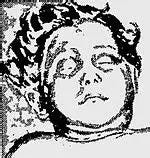
On the morning of March 8, 1921, in the then-small Wisconsin town of Waukesha, O’Laughlin Stone Company employee John Brlich was walking the company’s property, cursing the cold spring air, when something floating in the quarry pond caught his eye. Hoping his eyes were deceiving him, he moved closer. They weren’t. A child lay face down in the water.
Brlich ran to the company office and called County Sheriff Clarence Keebler. Keebler contacted County Coroner L. F. Lee, and the two men drove to the quarry together. The body was that of a young boy, between five and seven years old, short for his age at under four feet tall, but not due to malnutrition. He had blond hair, brown eyes, and no immediate signs of physical abuse. He was dressed finely: a blouse, black stockings, patent leather shoes, and a gray sweater made by the Bradley Knitting Company, all of high quality. However, all the clothing labels were removed, and the tags were deliberately cut out. Someone was trying to prevent the clothes from being traced.
Keebler and Lee soon collaborated with the much larger Milwaukee Police Department, just nineteen miles to the east. Before launching a full-scale investigation, authorities released a description of the boy, expecting that a child so well dressed, and presumably from a well-off family, would be claimed quickly.
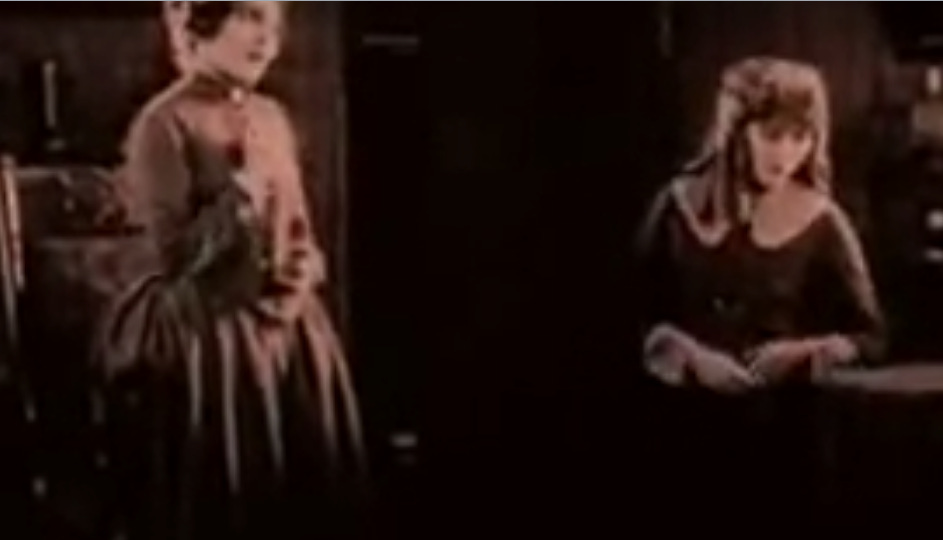
The press dubbed him “Little Lord Fauntleroy.” Today, the name is just as tied to this case, but at the time, it was widely recognized from the 1886 children’s novel Little Lord Fauntleroy by Frances Hodgson Burnett. In the story, a poor New York boy learns that his grandfather is a wealthy English earl, and to cut a convoluted story short, he melts the old man’s heart and teaches him how to be more compassionate. The book was enormously popular, aided by the stark wealth inequalities of the era (good thing we fixed that), and was adapted into stage plays and early films. It even influenced children’s fashion.
Here is a still from the 112-minute 1921 silent film Little Lord Fauntleroy that I watched in preparation for this edition. I didn’t like it.
As the days passed, nothing came of the initial reports, and the decision was made to display the boy at a local funeral home. The public was invited to come and look upon the “Little Lord” as the investigation began.
Investigations in the early twentieth century were, shall we say, limited. The coroner could only speculate how long the boy had been in the water, with estimates ranging from a few days to as long as six months. Six months may be a stretch, given the boy’s condition; his skin, for instance, was not sloughing off, but cold water can preserve a body, so he may have been there longer than one might first think. Though it makes you wonder how no one had seen the boy in the water before Brlich came forward.
There was little in the way of a lead until quarry worker Mike Koker came forward. He explained that weeks earlier, he had seen a young woman in a red sweater lingering around the quarry pond. Since it was private property, he asked her what the hell she was doing there. The woman had been crying. She asked if he had seen a young boy around the quarry. Koker said no, and the woman walked toward a car where she was joined by a man. The pair lingered briefly before driving off.
It seemed like a promising lead, and Sheriff Clarence Keebler theorized that the couple had been with their young son and, in the mood for privacy, had sent him off to play near the quarry while they had sex. The boy, he suggested, had then fallen in and drowned. It was one hell of a hunch, but Coroner L. F. Lee quickly put the kibosh on it. Not only did the boy have a blunt-force wound on the top of his head, but there was very little water in his lungs. He had been dead before he entered the water. This was murder, not an accident.
The couple Koker described would never be located. One anonymous tip claimed the woman had later drowned herself in that same body of water. Lacking the scuba equipment of today, authorities resorted to setting off dynamite in the pond in the hope of dislodging a corpse. Nothing floated to the surface.
Another tip came from the owner of the Liberty Department Store, who said he was certain the boy’s clothing had come from his shop and had been sold during a January sale. Even if that was true, there was no way to determine who had actually purchased the items. Yet another lead came from Chicago, where a man named J. B. Belson insisted the Little Lord was his nephew, his sister’s son, who had been kidnapped by her ex-husband. A police investigation quickly located the boy in question, alive and well.
Sheriff Keebler offered a $250 reward for information. When sympathetic locals and businesses contributed, the reward rose to $1,000, about $18,170 today. People filed through the morgue to look upon the Little Lord, while many more saw his photograph in newspapers across the American and Canadian Midwest. Still, nothing came of it.
Six days after his discovery, on March 14, a small white casket was lowered into the ground at Prairie Home Cemetery. The words “Our Darling” had been inscribed on the casket, not because anyone knew who he was, but because the abandoned boy had been embraced in death by the people of Waukesha. Much of the funeral’s fanfare was the work of a local woman, Minnie Conrad, who raised the money to pay for it. When she died in 1940, she too was buried in the same cemetery.
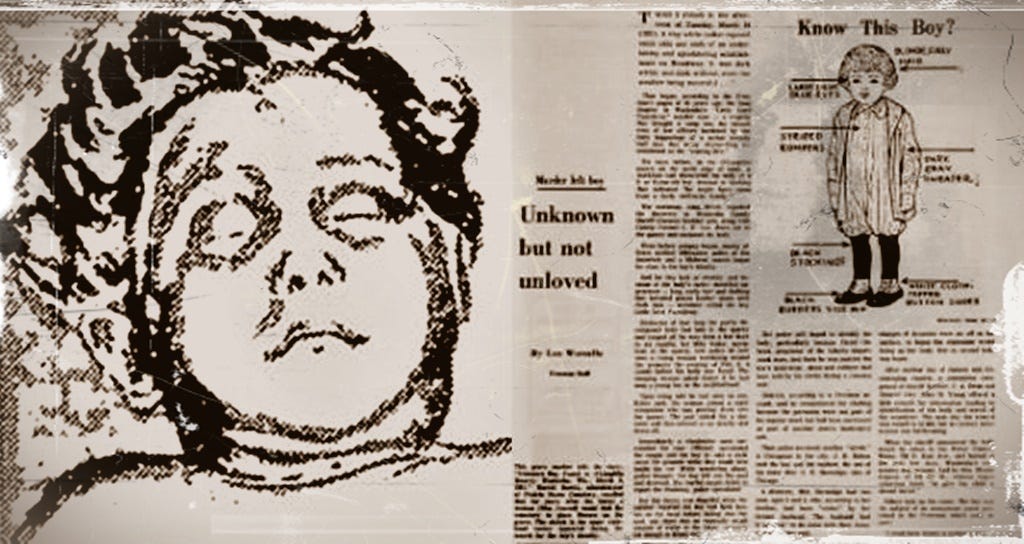
The case went ice cold for decades. It may be little more than local folklore, but it was reported to the police that a woman wearing a heavy veil would occasionally come to the grave and place flowers on it. The marker reads: Unknown Boy Found in O’Laughlin Quarry. Waukesha, Wis. March 8, 1921. And that would be that, for 28 years, anyway.
In 1949, a Milwaukee medical examiner named E. L. Tharinger put forward a hypothesis: the unknown boy might actually have been Homer Lemay. The son of Edmond Lemay, six-year-old Homer had disappeared from Milwaukee around the same time that Little Lord Fauntleroy was found.
Back in 1921, Edmond had told investigators looking into his son’s disappearance that he had left Homer in the custody of the Norton family, friends of his who lived in Chicago. According to him, they had taken Homer on a trip to Argentina, and later mailed him a newspaper clipping claiming the boy had died in an automobile accident there. One hell of a story, and likely just that. Police investigated the claim and found no Norton family, no press clipping, and no record from Argentine authorities of a six-year-old American boy killed in an automobile crash in 1921. Edmond Lemay would later be accused of falsifying his missing wife’s signature and was put on trial for forgery. He was ultimately acquitted, and from there he largely disappears from the record.
Examiner Tharinger, who, I must say, sources give no indication as to what prompted him to bring forward this excellent lead 28 years later, urged that Little Lord Fauntleroy be exhumed. But the decision ultimately rested with the new sheriff and coroner of Waukesha, and they decided to let the boy rest in peace.
That may seem frustrating, but first, this was 1949. What could be learned from an exhumation was extremely limited. And we don’t know what became of Edmond Lemay or any other relatives, so there was very little that could later be done through DNA comparison. More recent advances have made it possible to work backward, starting with a victim’s DNA and then finding family. In my neck of the woods, that’s how Ruth Marie Terry, for nearly fifty years simply called the Lady of the Dunes, was finally identified.
But Little Lord Fauntleroy has never been exhumed, and at this point, I’m not sure there would be much left to work with.
So was he Homer Lemay?
Maybe. But we’ll likely never know. Homer Lemay.
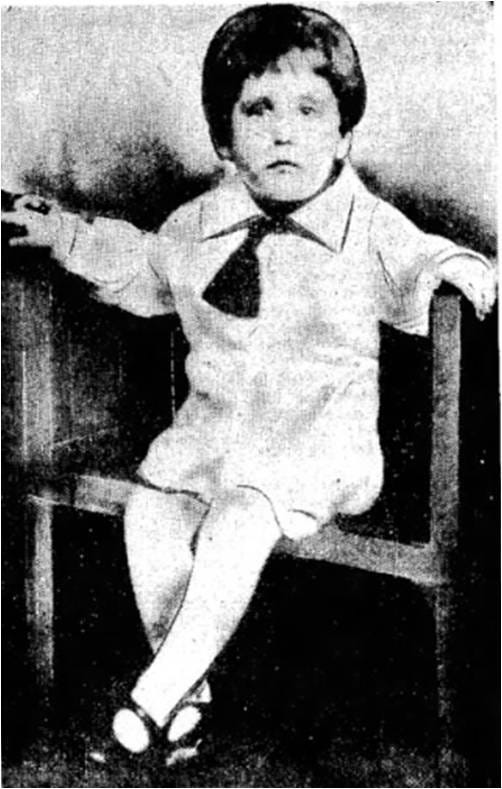
Now, that’s the case. And speculation here is even thinner than in most of the mysteries I’ve covered on this blog. I don’t even think there’s enough to justify bolded, itemized theories.
The first, and most plausible, is that he is Homer Lemay. But there’s a problem: no solid record of Homer Lemay clearly matches that of Little Lord Fauntleroy. There is an unsubstantiated photograph of a little boy in a casket that sometimes circulates with the case, which I have spared you, largely because it’s unconfirmed. The child in that image looks strikingly like Homer Lemay, but because it isn’t verified, well, it isn’t verified. Meanwhile, the sketch made of Little Lord Fauntleroy doesn’t particularly resemble Homer Lemay either. Then again, we only have one photograph of Homer to go on.
What about the couple seen at the quarry by the employee Mike Koker? Again, it’s unsubstantiated. That’s not to say Koker himself is suspected, we just don’t know. The sighting occurred weeks before the body was found, and the lack of water in the boy’s lungs makes the timeline murky. One theory suggests the child may have been kidnapped from a wealthy family, perhaps even that couple, and murdered and dumped in the quarry after a ransom attempt failed. But that raises obvious questions. Why would that couple know to search the quarry? And if it was their child, why wouldn’t they come forward? The deliberate removal of the clothing labels throws another wrench into things.
The last theory I’ll mention comes mostly from the internet, Reddit, to be specific, and while it’s extremely bleak, I don’t think it can be completely ruled out. The idea is that the child had some sort of developmental delay and that his parents killed him, or had him killed.
An unclaimed child, especially one who is well-dressed and whose image was widely circulated, suggests some level of parental complicity. Children with developmental delays or disabilities were often hidden away from schools, neighbors, and society at large due to stigma, shame, and lack of understanding.
While the horror of infanticide is often tied to practices of the distant past, Ancient Sparta comes most readily to my mind, it has never entirely disappeared. In 1921 America, the killing of a disabled child was not at all common, but it was not outside the realm of possibility either. A child who had already been kept out of sight might simply vanish without raising many questions. In this theory, the boy’s fine clothing and otherwise cared-for condition might suggest guilt, dressing him carefully, almost as if for an impromptu funeral. Placing him in an icy quarry pond could have been an attempt to preserve the body until it was found. The removed clothing tags would fit that effort at concealment, as might the story of the veiled woman leaving flowers at the grave. What it doesn’t explain is Koker’s couple asking about a boy near the quarry. And of course, this theory, like the others, is speculation.
The Little Lord Fauntleroy will likely never get his name back, if truth be told. He may well have been Homer Lemay, or maybe he wasn’t, which would leave us with two lost children instead of one.
His mystery endures. And while it is only a small comfort in the face of such a crime, the people of Waukesha did not let him be entirely forgotten. A local woman, Minnie Conrad, raised the money for his funeral and casket, and the words “Our Darling” were written upon it, a small measure of dignity for a child who, in life, had been cast aside.
Note: Thank you for making it to the end! What began as a farcical blog for a depressed, history-loving nerd to mess around with, an escape from the hole I’d dug, has grown into something more. As I’ve said before, this was always meant to be entertaining rather than academic. I’m not doing the deep-dive research that kept me from pursuing a career in history, but the work I put in here is careful, thoughtful, and, yes, work. And while it often doesn’t feel like work because I love it, it still takes time and effort. So if you’ve enjoyed this, please consider tossing a few bucks my way. My goal is to make history both educational and entertaining, the kind of history that first captured my imagination as a kid. Thank you for reading and for coming along on this journey. If you’ve made it this far, just know, I love you.
I don't know about back then, if this was a practice or not, but I know from shopping at Goodwill and working at a dept store myself that when fancy brand clothing is resold, the original tags are marked off. A giant X over "Hollister" for example. I never asked why this is done. I guess my thought was it was because the original retailer isn't the seller anymore? I haven't shopped at a discount store for a hot minute, so idk if this is still a thing, but that's what immediately came to my mind... and then you mentioned a discount store gentleman claimed they may have come from his shop. I wondered if they cut them off back then, similar to how we mark off the brand.
Another thought I'm having is, he had siblings. Some parents, to avoid the confusion of what belongs to who, mark tags of clothing with the child's initials. Perhaps for that reason, they were removed, to further avoid identification.
I think it does make sense that if the parents were the murderers, that they wouldn't come forward nor want him identified. But like you said, not a whole lot to go on here for theory purposes.
As always, loved this one, Aidan!!!!
I am glad you addressed those serious issues.