What Remains
Apocalyptic Fiction

This is the second teaser, and probably the last, for what I hope will be my next book. I’m really enjoying writing this, and I hope you’ve enjoyed reading it as well. This segment can stand on its own, but it continues from where the first part left off.
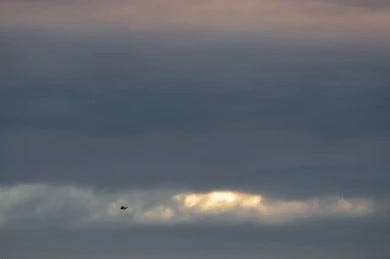
Benny scaled the rocks carefully. He had climbed this route hundreds of times and knew every handhold, every crack, every loose stone. Even so, the melting snow made the ascent dangerous. Water ran in thin streams down the rock face, turning stretches slick as ice.
A fall was the last thing he needed. Dying from the fall wouldn’t have been the worst outcome. Surviving it would. The thought brought back a memory he had spent decades trying to forget. A man lying in the road.
One leg bent at an angle no leg should bend. White bone protruded through torn flesh. Skin stretched tight around it, blistered and dirty. Horribly unnatural. The man had screamed until his voice broke,
“DEAR GOD, PLEASE HELP ME!”
The words still echoed in Benny’s memory. His mother had told him to close his eyes. He hadn’t. He never understood why the man kept screaming. Even years later, the memory puzzled him. Nobody could help him. Yet the man had continued to scream anyway.
Maybe people simply refused to accept death when it arrived.
Benny understood that now. People would do anything to survive. Anything. He had seen more than enough to know that.
Years later, though, while scavenging in the ruins of Fort Ann, he found a woman who taught him something different.
The fire had happened long after the bombs. An ordinary fire. He found her trapped beneath part of the burned-out building. At first he thought she was dead. Then she moved. The memory still made his stomach tighten. Her skin was cracked and blackened. Parts of it looked fused together. Every breath rattled in her chest. Benny had smelled burned flesh before. Too many times.
This wasn’t that smell. This was rot. The smell of a body already beginning to die while its owner remained alive.
He stood over her for a long time. She didn’t speak. Neither did he. Eventually he drew his knife. The movement caught her attention.
Slowly, painfully, her eyes focused on him. Then on the blade. For several long seconds they simply stared at one another. Benny searched for fear. He found none. Only exhaustion, pain, and acceptance.
The woman looked at the knife. Then back at him. And nodded.
Benny had learned where the heart was when he was fourteen. By seventeen he was practiced at finding it. The knife entered cleanly. She died quickly.
The memory lingered as he continued climbing. If he fell today and shattered a leg or broke his back, he knew what he would choose. Not because he was brave. Because he knew what came after. Starvation. Infection. Weeks of pain while waiting to die.
No. If it came to that, he would accept death the way the woman had. Quietly. Without begging. Without false hope.
Benny pulled himself over the final ledge. His arms burned from the climb. Above him, the tall pines swayed gently in the morning wind. They had stood here before the bombs. Before the fires. Before whatever darkness still hung over the world. Benny suspected they would still be standing long after he was gone.
He crossed the ridge and began climbing one of the larger trees. He was nearly as practiced at climbing trees as he was climbing cliffs. Or finding hearts. The thought wasn’t comforting.
He didn’t know what he expected to find. Helicopters moved fast. If civilization had somehow returned, if towns had been rebuilt and roads reopened, he thought he would have noticed. Over the course of these few years he wandered hundreds of miles around Lake Champlain.
Nothing changed. Every year there were fewer supplies. Fewer cans. Fewer batteries. Fewer traces of the old world. People could survive on deer, fish, and mushrooms for a while. But civilizations couldn’t.
By the time he reached the top branches, he wasn’t surprised by what he saw.
Nothing. The morning haze blended into the gray sky, obscuring much of the horizon. Benny slowly turned in a circle, scanning every direction. Trees. Water. Mountains. A ruined town. The same view he had seen for years.
The helicopter had come from the southwest. Or at least he thought it had. That didn’t tell him much.
Was it heading somewhere?
Returning from somewhere?
Had it even been real?
That last possibility frightened him most. He had read about it in books. Hallucinations. People seeing things that weren’t there. Hearing voices. Losing their grip on reality. Benny sat motionless among the branches. The idea settled heavily in his chest. Strangely, it frightened him less than the thought of falling. Less than the memory of the burned woman. Less, even, than the helicopter itself.
But he’d never hallucinated anything before. At least, not that he knew of. Had it been a dream?
No. It couldn’t have been. He had woken up to the sound. Then he’d spent the next twelve hours thinking about it, turning the possibilities over and over in his head until sleep became impossible.
A helicopter. The word itself felt strange. When was the last time he’d seen one?
Seventeen years ago, perhaps. Maybe longer. The thought pulled a memory from somewhere deep inside him. He pushed it away almost immediately. Some memories were easier left buried.
The last vehicles he’d seen before the helicopter hadn’t even been a helicopter. They had been a truck. A truck full of fallout liquidators.
At least that was what people had called them. Originally, they had been sent to contain the radiation. To stop its spread. To stop people from carrying it into places that were still safe.
Then the world began falling apart in a way that made all that came before it feel easy. Containment became control. Control became survival. Survival became killing. The liquidators started dealing with the people. The burned. The sick. The dying. The ones covered in tumors or too weak to walk. And then those with something they wanted.
Benny remembered hiding from them with his mother in the ruins of Hartford.
The memory came back in fragments. Cold concrete. The smell of ash. His mother’s hand clamped over his mouth. They’d been hiding beneath an abandoned flatbed truck while beams of light swept through the darkness around them. Flashlights. Voices. Boots crunching over broken glass. The men wore yellow hazmat suits, though even then the fabric had already begun turning gray with dirt and age.
Benny remembered being more curious than frightened. The masks had fascinated him. The rifles had frightened him.
A minute later, after they drove on, the screaming began. Gunshots followed seconds later. His mother had squeezed him tighter. She’d told him they were bad men. Not because they killed. Everyone had killed by then. Every liquidator truck carried supplies lashed to its sides. Food. Water. Fuel. Blankets. Medicine. Things taken from the people they found. Things taken from the people they killed.
Years later, long after his mother died, Benny encountered one of those trucks again. He’d been somewhere in the Berkshires. At least he thought he had. The road wound through endless, low-lying forested mountains. No signs remained. No maps he possessed were reliable anymore. For a few moments, standing on that mountain road, he could almost imagine the apocalypse had never happened. Some of the trees were green there. Birds sang as if bombs had never fallen. The wind still moved through the leaves.
Then he heard the rattle of an engine. The sound had startled him so badly he nearly fell into the ditch beside the road. He threw himself into the trees and buried himself beneath a mound of dead leaves. Moments later, the truck emerged around a bend. It moved slowly, coughing black smoke into the air. The faded circular symbol on the side was barely visible.
The same symbol. The same liquidators. Or what remained of them. The men inside no longer wore masks. Their faces looked hollow. Their cheeks sunken. Their uniforms hung loosely from thin frames. They looked exhausted. Starving. Broken. Much like Benny imagined he must have looked back then. The truck disappeared down the mountain road and he never saw another vehicle again.
Until yesterday. Benny sat motionless among the branches, listening to the wind move through the pine needles. A helicopter changed everything. Helicopters needed fuel. Fuel required refineries, stockpiles, or people capable of preserving what remained. They needed spare parts. Tools. Mechanics. Pilots. Organization.
A helicopter wasn’t survival. A helicopter was civilization. Or at least the beginning of one. That realization unsettled him more than the machine itself.
The civilization Benny remembered was chaos. Famine. Disease. Violence. Cities full of corpses and desperate people. Government collapsing. Soldiers abandoning their posts. The world ending one town at a time.
But that had been long ago. For most of his life, civilization had been something he read about in books. His world consisted of hunting deer, collecting water, repairing shelters, avoiding strangers, and surviving another winter.
Nothing in that life led to helicopters. Nothing in that life explained what he had seen. Eventually, Benny decided there was little more to learn from the top of the tree. The helicopter was gone. The horizon remained unchanged. Slowly and carefully, he began climbing back down.
The helicopter occupied Benny’s thoughts for the next several days. No matter what he was doing, his mind always drifted back to it. What could it mean? What was out there? Had the United States never truly died?
The thought felt absurd. Yet he couldn’t stop thinking about it. He pictured the places he’d seen in textbooks and magazines. Washington, D.C., with its marble monuments, grand buildings, and politicians endlessly arguing over a future that never came. New York, enormous and glittering beneath a forest of skyscrapers. Los Angeles, sprawling across the horizon beneath bright lights and hills covered in mansions. Had people rebuilt them? Had civilization returned while he wandered through forests and ruins, never knowing?
The images lingered in his imagination. Crowded streets. Electric lights. People living lives that didn’t revolve around finding their next meal. The fantasy never lasted long. On some level, Benny knew it couldn’t be true.
He had never seen one of those major cities the bombs had fallen on. He had been too young when the world ended. But everything he remembered from those years was death, disease, smoke, and running. Always running.
No. The world described in the books was gone. It had to be.
But the helicopter meant something. It meant someone, somewhere, possessed more than simple survival. Someone had built something. Organized something. Preserved something.
The realization filled him with anxiety. And fear.
But more than either of those things, it filled him with curiosity. And perhaps something else.
Benny knew what hope was. He understood the word. Books talked about it constantly.
People hoped for better things to come. Yet he couldn’t remember ever truly feeling it. Not in any meaningful way. Life had taught him not to expect things to improve. The next winter always came. The next hunger always arrived. The next loss always followed. Hope felt like something that belonged to other people. To the old world.
Yet the helicopter stirred something. Something small and unfamiliar. The feeling spread through him like a slow-burning ember. The possibility that there might be more out there than survival. The possibility that something had endured. It was enough to keep him awake at night.
His thoughts endlessly oscillated between curiosity and fear. Part of him wanted answers. The other part remembered exactly what helicopters, trucks, tanks, and jets had brought to the world. What they had brought to him. The memories were impossible to separate from the machine itself.
It was the day after he ran out of venison that he finally made his decision. He had spent the morning hunting. Poorly. His mind was elsewhere.
The snowpack was finally beginning to thaw, revealing roots and stones hidden beneath the slush. Twice he stumbled over roots. The second time he landed knee-first in icy meltwater and soaked himself from the waist down. Normally that would have terrified him. Wet clothes could kill. That day he barely noticed.
A flock of wild turkeys burst from the undergrowth ahead of him. Startled and frustrated, Benny reacted without thinking. He loosed one of his good arrows.
The shaft vanished into the trees. The birds escaped. For several seconds he simply stared after them. Then he swore. Loudly.
The next hour was spent searching for the arrow while continuing to curse himself. He found nothing. By the time he gave up, he was now down to two remaining arrows from before the collapse he scavenged. The rest were his own crude creations, straight sticks, sharpened stone points, and feathers bound together with scavenged cordage. They worked well enough. Usually. He’d also watched them bounce off a moose. The memory did little to improve his mood.
Eventually, he picked up the turkeys’ trail again. By dusk he finally managed to bring one down. The victory felt hollow. He spent the long walk home trudging through darkness, wet clothes clinging to his skin as the evening cold settled into his bones. He should have been thinking about hypothermia. He’d seen enough people die from exposure to know how dangerous it was. Instead, he was still thinking about the helicopter.
Questioning it. Doubting it. Wondering if it had ever existed at all. Of course it had. He had seen it. He had heard it. The machine had passed overhead only a few hundred feet above the trees, its blades chopping through the air. Maybe fifteen feet long. Maybe more. It had been real. Hadn’t it?
The uncertainty bothered him more than he wanted to admit.
He thought again about hallucinations, seeing things that weren’t there. Losing a grip on reality.
What if that was happening to him?
The thought lingered all the way back to camp. By the time he reached the shelter, he realized there was only one way to know for certain. Only one way to find answers. Benny didn’t like the conclusion. Not at all. If he wanted to know whether the helicopter was real, he would have to do something he had spent years avoiding. He would have to find other people.
The burned-out house stood exactly where he remembered it. Of course it did.
If the terrain had been flat, it would have been less than forty-five minutes from his camp. The cliffs, ravines, and patches of lingering snow made the journey closer to two hours.
As he picked his way down the hillside, Benny found himself almost amused by the situation. After years of living near them, he was finally going to meet his neighbors. A housewarming gift seemed appropriate.
That was why he carried a can of tuna. He had never liked tuna. Not before the collapse and certainly not after. He’d eaten enough of it over the years to know exactly how much he disliked it. Giving it away felt far easier than parting with some of his turkey or one of the better canned foods he had back at camp.
The day was unusually warm. For the first time in over a week, sunlight poured through gaps in the clouds, illuminating the forest in pale gold. The sight lifted his spirits. Benny wasn’t religious. He’d read the Bible several times over the years. It was impossible not to. Bibles were everywhere. After the collapse, people had clung to them.
He remembered entering a church in Falls Village with his mother over a decade ago. The dead had been piled together in the pews and along the altar. His mother had covered his eyes. Too late.
He still remembered the flies. Thousands of them. He remembered the rows of plastic cups scattered across the floor and the sweet smell that had lingered beneath the rot. Later, he pieced together what had happened. That memory had stayed with him.
Every time he read the Bible, the same question surfaced. How could any god allow this?
Still, as sunlight warmed his face, Benny couldn’t help but feel it was a good sign. By his estimate, judging from the position of the sun, he reached the house sometime around midmorning.
Only then did he realize he had no clue what he was going to say. The thought made his stomach tighten.
The house sat beyond the small town center, around a mile from the school where he had found the history textbooks. It was still recognizable despite the years. Burned timbers. Collapsed walls. The cluster of lighter beams hiding the trapdoor. Everything exactly as he remembered.
Benny stood there for several minutes. Thinking. Rehearsing. Failing. Finally, before he could lose his nerve, he spoke.
“Hello...” The word sounded strange. Too loud.
He swallowed. “Uh... I come in peace.”
He winced immediately. That sounded ridiculous.
“I brought gifts.”
Even worse. No one was opening a door for that. He rubbed the back of his neck.
“I don’t want to hurt you.”
His voice cracked slightly.
“I’ve been here before. A few years ago.”
Silence.
“I came looking for food. Supplies.”
He glanced toward the hidden cellar.
“I saw you down there.”
Nothing.
“I didn’t hurt you then.”
His throat felt dry.
“I don’t want to hurt you now.”
He hesitated.
Then forced himself to say it.
“I just need to know if you heard it.”
The words nearly caught in his throat.
“The helicopter.”
The forest remained silent. Benny suddenly became aware of how young his voice sounded. He almost never spoke. Not really. A curse muttered after stumbling wasn’t conversation. The sounds that had left his mouth felt like it belonged to somebody younger. Somebody from another life.
“Please,” he tried again.
“I really mean no harm.”
Nothing.
“I just need to know if you heard it.”
Still nothing. A rustle behind him made him jump. His hand flew to the Glock. He spun and dropped into a crouch. A rabbit stared back at him. Healthy. Completely unbothered. For several seconds they regarded one another.
Then Benny laughed nervously. The rabbit twitched its ears.
And that was when he noticed the mound behind the rabbit. It wasn’t large. Barely noticeable. A slight rise in the earth uncovered by melting snow. But something about it felt wrong. The shape. The way the soil sat. It wasn’t natural. A knot formed in his stomach.
Slowly, Benny approached. Then he knelt. And began digging. The dirt was soft. Too soft.
He found bone within minutes. The first skull confirmed what he already suspected. The second made his stomach drop. The third made him stop digging.
Three people. A family. His eyes drifted lower. The broken femurs told the rest of the story. Split open. Marrow removed.
Benny stared at them for a long time. Then he stood. His stomach churned. Disgust. Anger. Something darker.
The family had survived everything. The bombs. The collapse. The long winter. Only to be butchered for a basement full of canned food.
Every instinct screamed that whoever had done this might still be inside. That was exactly why he should leave.
Instead, Benny started walking. Then marching. Then practically running back toward the trapdoor. A voice in the back of his mind screamed at him to stop. The dead were dead. There was no point dying for them.
But Benny wasn’t thinking. He was angry. He tore the beams aside. Grabbed the handle. And yanked the trapdoor open.
The gunshot exploded from the darkness. Pain hit first. White-hot. Blinding. A bullet had slammed into his shoulder just above the collarbone.
Benny collapsed backward. For a moment, he couldn’t breathe. Couldn’t think. Only pain.
Then came the second thought. That was stupid.
Blood soaked through his jacket. He couldn’t tell whether the bullet had passed through. Only that it hadn’t killed him. Not yet.
Inside the cellar, movement. The shooter was coming.
Benny forced himself flat. Forced himself not to scream. Bullets were precious. Nobody wasted them.
He slowed his breathing. Made himself still.
The footsteps approached. A boot slammed into his ribs. Pain flared. Benny didn’t move.
Another kick. Still nothing.
Then fingers grabbing at his pack. The moment the man bent down, Benny exploded upward.
The scavenger recoiled in shock. Wild eyes. Long beard. Older than Benny. Bigger too.
The man raised his revolver. Too slow. Benny smashed a fist into his jaw. The man’s head snapped sideways.
The pistol fired. The shot vanished harmlessly into the trees.
Benny drove forward. Pure instinct. Pure rage.
He crashed into the man and knocked him onto his back. The pistol hand struggled beneath him.
Benny stomped on the wrist. Something cracked. The man screamed.
Benny drew his knife. The blade came down. The scavenger raised an arm. Steel punched through flesh. More screaming.
Benny let go of the knife. Drove his fist into the man’s throat. The scream became a choking gasp.
Then something inside Benny broke loose. The violence became a blur. Fists. Boots. Blood.
When it was over, the man’s face was no longer a face. Only ruin.
Silence returned to the forest. Benny stood over the body. Breathing hard. His knuckles throbbed. His shoulder burned.
And suddenly he was crying. Not loudly. Not dramatically. Just tears running down a filthy face while he stared at what he had done.
A few seconds later, survival reasserted itself. The wound. The blood. An imaginary clock. Someone might have heard the shots. He forced himself into motion.
The bullet had passed through. Luck. Nothing more. Pure luck. Inside the cellar, he found shelves packed with supplies. Cans. Water. Medicine. A first-aid kit. The killer had done very well for himself.
Benny cleaned the wound with rubbing alcohol and nearly blacked out from the pain. Then he bandaged it. Loaded supplies into his pack. Collected every bullet he could find.
Only afterward did he allow himself to think. The man had murdered an entire family. Maybe for food. Maybe for shelter. Maybe for both. Benny hated him for it.
What unsettled him most was understanding. Because if circumstances had been different… If he had been hungry enough… Desperate enough… Could he honestly say he wouldn’t have done the same?
The question followed him all the way home. By the time he reached camp, the sun was setting behind the mountains.
A new gun belt hung from his waist. Beside the Glock rested a rusting revolver with a faded wooden grip.
Benny had always wanted a revolver. Now he had one. For some reason, that only made him feel worse.
Compelling. Looking forward to seeing where this goes. I like Benny. We would be friends.
Love this!!! I’d love to read more. But you can’t just give it away!